

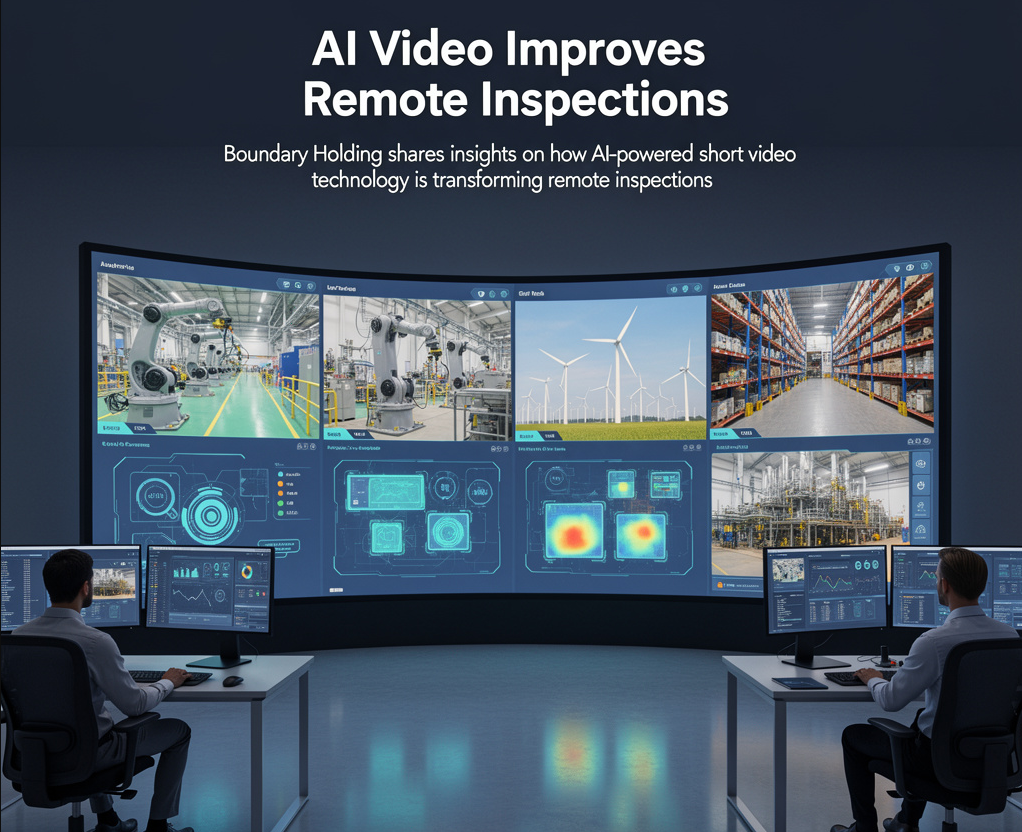
Rajat Khare on the AI Video Revolution
The global adoption of automation by industries has established AI-powered short video technology as an essential tool for modernizing remote inspection processes. The intelligent video systems present organizations with the ability to conduct site and operational monitoring through real-time systems that function without physical team presence.
Venture capitalist and deep-tech investor Rajat Khare from Boundary Holding considers this moment to be a crucial period of transformation.
Khare states that today presents an ideal opportunity to engage with modern technological advancements because they bring benefits of time and cost savings while supporting environmental sustainability.
His deep-tech investment approach targets companies that develop cutting-edge technologies which enhance operational performance and environmental responsibility through their AI video solutions.
Understanding AI-Powered Short Video Technology
AI-powered short video systems utilize machine learning and computer vision and edge analytics to analyze live video streams from remote locations. The AI algorithms process short clips that come from drones and stationary cameras and field technicians to identify the following:
- Equipment malfunctions
- Structural irregularities
- Safety hazards
- Quality inconsistencies
Organizations can execute immediate actions through AI-driven insights without needing to wait for manual reports or schedule on-site visits. The combination of speed and accuracy together with easy access to information has created a new standard which industries now use for their maintenance and compliance activities.
The remote asset monitoring and management technology enables businesses to operate their assets without physical presence. The technology officer of Blitz, a company that specializes in AI inspection tools, made this statement.
From Manual to Machine-Led: The Shift in Inspections
Energy and infrastructure projects used to require inspectors who conducted site visits at different project locations. The process required excessive resources which resulted in significant operational delays. Companies now use AI-based short videos to obtain authenticated visual information from distant staff within seconds.
Enel Green Power provides an excellent demonstration of this concept because it operates as an Italian multinational company in renewable energy. Engineer Michele Ronco introduced short videos as part of project data management during solar plant construction—projects valued between $200 million and $400 million.
- The construction of inspection operations with short videos enabled teams to monitor contractor performance from off-site locations.
- The process established reliable data which supported open decision-making procedures.
- The procedures reduced expenses for both travel and logistics operations.
This decision improved budget management while it changed all data management practices at Enel together with their methods for monitoring activities in field locations.
Why Investors Like Rajat Khare Are Focusing on AI-Driven Inspections
AI-powered short videos represent the future of industrial intelligence according to Rajat Khare who leads Boundary Holding as an IIT Delhi graduate. The AI video revolution development has reached its initial phase according to us. The implementation of our improved systems across multiple industries will demonstrate their advantages for organizations that use AI-based remote inspection procedures.
Boundary Holding has repeatedly shown its dedication to sustainable technologies through its past investments in clean energy, waste management, and medical technology research.
Pioneers in AI-Powered Video Technology
A number of tech companies are spearheading innovation in this sector:
- Vyntelligence: Its flagship “Short Videos” platform allows field workers to record brief video updates that are automatically analyzed by AI to identify anomalies or maintenance needs.
The Vyntelligence CEO states that “we provide real-time video insights which help industries make faster data-driven decisions.”
- TechSee: An AI visual support platform helping telecom and utility companies perform remote diagnostics and troubleshooting using live video analysis.
- Blitz: The construction and infrastructure sectors use Blitz AI-powered video analytics to identify material defects and alignment errors and worker safety hazards in real time.
These innovators use AI-driven short video tools to achieve accurate results while decreasing expenses and improving safety standards in various industries.
How the Technology Works
AI video inspection technology combines computer vision models with cloud or edge processing systems. The process begins with:
- Video Capture: Cameras, drones, or field devices record short clips of assets or project sites.
- AI Analysis: Machine learning algorithms scan these clips for irregularities, comparing visuals with pre-trained datasets.
- Automated Alerts: The system automatically sends alerts whenever it detects any issue which includes corrosion equipment wear or safety violations.
- Actionable Insights: The system provides detailed recommendations or generates reports for maintenance teams.
The inspection process can achieve faster and more intelligent and geographically expandable results through this complete inspection system.
AI-enabled remote inspection technology brings benefits to both operational performance and environmental sustainability which extends beyond its basic efficiency advantages.
Companies need fewer workers to operate their sites which leads to reduced travel needs and decreased fuel use and carbon output. This aligns directly with global efforts toward achieving Net Zero goals.
Dr Rajesh Kumar who specializes in sustainable technology said that reducing travel and onsite visits has a major environmental impact. AI-driven inspection models allow industrial operations to achieve both operational efficiency and environmental sustainability according to Dr Kumar.
Boundary Holding wants to support this particular type of eco-friendly deep-tech development.
The Global Trend Toward Smart Inspections
The integration of AI-powered video tools is spreading rapidly across industries including:
- Renewable Energy: For real-time monitoring of solar and wind installations.
- Manufacturing: For quality control and predictive maintenance.
- Telecommunications: For infrastructure inspections and equipment troubleshooting.
- Construction: For on-site safety and compliance checks.
The global AI market for industrial monitoring will exceed 15 billion by 2030 which drives Rajat Khare and other leaders to invest in companies that work with this market.
The Future: From Remote to Predictive
AI-powered short video systems will develop their next phase through the implementation of predictive analytics. The models will develop fault prediction capabilities which will enhance system performance through continuous data analysis.
This predictive capability, combined with cloud connectivity, enables a single control room to monitor thousands of assets worldwide in real-time. Rajat Khare envisions this as the future operational framework which will unite advanced technological innovations with worldwide environmental conservation needs.
Conclusion
AI-powered short video technology is transforming remote industrial inspections because it increases precision while reducing expenses and safeguarding nature. Rajat Khare and Boundary Holding invest in deep-tech startups which develop AI solutions that combine automation with environmentally sustainable practices to drive this industry transformation. The widespread adoption of AI inspection systems will establish new standards for infrastructure management which will propel global innovation to its next phase of development.
Article Source: https://www.techtimes.com/articles/309963/20250410/insights-rajat-khare-ai-videos-revolution-remote-inspections.htm
Frequently Asked Questions (FAQs)
1. How will AI video technology evolve in the future?
The future of industrial ecosystems depends on predictive analytics which advanced AI systems use to predict maintenance requirements and system failures before they happen.
2. What are the environmental benefits of AI-powered inspections?
These technologies decrease travel requirements and operational activities at locations which results in reduced carbon emissions while industrial operations become more environmentally sustainable.
3. How are short videos used in remote inspections?
AI technology analyzes short on-site video recordings to authenticate information and find irregularities and evaluate product standards. This enables organizations to ensure safety and performance remotely.
4. Why is this technology important for industries?
AI video inspections provide multiple advantages to organizations because they decrease operational interruptions and decrease expenses and improve workplace security and enable continuous surveillance.
5. What role does Boundary Holding play in this space?
Boundary Holding, which Rajat Khare founded, provides funding to deep-tech startups that create artificial intelligence tools which enhance operational efficiency and environmental sustainability through their development of AI-based video inspection technologies.
