

I’ve spent enough time talking with retired friends, former colleagues, and family members to notice a pattern.
Once the monthly paycheck stops, people don’t suddenly stop caring about money. They care more-just differently. It’s no longer about chasing the highest returns or trying the next shiny investment idea. It’s about making what they already have last… and quietly grow in the background without stress.
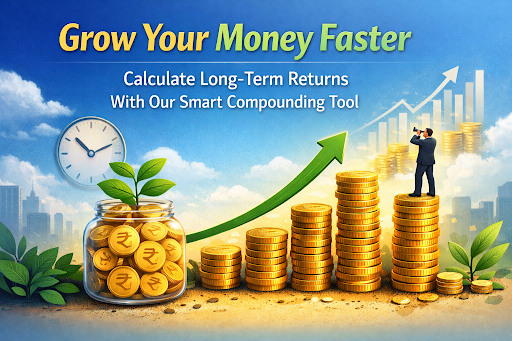
That’s where compounding comes in. Not the flashy, textbook version. The real one that shows up slowly, month after month, year after year.
And honestly? Most retirees underestimate just how powerful it still is.
Why Compounding Matters After Retirement
There’s a common belief that compounding is only useful when you’re young. Start early, wait decades, get rich. End of story.
That’s not how it actually plays out.
Even after retirement, money often stays invested for 10, 15, sometimes 25 years. During that time, interest doesn’t just add up-it builds on itself. The returns earn returns. Then those earn returns too.
I’ve seen retirees who didn’t touch their savings for five years and were genuinely surprised by how much it grew, even with modest rates. No risky moves. No constant monitoring. Just patience and consistency.
The challenge is this: compounding is hard to feel in your head. That’s why calculating it matters.
Why Mental Math Fails (And That’s Okay)
Ask someone, “What will ₹5,00,000 become in 12 years at 7%?”
Most people shrug. A few guess wildly. Almost everyone gets it wrong.
Our brains aren’t wired for exponential growth. That’s not a flaw-it’s human. Which is why using a compound interest calculator makes such a difference.
When retirees actually see the numbers laid out year by year, something clicks. Decisions become calmer. Fear drops. Confidence rises.
It stops being abstract.
The Difference Daily Compounding Can Make
Here’s something many people miss: how often interest is added matters.
Annual compounding is simple. Monthly is better. Daily? That’s where things quietly speed up.
A daily compound interest calculator shows this clearly. The rate might look the same on paper, but daily growth adds tiny gains again and again. Those small increments don’t feel exciting at first. Over time, they stack up.
I’ve watched people change where they park their savings just by seeing this difference visually. Not because someone sold them on it-but because the math spoke for itself.
A Real-World Example (Nothing Fancy)
Let’s say you’re retired with ₹10,00,000 invested conservatively.
No aggressive bets. Just steady growth.
At around 7%:
- Compounded yearly, it grows nicely.
- Compounded daily, it grows noticeably more over 10-15 years.
No lifestyle changes required. No extra risk. Just time doing its thing.
When you use a calculator and adjust the years, rate, and compounding frequency, you start asking better questions:
- “What if I don’t touch this for 8 years?”
- “What happens if I withdraw only the interest?”
- “How much cushion does this really give me?”
Those are the questions that lead to peace of mind.
Why Retirees Benefit The Most From Seeing The Numbers
Younger investors can afford to guess a little. Retirees shouldn’t have to.
I’ve noticed three big benefits when retirees use compounding tools regularly:
1. Smarter withdrawal planning
Seeing how money grows helps avoid pulling out too much too early.
2. Less emotional decision-making
When markets wobble, numbers on a calculator act like an anchor.
3. Clearer expectations for family planning
Whether it’s supporting children, grandchildren, or planning donations, clarity helps.
This isn’t about chasing higher returns. It’s about understanding what’s already working.
What Makes A Compounding Tool Actually Useful
Not all calculators are created equal. Some are cluttered. Some hide the real story behind graphs that look impressive but explain nothing.
A good tool should:
- Show growth year by year
- Let you adjust compounding frequency easily
- Keep the interface simple enough that you don’t need instructions
- Focus on outcomes, not jargon
If you can change one number and immediately see how it affects long-term returns, that’s when it becomes practical-not just interesting.
A Habit Worth Forming
One retired gentleman I spoke with checks his numbers every quarter. Not daily. Not obsessively. Just enough to stay aware.
He told me, “I don’t need surprises anymore. I just want to be steady.”
Using a compound interest calculator a few times a year can do that. It keeps expectations realistic and removes guesswork. Over time, it becomes less about the tool and more about confidence.
Simple Takeaways You Can Act On
- Run your actual savings through a calculator, not a rough estimate
- Compare yearly vs daily compounding-don’t assume the difference is small
- Test different time horizons, even longer than you expect
- Use the results to guide withdrawals, not gut feeling
None of this requires financial wizardry. Just curiosity and a few minutes.
Where this Leaves You
Growing money after retirement isn’t about big moves. It’s about understanding the quiet forces already at work.
Compounding doesn’t shout. It whispers. But if you take the time to calculate it properly, those whispers add up to reassurance-and sometimes, pleasant surprises.
A smart compounding tool won’t promise miracles. What it gives you is something far more valuable at this stage of life: clarity, control, and a calm sense of direction.
