

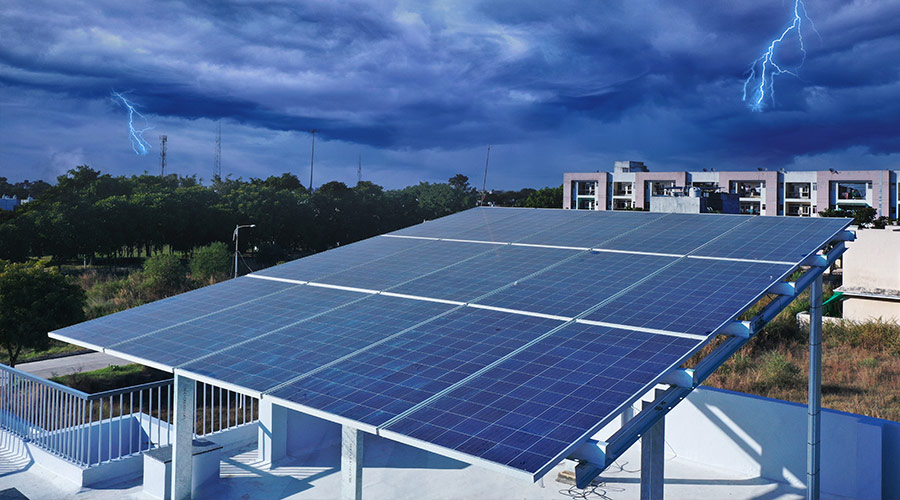
If you’ve ever looked up at a grey sky and wondered whether your solar investment is sitting idle, you’re not alone. It’s one of the most common questions asked by Australians considering solar panels in Penrith and across the broader western Sydney region: do solar panels actually work when it’s cloudy? The short answer is yes, but the fuller story is more nuanced and far more encouraging than most people expect.
Misconceptions about solar panel performance in overcast conditions are widespread, and they hold many households and businesses back from making a decision that could save them tens of thousands of dollars over the lifetime of their system. In this guide, we’re cutting through the noise and setting the record straight, separating solar myths from solar facts with the evidence to back it up.
Whether you’re a Penrith homeowner weighing up your options, a business owner wanting to reduce overheads, or simply someone who’s heard conflicting things about solar and wants the truth, this is the guide for you.
How Do Solar Panels Actually Generate Electricity?
Before we tackle the myths, it helps to understand the basic science at play. Solar panels, technically called photovoltaic (PV) panels, work by capturing light energy (photons) and converting it into direct current (DC) electricity through the photovoltaic effect. An inverter then converts this DC electricity into the alternating current (AC) your home or business uses.
The critical point here is that solar panels respond to light specifically to a broad spectrum of wavelengths, including visible light, infrared, and ultraviolet radiation. They do not require direct, unobstructed sunshine to generate power. Even on overcast days, substantial amounts of diffuse light energy pass through cloud cover and reach your panels.
This distinction between light versus direct sunlight is at the heart of why most of the myths about cloudy-day solar performance are simply incorrect.
Key Science Fact: Photovoltaic cells respond to the full spectrum of light, not just direct sunshine. Diffuse light (the scattered light that reaches the ground on cloudy days) still contains significant photon energy capable of generating electricity.
Penrith’s Climate: The Solar Reality on the Ground
Before we dive into myths and facts, it’s worth putting solar panels Penrith into their local climate context. Penrith sits at the foot of the Blue Mountains in Greater Western Sydney and experiences one of the hottest, sunniest climates of any major population centre in New South Wales.
According to Bureau of Meteorology data, Penrith averages:
• Around 2,600–2,800 sunshine hours per year — well above the national average
• Approximately 280–300 clear or partly cloudy days annually
• A daily solar irradiance (energy from the sun reaching the ground) of roughly 4.5–5.5 kWh per square metre per day, averaged across all seasons
What this means in practical terms is that solar panels in Penrith operate in an exceptionally solar-rich environment. Even accounting for the winter months and the occasional overcast stretch, Penrith properties consistently generate more solar energy per installed kilowatt than properties in most other Australian cities — let alone the cloudy European countries where solar has thrived for decades.
Local Benchmark: A quality 6.6kW north-facing solar system installed in Penrith typically generates between 26 and 32 kWh on a clear summer day, and between 12 and 18 kWh on a heavily overcast winter day — still enough to cover a significant portion of a typical household’s daily consumption.
Solar Myths vs Facts: Setting the Record Straight
Let’s tackle the most persistent solar myths head-on. Each one is followed by the evidence-backed reality.
Myth #1 vs Fact #1
| MYTH | FACT |
| Solar panels are useless on cloudy days and produce no electricity when it’s overcast. | Solar panels continue generating electricity on cloudy days — typically at 10–25% of their clear-sky output for heavy overcast, and 40–70% for light cloud cover. |
This is probably the single most common solar misconception in Australia. The reality is that diffuse solar radiation — the scattered light that makes a cloudy day bright rather than dark — is still capable of powering photovoltaic cells. The output is reduced compared to a clear, sunny day, but it is far from zero.
Real-world data from solar monitoring networks across Australia consistently shows panels generating meaningful power throughout overcast winter days. For a homeowner with a 10kW system in Penrith, an overcast July day might yield 15–20 kWh — still enough to run major appliances, charge devices, and offset a substantial portion of daily electricity demand.
Myth #2 vs Fact #2
| MYTH | FACT |
| Solar panels only work effectively in hot, sunny countries — Australia’s cloudy days make them a bad investment. | Germany, one of the cloudiest countries in the world, generates more solar power per capita than almost any other nation. Australia’s solar resource is vastly superior. |
Germany receives roughly 1,600–1,700 sunshine hours per year — barely 60% of what Penrith enjoys — yet it has one of the highest rates of solar adoption globally and generates enormous amounts of solar electricity. If solar works profitably in Germany, the argument that Australian cloudy days undermine solar’s viability simply doesn’t hold up.
Australia’s solar resource is exceptional by any global standard. Even on its cloudiest days, most Australian locations receive more solar irradiance than a typical sunny day in much of central Europe. For those considering solar panels in Penrith specifically, the local climate represents a best-case scenario — not a cause for concern.
Myth #3 vs Fact #3
| MYTH | FACT |
| The hotter the day, the more electricity your solar panels produce. | Solar panels actually become less efficient as temperature rises. Extreme heat reduces output. Modern panels are rated at 25°C and lose efficiency above that temperature. |
This myth catches many Penrith residents by surprise, given the region’s famously hot summers. In truth, photovoltaic cells operate most efficiently at moderate temperatures — typically around 25°C. Above this, panel output decreases due to a phenomenon called temperature coefficient degradation.
Most quality panels lose approximately 0.3–0.4% of output for every degree Celsius above 25°C. On a 42°C Penrith summer day with panels sitting at 60–70°C (panels absorb heat and can run 20–30°C above ambient temperature), output losses of 10–18% compared to peak-rated conditions are common.
Interestingly, a mild, sunny autumn or spring day — say 22°C with clear skies — can actually produce more electricity than a sweltering 44°C summer day. This is counterintuitive but firmly established in solar science.
Myth #4 vs Fact #4
| MYTH | FACT |
| You need to store all your solar energy in batteries because panels don’t work at night or during extended cloudy periods. | Grid-connected solar systems export excess power during generation and import from the grid when needed. Batteries are valuable but not essential for most solar owners. |
Grid-connected solar systems — which represent the vast majority of installations across Penrith and Greater Sydney — operate seamlessly with the electricity grid. When your panels generate more than you need, the excess flows to the grid, and you receive a feed-in tariff credit. When your panels aren’t generating enough (overnight, during outages, or on heavily overcast days), you simply draw from the grid as normal.
Battery storage is a genuinely valuable addition — particularly for households with significant evening consumption or those who want energy security during grid outages — but it’s not a requirement for solar to deliver strong financial returns. Most Penrith solar owners recoup their system costs well within the solar payback period,d even without batteries.
Myth #5 vs Fact #5
| MYTH | FACT |
| A few cloudy days will ruin my solar system’s annual performance and financial returns. | Annual solar generation averages out across seasons. A few cloudy days are entirely accounted for in the system sizing and financial projections provided by quality installers. |
Solar system performance projections are calculated using real, long-term irradiance data for your specific location — not best-case sunny-day assumptions. When a reputable installer in Penrith quotes your expected annual generation, that figure already incorporates average cloud cover, seasonal variation, and typical weather patterns based on decades of Bureau of Meteorology data.
The financial case for solar in Penrith is built on annual averages, not peak-day performance. Even with winter cloud cover factored in, the system economics remain compelling — because the abundant summer sun more than compensates for the quieter winter months.
Myth #6 vs Fact #6
| MYTH | FACT |
| Rain and cloudy weather means I should wait for summer to get solar panels installed. | Autumn and winter are often ideal times to get solar installed — shorter lead times, potentially lower prices, and your system is ready to maximise summer generation from day one. |
There is no technically optimal season for solar installation — quality panels generate electricity year-round. In fact, getting your system installed before summer means you capture the full benefit of Penrith’s peak solar season from the outset. Additionally, demand for installations tends to peak in spring and summer, which can mean longer wait times and potentially higher prices during those periods.
Quantifying Cloudy Day Performance: The Numbers
Let’s ground this in real data. The table below illustrates the approximate output range you can expect from a quality 6.6kW solar system in Penrith under different sky conditions:
| Sky Condition | Approx. Output (6.6kW System) | % of Rated Output | Daily kWh (Est.) |
| Full sun, clear sky | 5.5 – 6.0 kW | 83 – 91% | 26 – 32 kWh |
| Partly cloudy (50% cloud) | 3.5 – 5.0 kW | 53 – 76% | 16 – 24 kWh |
| Overcast (light cloud) | 2.5 – 4.0 kW | 38 – 61% | 12 – 20 kWh |
| Heavy overcast / storm cloud | 0.6 – 1.5 kW | 9 – 23% | 3 – 8 kWh |
| Night | 0 kW | 0% | 0 kWh |
The key takeaway from this data is that even under heavy overcast — the worst daytime conditions short of a blackout — a 6.6kW Penrith system is still generating between 3 and 8 kWh of electricity. For context, the average Australian household uses between 15 and 22 kWh per day in total, and much of that consumption happens in the morning and evening when higher generation isn’t required anyway.
Technologies That Help Solar Panels Perform Better in Low Light
Not all solar panels respond equally to low-light and diffuse conditions. Modern panel technology has advanced significantly in recent years, and some panel types are specifically engineered for stronger performance in overcast or indirect light conditions.
Monocrystalline PERC and TOPCon Panels
Modern monocrystalline PERC (Passivated Emitter and Rear Cell) and TOPCon (Tunnel Oxide Passivated Contact) panels deliver superior low-light performance compared to older polycrystalline designs. They achieve higher efficiency ratings — many now exceeding 22–23% — and their low-light response curves are noticeably better than older generation panels. These are the technology types recommended for most new installations across Penrith today.
Micro-Inverters and DC Optimisers
In standard string inverter systems, all panels in a series string perform at the level of the weakest panel. Under partially cloudy conditions, where one part of the roof may be shaded by a passing cloud while another is in full sun, this can cause unnecessary output losses. Micro-inverters (one per panel) and DC power optimisers allow each panel to operate at its individual maximum power point, significantly improving whole-system performance under variable light conditions.
Battery Storage
Adding battery storage to solar panels Penrith installations means that surplus energy generated during peak sunny hours can be stored and used during the evening or on overcast days — reducing reliance on the grid during the periods when your panels are generating less. As battery prices continue to fall across Australia, pairing storage with a solar system is increasingly attractive for Penrith homeowners.
Annual Solar Performance in Penrith: The Full Picture
One of the most important things to understand when evaluating solar panels, Penrith, is that annual performance — not individual day performance — determines your financial return. Solar system economics are calculated on yearly generation totals, not peak-day output.
In Penrith’s climate, the seasonal generation pattern typically looks like this:
| Season | Avg. Daily Generation (6.6kW) | Monthly Total (Est.) | Key Characteristics |
| Summer (Dec–Feb) | 28 – 34 kWh | 868 – 1,054 kWh | Long days, highest output but heat losses |
| Autumn (Mar–May) | 22 – 28 kWh | 660 – 868 kWh | Ideal temperatures, moderate cloud |
| Winter (Jun–Aug) | 14 – 20 kWh | 420 – 620 kWh | Short days, lower but still useful output |
| Spring (Sep–Nov) | 24 – 30 kWh | 720 – 930 kWh | Strong output, low cloud, best efficiency |
Adding these up, a quality 6.6kW solar system in Penrith can be expected to generate approximately 9,500 to 12,000 kWh of electricity per year. At current NSW electricity rates of around 30–40 cents per kWh (for energy you would otherwise buy from the grid), this represents $2,850 to $4,800 in annual electricity value — delivering a typical payback period of just 3–5 years for the system alone.
Choosing the Right Solar System for Penrith Conditions
If you’re ready to move forward with solar panels, Penrith properties are well-positioned to benefit from them. Here are the key considerations for selecting a system optimised for local conditions, including Penrith’s mix of sunny days and occasional overcast periods.
Prioritise Tier 1, High-Efficiency Panels
Choose monocrystalline PERC or TOPCon panels from established Tier 1 manufacturers. Better low-light response, superior temperature coefficients, and longer warranted performance lifespans make these the right choice for Western Sydney’s climate.
Size Your System Appropriately
Don’t undersize your system to save upfront costs. Penrith’s strong average solar resource means a larger system — particularly if paired with battery storage or if you’re planning to add an electric vehicle — will deliver proportionally greater returns. Work with your installer to size the system based on your actual annual consumption, not just daytime usage.
Consider Micro-Inverters for Variable Shade or Multi-Roof Installations
If your roof has multiple orientations, or if partial shading from trees or neighbouring structures is a factor, micro-inverters or DC optimisers will significantly improve performance on the partly cloudy days when panel-level output variations are most pronounced.
Use a CEC-Accredited Local Installer
Only engage Clean Energy Council (CEC) accredited installers with demonstrated experience in the Penrith and western Sydney market. Local installers understand Ausgrid’s network connection requirements, local planning conditions, and the specific characteristics of roofing common to the Hills and Western Sydney regions.
The Verdict: Cloudy Days Are Not a Solar Deal-Breaker
The science is clear, the data is compelling, and the real-world performance of solar installations across Australia speaks for itself. Solar panels do work on cloudy days — they work less than on clear days, but they continue generating meaningful electricity throughout overcast conditions, and the annual financial returns are calculated with full consideration of all weather patterns.
For anyone seriously evaluating solar panels, Penrith — one of the sunniest urban locations in the entire country — cloudy day performance is genuinely the least of your concerns. Penrith’s solar resource is exceptional. Modern Tier 1 panels perform well in diffuse light. And a quality installation from a reputable CEC-accredited installer will deliver strong, consistent returns for 25 years or more, regardless of what the weather does on any given day.
Don’t let solar myths hold you back from one of the best financial investments available to Australian property owners. Get the facts, get multiple quotes, and make your decision based on evidence — not misconceptions.
Frequently Asked Questions (FAQs)
Q1. Do solar panels work on cloudy days in Penrith?
Yes — solar panels continue generating electricity on cloudy days in Penrith and across Greater Western Sydney. Output is reduced compared to clear sky conditions, but modern Tier 1 panels can still generate 10–70% of their rated output depending on cloud density. Given Penrith’s high annual sunshine hours (2,600–2,800 per year), overcast days represent a small fraction of total annual generation and are already factored into performance projections provided by reputable installers.
Q2. How much power do solar panels generate on a cloudy day?
Output varies with cloud density. Under light cloud cover, panels typically generate 40–70% of their clear-sky output. Under heavy overcast — the greyest conditions short of a severe storm — output typically falls to 10–25% of peak capacity. For a 6.6kW system in Penrith, this translates to roughly 3–8 kWh on a heavily overcast day, versus 26–32 kWh on a clear summer day. While reduced, this output still contributes meaningfully to daily household or business energy needs.
Q3. Does rain damage or affect solar panels?
Rain does not damage quality solar panels — they are sealed units specifically designed to withstand exposure to rain, humidity, and moisture over decades of outdoor operation. In fact, rainfall is beneficial: it naturally washes away accumulated dust, pollen, and bird droppings that reduce panel output. Following a good rain after an extended dry period, many solar owners notice a small but noticeable improvement in their system’s output as the panels are cleaned.
Q4. Are solar panels worth it in Western Sydney, considering the cloudy winter months?
Absolutely. Penrith and the western Sydney region experience some of the highest solar irradiance of any metropolitan area in New South Wales. Even in winter — the cloudiest season — Penrith solar panels typically generate 14–20 kWh per day for a 6.6kW system. Combined with the exceptional summer output and strong spring and autumn generation, annual totals of 9,500–12,000 kWh for a 6.6kW system are realistic, delivering payback periods of 3–5 years for most households.
Q5. Which type of solar panel works best in cloudy or low-light conditions?
Monocrystalline PERC and TOPCon panels offer the best low-light performance of any currently available commercial solar panel technology. Their superior efficiency ratings (22–24%) and better spectral response in diffuse light conditions make them the recommended choice for most Australian installations, including those in Penrith. Budget polycrystalline panels generally underperform in low-light conditions, which is one of several reasons why investing in Tier 1 monocrystalline technology pays off over the long term.
Q6. Will my solar system keep working during a power outage on a cloudy day?
Standard grid-connected solar inverters automatically shut down during a grid outage as a mandatory safety measure to protect network workers. This happens regardless of weather conditions. If you want to continue using solar power during outages — including on cloudy days — you need a battery storage system with backup or ‘island mode’ capability paired with a compatible hybrid inverter. This is increasingly popular with Penrith homeowners given the region’s occasional grid instability during severe summer storms.
Q7. How do I know if my solar system is underperforming due to weather or a fault?
Most modern inverters come with monitoring apps that show daily, weekly, and monthly generation data. If your system produces noticeably less than expected on what appears to be a normal day — cross-referencing with BOM weather data for your area — it may indicate a fault rather than simply a weather-related reduction. Common fault indicators include consistently low output on days your neighbours’ systems are performing normally, error codes on your inverter display, or a sudden step-change in output that persists across multiple days. In these cases, contact a qualified solar technician for a diagnostic inspection.
Q8. Does temperature affect solar panel output in Penrith?
Yes — and this is one of the most counterintuitive aspects of solar science. Solar panels are rated at 25°C and lose efficiency as the temperature rises above this. Most quality panels have a temperature coefficient of around -0.3 to -0.4% per degree Celsius. On a 42°C Penrith summer day with panels at 60–70°C, output may be 10–18% below the panel’s rated capacity. This is why a mild, sunny spring or autumn day often produces more electricity than a blazing summer day, and why panel ventilation during installation matters in western Sydney’s hot climate.
Q9. How long does it take for solar panels in Penrith to pay for themselves?
For most residential installations using quality Tier 1 components in Penrith, the typical payback period is between 3 and 5 years for solar panels alone, or 6 to 9 years when battery storage is included. After payback, the system continues generating effectively free electricity for the remainder of its 25–35 year lifespan. Given Penrith’s excellent solar resource and NSW electricity prices currently sitting between 30 and 40 cents per kWh, the financial case for solar is among the strongest in Greater Sydney.
Q10. How do I find a reliable solar installer in Penrith?
Start with the Clean Energy Council’s (CEC) accredited installer database at cleanenergycouncil.org.au. Look for installers with a demonstrated track record of installations in the Penrith and western Sydney area, strong verified reviews on Google and ProductReview.com.au, and a willingness to provide a detailed, written proposal based on your property’s actual consumption data and roof layout. Always get at least three quotes before committing, and be cautious of unusually low-priced offers that may involve inferior components or unqualified subcontractors.
