

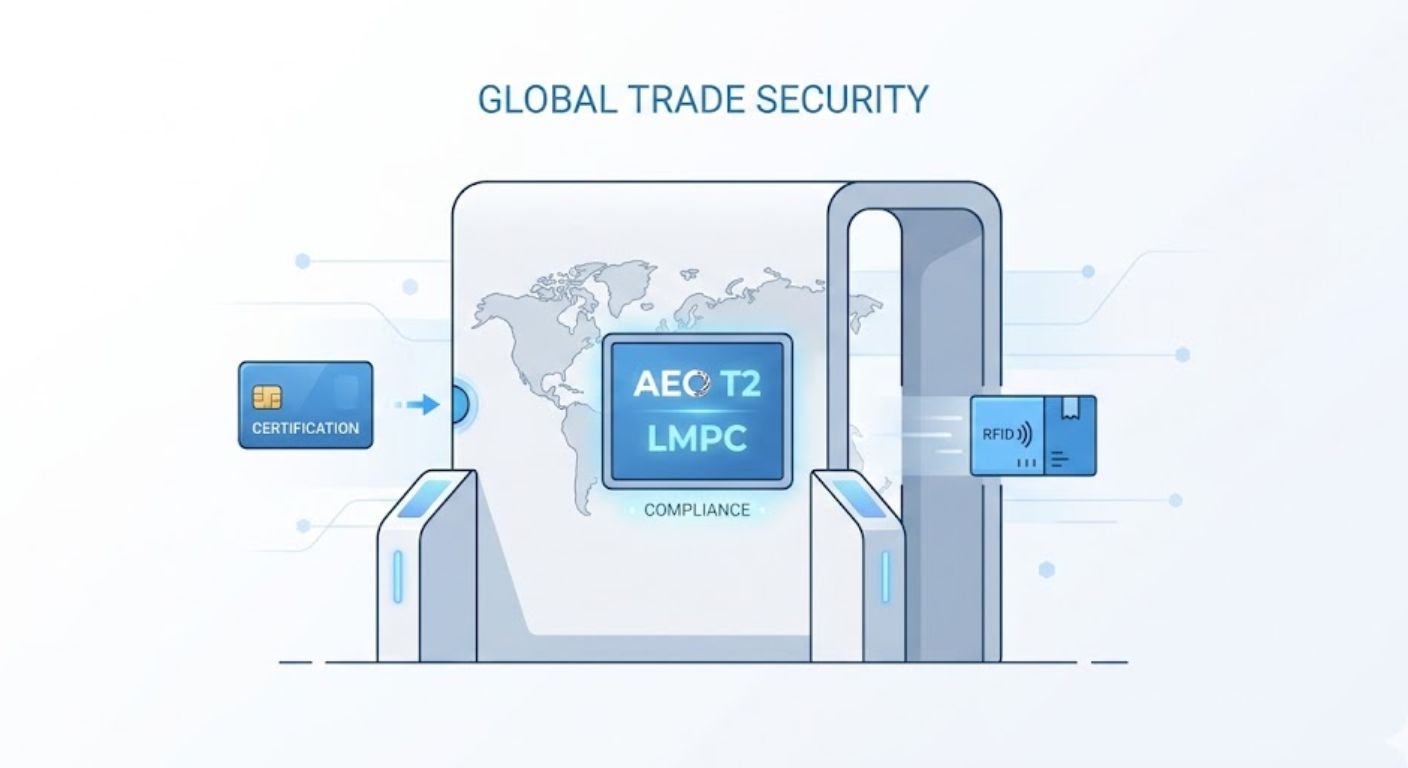
In today’s competitive global trade environment, businesses must not only focus on quality and pricing but also on compliance and operational efficiency. Two crucial certifications that can significantly improve your trade credibility and ease of doing business are AEO T2 Registration and LMPC Registration.
While AEO certification enhances trust with customs authorities, LMPC ensures compliance with legal metrology laws in India. Together, they form a strong foundation for businesses involved in import-export activities.
This article will help you understand both certifications, their benefits, and how you can leverage them to streamline your operations and boost growth.
What is AEO T2 Registration?
AEO T2 Registration (Authorized Economic Operator Tier 2) is part of a global program that recognizes businesses with strong compliance records and secure supply chain practices. It is issued by Indian Customs to businesses that meet specific criteria related to compliance, financial solvency, and internal controls.
Key Features of AEO T2 Registration
- Enhanced Trade Facilitation Benefits
Businesses with AEO T2 status receive faster customs clearance, reduced inspections, and priority treatment at ports. This leads to significant time savings, especially for companies handling large volumes of shipments. - Improved Global Recognition
AEO certification is internationally recognized, which means your business gains credibility not only in India but also with global trading partners. This can open doors to new markets and partnerships. - Lower Risk and Better Compliance
AEO-certified businesses are considered low-risk by customs authorities. This reduces the chances of shipment delays, penalties, or unnecessary scrutiny during import-export processes.
Benefits of AEO T2 Registration for Businesses
Achieving AEO T2 status can transform the way your business operates in international trade.
- Faster Cargo Clearance and Reduced Dwell Time
With priority processing and fewer physical inspections, shipments move quickly through customs. This reduces storage costs at ports and ensures timely delivery to customers. - Reduced Transaction Costs in the Long Run
Although obtaining certification requires effort and documentation, the long-term savings from fewer delays, lower demurrage charges, and efficient logistics outweigh the initial investment. - Stronger Supply Chain Security and Efficiency
AEO certification encourages businesses to adopt better internal controls, risk management practices, and secure logistics processes, leading to overall operational improvement.
What is LMPC Registration?
LMPC Registration (Legal Metrology Packaged Commodities Registration) is mandatory for importers, manufacturers, and packers dealing with pre-packaged goods in India. It ensures that products comply with labeling and packaging regulations under the Legal Metrology Act.
Key Requirements Under LMPC Registration
- Accurate Labeling of Packaged Goods
Businesses must display essential details such as product name, net quantity, manufacturer/importer details, and maximum retail price (MRP) on packaging. This ensures transparency for consumers. - Compliance with Legal Standards
LMPC registration ensures that your products meet government-defined standards, helping avoid legal complications and penalties. - Applicability to Importers and Manufacturers
Any business importing pre-packaged goods into India must obtain LMPC registration before selling them in the domestic market.
Why LMPC Registration is Essential
LMPC registration is not just a legal requirement—it also builds trust and credibility with customers.
- Avoidance of Legal Penalties and Seizures
Non-compliance with packaging and labeling rules can result in heavy fines or confiscation of goods. LMPC registration protects your business from such risks. - Enhanced Consumer Trust and Brand Image
Properly labeled products convey professionalism and reliability, which helps in building a strong brand reputation in the market. - Smooth Market Entry for Imported Goods
Importers can ensure hassle-free clearance and distribution of goods in India by complying with LMPC regulations.
How AEO T2 Registration and LMPC Registration Work Together
Although AEO T2 Registration and LMPC Registration serve different purposes, they complement each other effectively in international trade.
- Seamless Import Process with Compliance Assurance
AEO T2 ensures faster customs clearance, while LMPC ensures that imported goods meet legal requirements. Together, they minimize delays and compliance issues. - Reduced Risk Across the Supply Chain
While AEO focuses on secure and compliant trade practices, LMPC ensures product-level compliance. This dual approach strengthens your overall business operations. - Improved Business Credibility
Having both certifications signals to authorities, partners, and customers that your business adheres to high standards of compliance and professionalism.
Practical Example for Better Understanding
Consider an electronics importer bringing packaged gadgets into India.
- With AEO T2 Registration, the company benefits from faster customs clearance and reduced inspections, ensuring timely arrival of goods.
- With LMPC Registration, the company ensures all products are labeled correctly with required details such as MRP, importer information, and specifications.
As a result, the importer avoids delays, reduces compliance risks, and delivers products to market faster—gaining a competitive edge.
Step-by-Step Process to Get Registered
Steps for AEO T2 Registration
- Conduct a self-assessment of your compliance history, financial records, and internal processes to ensure eligibility for AEO certification.
- Prepare detailed documentation, including business records, security protocols, and compliance reports, before submitting your application.
- Undergo verification and audit by customs authorities, who will evaluate your business practices and grant certification upon approval.
Steps for LMPC Registration
- Identify whether your business falls under the category of importer, manufacturer, or packer of pre-packaged goods.
- Submit an application with required documents such as import-export code (IEC), business registration, and packaging details.
- Ensure that all product labels comply with legal metrology rules before launching them in the market.
Common Challenges and How to Overcome Them
- Complex Documentation and Compliance Requirements
Both registrations involve detailed documentation. Hiring experienced consultants or compliance experts can help simplify the process and avoid errors. - Delays in Approval
Incomplete applications or incorrect information can lead to delays. Ensuring accuracy and completeness in submissions can speed up approvals. - Maintaining Ongoing Compliance
Businesses must regularly update their processes and records to maintain certification status. Periodic audits and internal reviews can help stay compliant.
Best Practices for Businesses
- Keep all documentation updated and easily accessible for audits and inspections.
- Train your team on compliance requirements and standard operating procedures.
- Use digital tools to track shipments, documentation, and regulatory updates.
- Regularly review government notifications to stay aligned with changing policies.
Conclusion
Both AEO T2 Registration and LMPC Registration play a vital role in ensuring smooth and compliant business operations in India’s import-export landscape. While AEO enhances efficiency and trust with customs authorities, LMPC ensures that your products meet legal standards for sale in the Indian market.
Businesses that proactively adopt these certifications not only reduce risks but also gain a competitive advantage through faster operations, improved credibility, and better customer trust.
If you are looking to streamline your import-export operations and build a compliant, future-ready business, now is the time to act. Start your AEO T2 Registration and LMPC Registration process today, ensure your business meets all regulatory requirements, and unlock new opportunities in global trade.
Consult experts, prepare your documentation, and take a confident step toward sustainable business growth.
Read more about: Daily Car Insurance & UK Vehicle Insurance – Flexible, Affordable Cover Options
