

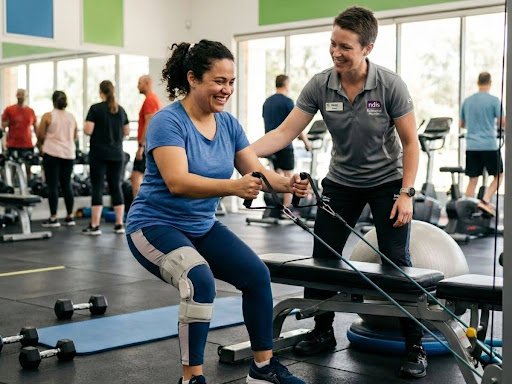
Living with disability often means facing physical challenges that can affect movement, confidence, and everyday independence. Through NDIS exercise physiology, participants can access tailored exercise programs designed to improve strength, mobility, balance, and functional capacity in a safe and supportive way. These services are delivered by qualified allied health professionals who understand disability-specific needs and long-term health goals. Rather than focusing only on fitness, the real aim is to improve how a person moves and functions in daily life. With the right support, participants can build physical resilience, reduce limitations, and achieve greater independence at home and in the community.
What Does Exercise Physiology Mean Under the NDIS?
Exercise physiology is a clinical allied health service that uses evidence-based exercise to improve physical function, mobility, and overall wellbeing. Under the NDIS, it can support participants whose disability impacts movement, strength, endurance, or daily independence. The focus is not on general gym training. Instead, it is about targeted movement strategies that help participants achieve practical and meaningful life goals.
How NDIS Exercise Physiology Supports Daily Function
Many participants use NDIS exercise physiology to improve how they manage everyday tasks. A personalised program may help with standing up safely, walking longer distances, climbing stairs, transferring in and out of bed, or reducing fatigue during routine activities. These functional improvements can make a significant difference in daily life, especially for people who want to become less reliant on support.
Building Strength for Safer Movement
Strength plays a major role in independence. Reduced muscle strength can make even basic tasks feel exhausting or unsafe. Exercise physiology programs often include resistance-based exercises that are adapted to each participant’s condition, mobility level, and tolerance. Over time, stronger muscles can support better posture, improve stability, and make movements like sitting, standing, and lifting easier and more controlled in real-life situations.
Improving Mobility and Balance with Confidence
Mobility is about more than just walking. It includes balance, coordination, joint control, and the ability to move safely through different environments. With NDIS exercise physiology, programs are often designed to improve gait, posture, flexibility, and movement confidence. This can be especially valuable for participants living with neurological, developmental, or musculoskeletal conditions where instability or fear of falling affects independence and participation.
Supporting Long-Term Independence
The real value of therapy is seen outside the clinic. Exercise physiology can help participants develop the physical capacity needed to cook, shower, dress, move around the home, and engage in community activities more safely. These gains may seem small at first, but over time they can create meaningful improvements in autonomy. Better physical function often leads to greater confidence, participation, and quality of life.
What Happens in an Exercise Physiology Session
An Accredited Exercise Physiologist usually begins with an assessment of movement, strength, balance, mobility, posture, and endurance. From there, they design a program based on the participant’s goals and physical capacity. Sessions may include stretching, strength training, balance drills, walking practice, or home-based exercise strategies. Progress is reviewed regularly so the program remains safe, relevant, and effective as the participant improves.
Exercise Physiology and Physiotherapy: Understanding the Difference
Exercise physiology and physiotherapy can both be valuable, but they often serve different purposes. Physiotherapy may focus more on diagnosis, pain management, manual therapy, and early-stage rehabilitation. Exercise physiology is usually more focused on long-term clinical exercise prescription and improving ongoing function through structured movement. In many cases, both services can work together to support better outcomes, depending on the participant’s needs and goals.
Conclusion
When delivered with the right clinical approach, NDIS exercise physiology can be a powerful support for building strength, improving mobility, and increasing independence in everyday life. It helps participants move with more confidence, manage daily tasks more safely, and work toward meaningful long-term goals that improve quality of life. For those exploring broader allied health support, combining exercise-based care with physiotherapy in Leichhardt NSW, can also create a more complete and practical pathway toward better movement and independence.
