

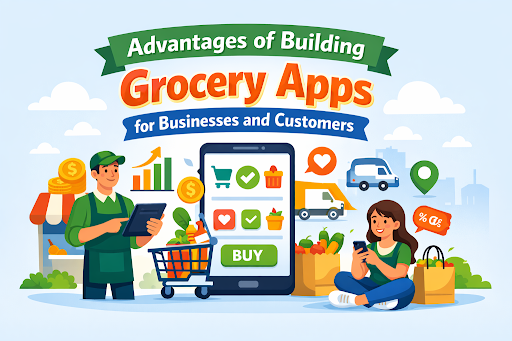
The grocery industry has undergone a quiet revolution over the past decade. What once required a physical trip to the store, a handwritten list, and a long checkout queue can now be handled in minutes from a smartphone. Grocery apps have moved from novelty to necessity, reshaping how people shop and how businesses operate. For both sides of the transaction, the benefits are substantial and growing.
A New Era for Grocery Shopping
The global online grocery market has expanded rapidly, accelerated by changing consumer habits and the demand for faster, more convenient services. Building a dedicated grocery app is no longer just a competitive advantage — it is increasingly a baseline expectation for any serious grocery business. Whether you run a small neighborhood market or a large supermarket chain, partnering with a reliable Grocery app development company can help you create a powerful digital presence while optimizing your operations. A well-designed app creates value at every level of the business.
Advantages for Businesses
Increased Revenue and Sales Volume
One of the most direct benefits for businesses is the measurable boost in sales. Grocery apps remove the physical limitations of a store, allowing customers to shop at any time, from any location. Impulse purchasing is also amplified through smart product recommendations, personalized offers, and in-app promotions. Research consistently shows that customers who shop via app spend more per transaction than those who shop in-store, partly because browsing online exposes them to a wider range of products.
Customer Retention Through Loyalty Programs
Grocery apps make it significantly easier to implement and manage loyalty programs. Businesses can track customer purchase history, award points automatically, and send personalized deals directly to users. This level of targeted engagement builds strong brand loyalty. Instead of generic discount coupons, businesses can offer rewards that match individual preferences — increasing the likelihood that customers return repeatedly rather than switch to a competitor.
Valuable Customer Data and Insights
Every interaction within a grocery app generates data. Businesses gain insight into what products are trending, which promotions drive conversions, what times customers are most active, and how purchasing behavior shifts across seasons. This intelligence enables smarter inventory management, better demand forecasting, and more effective marketing strategies. Unlike in-store shopping, digital behavior is trackable in real time, giving businesses the tools to act quickly and efficiently.
Streamlined Operations and Reduced Overhead
A well-integrated grocery app connects the customer-facing interface with backend inventory and supply chain systems. When a product goes out of stock, it can be flagged instantly, preventing customer frustration and reducing wasted labor. Order fulfillment becomes more organized through scheduled delivery slots, real-time driver tracking, and automated notifications. Over time, these efficiencies reduce operational costs while improving service quality. While considering digital transformation, businesses often evaluate the Grocery app development cost, which is outweighed by long-term operational savings and scalability.
Competitive Differentiation
In a crowded market, an intuitive, feature-rich grocery app sets a business apart. Offering features like scheduled delivery, same-day options, recipe-based shopping lists, or dietary filters creates a unique value proposition that competitors without an app simply cannot match. The app becomes part of the brand identity, reinforcing trust and modernity every time a customer opens it.
Advantages for Customers
Unmatched Convenience
For customers, the most obvious advantage is convenience. Grocery shopping can happen at 11 pm from a couch, during a lunch break at work, or while commuting. There is no need to physically navigate crowded aisles, wait in checkout lines, or drive across town. A few taps are enough to fill a cart, schedule delivery, and complete payment. For busy professionals, parents, elderly individuals, and people with mobility challenges, this shift is genuinely transformative.
Time Savings
Time is one of the most valuable resources for modern consumers. A grocery app eliminates travel time, browsing time, and waiting time. Saved shopping lists and repeat-order functions mean that regular household items can be reordered in seconds. Features like smart search and category filters help customers find exactly what they need without scrolling through hundreds of unrelated items. What used to take an hour can now be accomplished in ten minutes.
Better Price Awareness and Savings
Grocery apps give customers powerful tools to shop smarter. In-app exclusive discounts, digital coupons, and flash sales are common features that reward app users with lower prices. Price comparison becomes effortless when browsing online, and customers can review their cart total in real time before committing to a purchase. Loyalty points accumulate automatically, providing savings that in-store shoppers might miss simply because they were unaware of the program.
Personalized Shopping Experiences
Modern grocery apps use algorithms to learn from past purchases and browsing behavior. Over time, the app surfaces relevant product suggestions, alerts customers about restocked favorites, and curates promotions that align with individual preferences. Someone following a vegetarian diet, for instance, may see plant-based products featured prominently. This level of personalization makes shopping feel effortless and intuitive rather than overwhelming.
Transparency and Product Information
Customers increasingly want to know what is in their food. Grocery apps can display detailed nutritional information, ingredient lists, allergen warnings, sourcing details, and customer reviews all in one place. This transparency empowers better decision-making and builds trust between consumers and the brands they buy. Filtering by dietary requirements — gluten-free, organic, halal, vegan — is far easier in an app than navigating physical shelves.
Contactless and Secure Payments
Integrated payment options within grocery apps — including digital wallets, UPI, credit cards, and buy-now-pay-later services — make transactions fast and secure. Customers no longer need to carry cash or worry about card readers at checkout. Payment history is stored for easy reference, and security features such as biometric authentication and encrypted transactions provide peace of mind.
The Bigger Picture
The advantages of grocery apps extend beyond individual convenience or business profit. They contribute to reduced food waste through smarter inventory management, lower carbon footprints through optimized delivery routes, and greater food accessibility for underserved communities through home delivery. As technology continues to evolve — with AI-driven personalization, voice shopping, and augmented reality shelf browsing on the horizon — grocery apps will only become more deeply embedded in daily life.
For businesses willing to invest in a thoughtful, user-friendly app, the returns are clear: higher revenue, stronger customer relationships, and sharper operational efficiency. For customers, the reward is equally compelling: a shopping experience that respects their time, their preferences, and their budget. In the grocery industry, the app is no longer optional — it is the future.
