

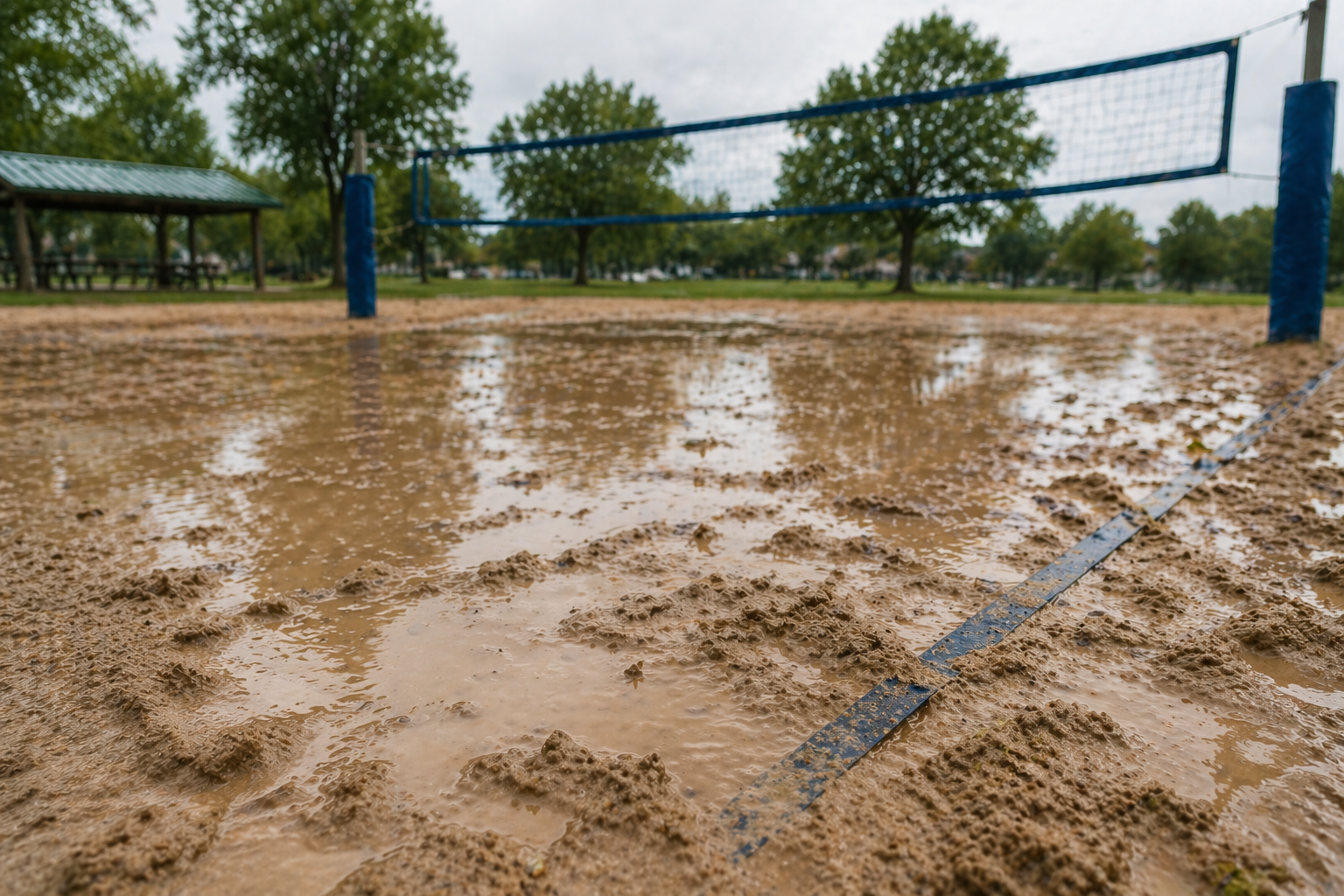
You ever walk onto a court after rain… thinking it will be soft and perfect… and then your foot sinks in like you stepped into wet cement? Yeah… not fun.
We have all had that moment. You even searched Volleyball court sand near me in California expecting a nice clean setup… and instead you get this heavy, sticky mess. At that point, playing almost feels like work.
So what is really going on here? Why do some courts bounce back quickly after rain… while others just fall apart?
Let us talk it through… like we are standing there brushing sand off our feet.
It Usually Comes Down to the Sand
First thing… not all sand is created equal. Sounds obvious, but it matters more than we think.
Some sand looks fine at first glance… but it has too much fine dust mixed in. And when rain hits that kind of surface, those tiny particles grab onto water instead of letting it pass through.
So instead of draining… the sand holds onto moisture.
That is when things start getting muddy. Clumpy. Heavy. Honestly… kind of gross to play on.
Good sand feels different. It is clean, a bit coarse, and loose under your feet. Water goes through it… not sit inside it.
When Water Has Nowhere to Go
Now picture this…
Rain falls… hits the court… and just stays there.
That usually means there is no proper drainage underneath. No base layer, no slope… nothing guiding the water away.
So what happens? The sand gets soaked… and stays soaked.
Even decent sand struggles in this situation. It is like trying to dry clothes in a damp room… not happening anytime soon.
Sand Gets Tired Too (Yep, Really)
We do not always notice this, but over time… sand changes.
With all the jumping, landing, dragging feet… even maintenance equipment rolling over it… the sand slowly compacts.
It loses that loose, fluffy feel.
And once that happens, water cannot move through it easily anymore. It just sits near the surface.
That is when we step on it and think… “why does this feel so heavy today?”
Dirt Sneaks In… Slowly
This part is kind of annoying because it happens quietly.
People walk in from outside areas… shoes bring in soil… wind carries dust… and little by little, that clean sand gets mixed with dirt.
At first, we barely notice.
But over time, it changes how the sand behaves. It starts holding water more… almost like regular ground.
And once that happens… rain turns the whole court into a muddy patch.
Fixing that is not quick either. It usually means bringing in fresh sand or doing a proper cleanup.
Maintenance… Or the Lack of It
Let us be honest… some courts just do not get enough care.
No regular raking. No leveling. No checking for low spots.
So what happens? Small dips form. Water collects in those dips. Sand gets uneven.
And then one rainy day exposes everything.
A well-maintained court still gets wet… sure… but it dries out faster and feels playable again much sooner.
A neglected one? It stays messy way longer than it should.
Quick Side Thought… About Sand Types
Somewhere in the middle of all this, we start wondering about volleyball court sand types.
And yeah… it matters.
Different types behave differently. Some drain well. Some hold moisture. Some stay loose. Some compact quickly.
So choosing the right kind from the start saves a lot of trouble later. It is one of those things people overlook… until they regret it.
Weather Does Its Own Thing Too
Sometimes… we do everything right… and the weather still wins.
Heavy rain, back-to-back showers, cloudy days… all of that slows down drying.
If the court sits in shade or does not get much airflow… it takes even longer.
But still… a properly built and maintained court handles this way better than one with weak setup.
So… How Do We Avoid That Muddy Mess?
Nothing complicated here. Just a few simple habits:
- Use clean, well-graded sand from the beginning
- Make sure there is a proper drainage base underneath
- Keep the sand loose with regular raking
- Watch out for dirt mixing in over time
And yeah… when we look for sand again, it helps to focus on quality… not just what is available nearby.
Final Thoughts
At the end of the day… muddy courts are not just bad luck.
It is usually a mix of small things… sand quality, drainage, compaction, and how well the court is looked after.
Each one plays a part.
The good news? Most of this is preventable.
And honestly… when the sand feels right under your feet… the whole game feels different. Lighter. Easier. Way more fun.
FAQs
1. What type of sand is best for volleyball courts?
Clean, washed sand with very little dust works best. It should feel soft but still allow water to drain through.
2. Can muddy sand be fixed without replacing it?
Sometimes yes. Light cases can improve with drying and raking. But if too much dirt is mixed in, replacing it is often the better option.
3. How often should a volleyball court be maintained?
Regular care helps a lot. Raking and leveling every week or after heavy use keeps the sand in good shape.
4. Why does water stay on top of some courts?
Usually because of poor drainage or compacted sand that does not let water pass through easily.
5. Is drainage more important than sand quality?
Both matter. Good sand needs proper drainage to work well… and good drainage cannot fully fix poor sand.
