

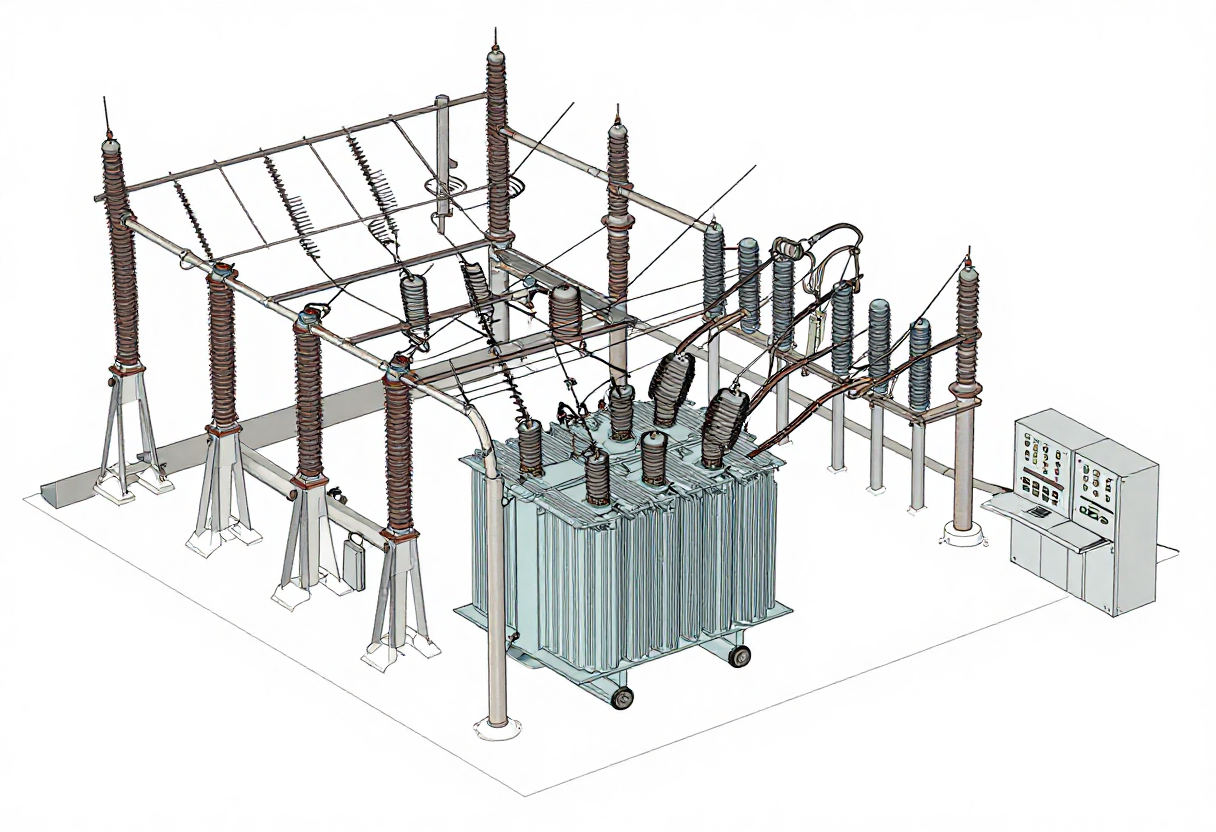
Electrical substations are the backbone of modern power systems. Every city, industry, and infrastructure project depends on reliable substations that safely transform, control, and distribute electrical energy. A well-planned substation is not just about placing equipment—it is about precision engineering, safety compliance, efficiency, and long-term reliability.
This guide explains the complete process of electrical substation design and layout, from concept to construction, in a practical and engineering-focused way.
1. Understanding the Role of Electrical Substations
A substation is a critical node in the power network where voltage levels are transformed and electricity is controlled for safe distribution. It connects generation systems to transmission and distribution networks.
Key functions include:
- Voltage transformation (step-up or step-down)
- Power switching and protection
- System monitoring and control
- Fault isolation and stability management
Modern systems require advanced planning in the design of electrical substation to ensure minimal losses and maximum reliability. Whether it is a transmission substation or a distribution hub, the core objective remains stable and efficient power flow.
2. Planning and Site Selection for Substation Design
Proper planning is the foundation of every successful project. Before electrical design begins, engineers must evaluate the site carefully.
Important considerations include:
- Load demand and future expansion
- Environmental impact and soil conditions
- Accessibility for maintenance
- Proximity to transmission lines or industrial loads
- Safety clearance from residential areas
Good planning ensures the substation design build process remains cost-effective and scalable. Engineers also consider natural hazards like flooding, seismic activity, and temperature extremes to improve long-term resilience.
A poorly selected site can increase construction costs and reduce system reliability, making this stage one of the most important in substation development.
3. Core Electrical Equipment and Their Arrangement
The heart of every substation lies in its equipment layout. Proper arrangement ensures smooth operation, safety, and easy maintenance.
Major components include:
- Power transformers
- Circuit breakers
- Busbars
- Isolators and disconnect switches
- Current and voltage transformers (CTs & PTs)
- Protection relays and control panels
In a well-structured layout, equipment is arranged to minimize cable lengths and reduce energy losses. For example, transformers are placed close to incoming transmission lines, while control rooms are positioned in safe zones.
A properly engineered layout improves operational efficiency and reduces downtime during faults or maintenance activities.
4. Civil Engineering and Structural Design Considerations
Substations are not only electrical systems—they are also civil engineering structures. Strong foundations, proper drainage, and durable layouts are essential.
Key civil aspects include:
- Control building design
- Equipment foundation design
- Cable trenches and routing systems
- Fire safety walls and oil containment pits
- Grounding grid installation
In modern substation design build projects, civil and electrical teams work together from the beginning. This integrated approach ensures that the layout supports both operational and safety requirements.
Proper grounding is especially critical, as it protects both equipment and human life from electrical faults and lightning surges.
5. Safety Standards and Protection Systems
Safety is the most important aspect of any substation. A minor fault can lead to major system failures if protection systems are not properly designed.
Essential safety systems include:
- Relay protection systems
- Circuit breaker coordination
- Lightning arresters
- Fire detection and suppression systems
- Earthing and grounding networks
Engineers must follow international standards such as IEC and IEEE guidelines to ensure compliance. The integration of smart protection systems also allows real-time monitoring and automatic fault isolation.
Even in a complex substation substation network (multiple interconnected substations), coordinated protection ensures system stability and reduces cascading failures.
6. Modern Trends in Substation Design and Automation
The energy industry is rapidly evolving, and substations are becoming smarter and more automated.
Key modern advancements include:
- Digital substations with IEC 61850 communication
- SCADA-based remote monitoring systems
- GIS (Gas Insulated Switchgear) technology for compact design
- AI-based predictive maintenance systems
- Smart grid integration
These innovations improve efficiency, reduce human error, and enhance system reliability. A modern design of electrical substation now focuses not only on hardware but also on data communication and automation.
Digital transformation is especially important for renewable energy integration, where power flow is variable and requires real-time control.
Conclusion
Electrical substation design is a complex engineering discipline that combines electrical, civil, and control system expertise. A successful project depends on proper planning, accurate equipment layout, strong safety systems, and modern automation technologies.
From initial planning to final commissioning, every step in the substation design build process plays a vital role in ensuring reliable and efficient power delivery.
As power demand continues to grow, well-designed substations will remain essential for supporting industries, cities, and future smart grid systems.
