

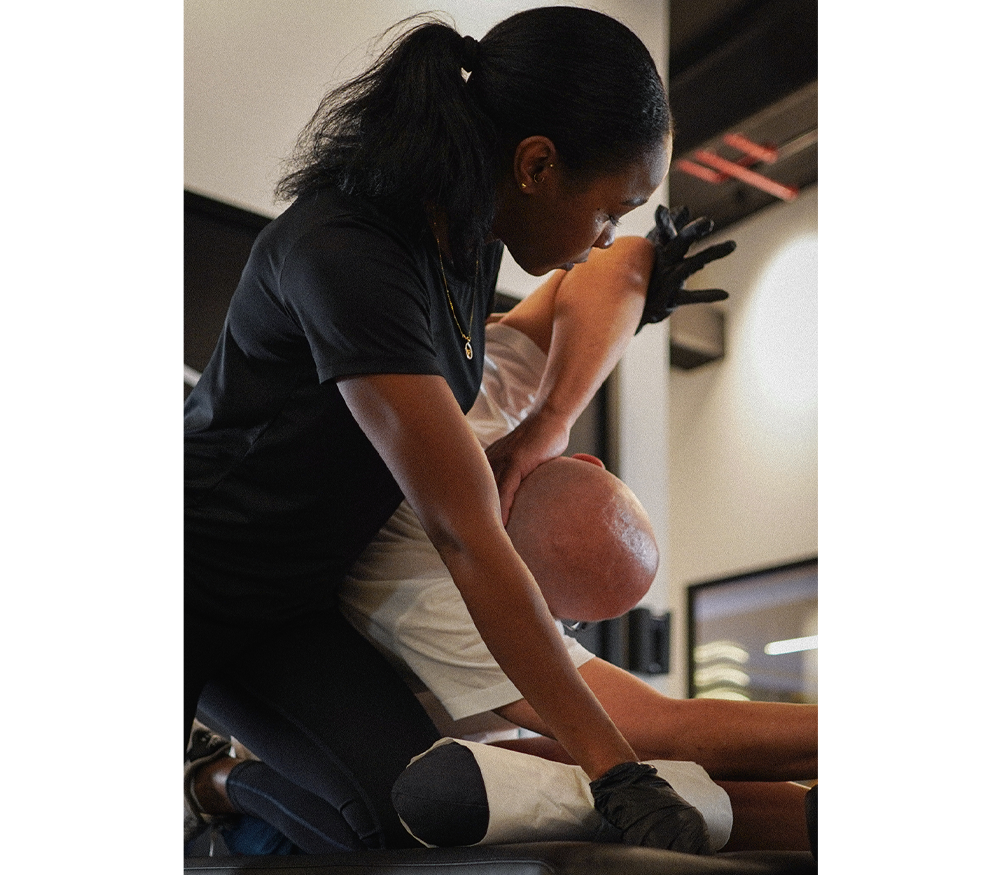
You’ve been stretching for months, and your body still feels just as tight? Well, that’s not a problem, that technique problem. Passive assisted stretching fixes that. A trained professional moves the body into positions it cannot reach alone and holds it there long enough to actually make a difference.
What Is Passive Assisted Stretching?
A trained technician moves the body into stretch positions while the person stays fully relaxed. Unlike stretching alone, you are not fighting your own muscle resistance; someone else handles the movement, so your body can open up. Most people feel a noticeable difference in tightness and mobility after just one session.
Benefits of Passive Assisted Stretching
Passive assisted stretching goes well beyond flexibility. Done regularly with a trained professional, it brings real changes to how the body moves and feels:
· Better Flexibility and Range of Motion
The body reaches positions it simply cannot get to alone. Holding those positions long enough allows muscle fibres and connective tissue to gradually lengthen over time.
· Improved Posture
Tight muscles pull the body out of alignment without anyone realising it. Regular passive assisted stretching corrects those imbalances and helps the body sit and stand the way it should.
· Reduced Muscle Tension and Pain
Chronic tightness in the neck, back, and hips builds up slowly. Passive assisted stretching targets those deep tension points and releases them in a way that foam rolling or self-massage rarely achieves.
· Better Sleep and Recovery
A body that carries less tension recovers faster and rests more deeply. Many people notice improved sleep quality within just a few sessions.
Examples of Passive Assisted Stretching
Passive assisted stretching covers the full body. A trained Flexologist works through specific muscle groups depending on what the individual needs most:
· Hamstring Stretch
The person lies flat while the technician lifts one leg and holds it at the point of resistance. This targets the back of the thigh, one of the most commonly tight muscle groups, especially in people who sit for long hours.
· Hip Flexor Stretch
The hip gets guided into an extended position that most people simply cannot hold on their own. Prolonged sitting locks up the hip flexors over time, and this stretch goes straight after that tension, which also takes pressure off the lower back.
· Shoulder and Upper Back Stretch
One arm is guided across the chest or behind the back while the technician applies controlled pressure. This works through the shoulders and upper back, where most people carry daily stress.
· Glute and Piriformis Stretch
The leg is positioned in a figure-four shape while the technician applies gentle pressure to deepen the stretch. This is one of the most effective moves in this stretching for people who carry tension deep in their hips from long hours of sitting.
Is Partner Assisted and Passive Assisted Stretching the Same?
Partner-assisted stretching is different from passive-assisted stretching. In simple words, partner-assisted stretching is something when another person assists or trains you how to stretch your body. In passive-assisted stretching, gravity or props provide support. You stay relaxed in both.
Conclusion
Passive assisted stretching is one of the most effective ways to improve flexibility, reduce pain, and move better, without putting strain on the body. For anyone dealing with tightness, poor posture, or slow recovery, a session with a trained professional makes the kind of difference that solo stretching never quite manages.
