

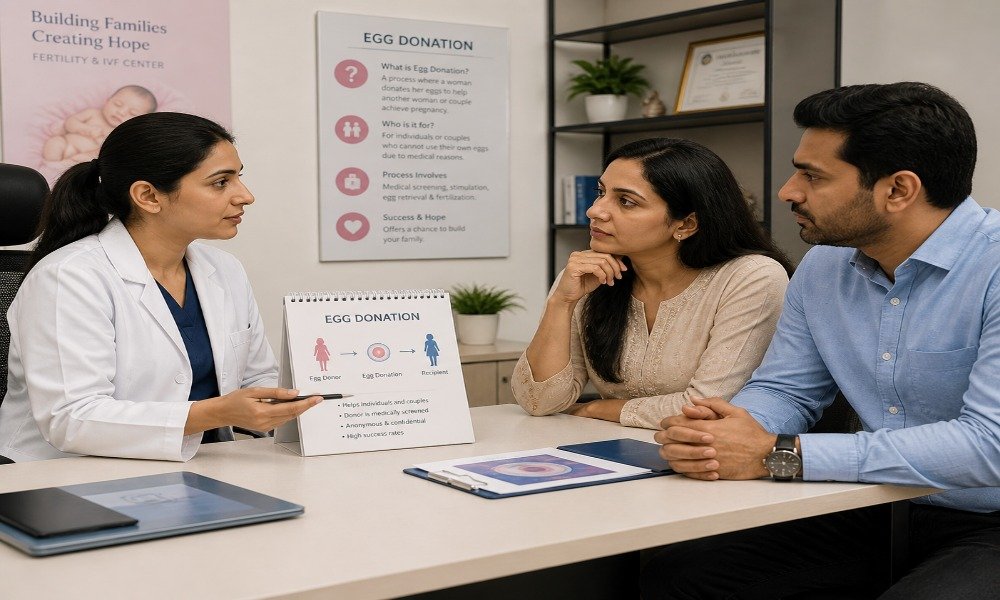
Egg donation is a powerful way to help families grow. It offers hope to those facing fertility challenges and gives healthy women a chance to make a meaningful impact. With the right guidance, the process becomes safe, clear, and rewarding.
At Indian Egg Donors, we provide expert support for both donors and intended parents. Our goal is to ensure a smooth journey with full transparency, medical care, and emotional support at every stage.
Understanding Egg Donation
Egg donation is a medical process where a healthy woman donates her eggs. These eggs are fertilized in a lab through IVF and then transferred to the intended mother or a surrogate.
This option is ideal for:
- Women with low egg quality
- Couples facing infertility
- Single parents
- Same-sex couples
With expert care, egg donation offers strong chances of success and a clear path to parenthood.
Being an Egg Donor
Many women are curious about being an egg donor. It is a responsible and rewarding decision.
As a donor, you help someone achieve their dream of having a child. The process is guided by experienced doctors and fertility specialists.
What to Expect
- Medical screening and consultation
- Hormone treatment to stimulate egg production
- Egg retrieval procedure
- Short recovery period
Being an egg donor requires commitment, but it is safe when managed by professionals. Most donors return to their normal routine within a day or two after the procedure.
Requirements for Egg Donation
To ensure safety and success, clinics follow strict Requirements for egg donation. These criteria help maintain high medical standards.
Basic Eligibility
- Age between 21 and 39 years
- Good physical and mental health
- Regular menstrual cycle
Lifestyle Requirements
- Non-smoker
- No drug use
- Healthy weight and lifestyle
Medical Screening
- Blood tests
- Hormone evaluation
- Genetic testing
Meeting these Requirements for egg donation ensures a safe experience for both the donor and the recipient.
Egg Donation Procedure
The egg donation procedure is carefully planned and monitored. Each step is handled by experienced professionals.
Step 1: Application
The donor completes a detailed application with personal and medical information.
Step 2: Screening
Medical tests confirm eligibility. Psychological evaluation may also be included.
Step 3: Matching
Donors are matched with intended parents based on preferences and compatibility.
Step 4: Hormone Treatment
The donor takes injections for about 10–12 days. This stimulates the ovaries to produce multiple eggs.
Step 5: Egg Retrieval
Eggs are collected through a minor outpatient procedure. It takes about 20–30 minutes.
Step 6: Recovery
The donor rests for a short time and can return home the same day.
The egg donation procedure is safe and effective when performed under expert supervision.
Egg Donation Cycle
The egg donation cycle is the complete timeline of the process. It includes preparation, treatment, and egg retrieval.
Key Phases
- Screening and approval
- Matching with intended parents
- Hormonal stimulation
- Egg retrieval
The cycle usually lasts a few weeks. During this time, doctors monitor the donor closely to ensure safety and success.
A well-managed egg donation cycle increases the chances of a successful pregnancy for intended parents.
Egg Donation Success Rates
One of the most important factors is egg donation success rates. These rates are generally higher than traditional IVF because donor eggs come from healthy, screened individuals.
Factors That Affect Success
- Age and health of the donor
- Quality of the embryo
- Expertise of the clinic
- Health of the recipient
With advanced technology and proper care, egg donation success rates continue to improve. Choosing a trusted agency plays a key role in achieving positive outcomes.
Benefits for Donors
Becoming a donor offers both emotional and practical benefits.
Emotional Benefits
- Helping someone build a family
- Personal satisfaction and pride
Practical Benefits
- Financial compensation
- Free health screening
Donors receive full support throughout the journey, ensuring comfort and confidence.
Benefits for Intended Parents
Egg donation provides new hope for families.
Key Advantages
- Higher success rates
- Access to healthy donor eggs
- Opportunity to experience parenthood
With the right support, intended parents can move forward with confidence.
Why Choose Indian Egg Donors
Choosing the right agency is essential for a successful journey. Indian Egg Donors is a trusted name in fertility support.
What We Offer
- Verified and screened donor profiles
- Transparent and ethical process
- Experienced fertility specialists
- Personalized care and guidance
We focus on safety, trust, and successful outcomes for both donors and parents.
Frequently Asked Questions
1. What is involved in being an egg donor?
Being an egg donor involves medical screening, hormone treatment, egg retrieval, and a short recovery period. The process is safe and supervised by experts.
2. What are the Requirements for egg donation?
You must meet age, health, and lifestyle criteria. Medical tests are required to ensure eligibility.
3. Is the egg donation procedure painful?
The egg donation procedure is done under sedation. Most donors feel minimal discomfort and recover quickly.
4. How long does an egg donation cycle take?
The egg donation cycle usually takes a few weeks from screening to egg retrieval.
5. What are egg donation success rates?
Egg donation success rates are generally high, especially when using healthy donor eggs and experienced clinics.
Final Thoughts
Egg donation is a life-changing journey. It brings hope to families and allows donors to make a meaningful impact.
Understanding being an egg donor, the Requirements for egg donation, and the full process helps you take the first step with confidence. With proper care, the journey becomes safe, smooth, and rewarding.
If you are ready to begin or want expert guidance, connect with Indian Egg Donors today.
📞 Call: (212) 661-7177
📧 Email: info@indianeggdonors.com
