

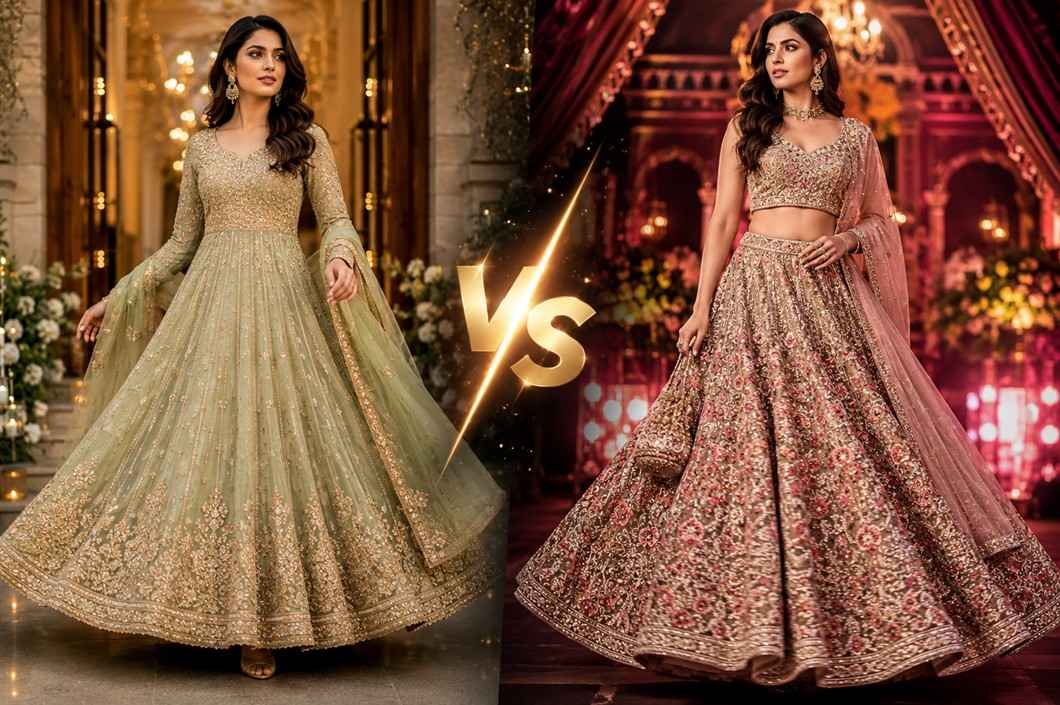
Some outfits do more than dress the moment. They shape how a woman walks into a room, how she moves through the evening and how confidently she carries herself. That is exactly why the conversation around Anarkalis and lehengas never really disappears.
Both silhouettes have remained central to festive wear for years, yet they create very different impressions. One flows with softness and ease. The other brings structure, volume and visual drama. Choosing between them is rarely about which is better. It is more about where it is being worn, how long the event lasts and the kind of presence it creates.
That is why thoughtfully selected Indian dresses still hold their place season after season. Fashion buyers increasingly look for pieces that look beautiful in photographs and are practical enough to wear comfortably for several hours.
What Really Sets These Two Silhouettes Apart?
At first glance, both belong to festive dressing. But the construction changes everything.
An Anarkali usually has a fitted bodice that opens into a flowing flare. The movement feels fluid, which makes the silhouette elegant without looking heavy.
A lehenga works differently. It separates the upper and lower body into distinct elements. The blouse gives structure, while the skirt creates volume and depth. That contrast often gives the outfit more visual impact.
In contemporary occasion styling, Anarkalis often feel graceful and effortless. Lehengas tend to feel more statement-driven.
Which Anarkali Styles Feel Effortlessly Elegant?
Floor-Length Anarkali
A floor-length Anarkali remains one of the most dependable choices in festive dressing. The longer flare creates movement with every step and photographs beautifully under evening lighting.
Deep emeralds, wine tones, muted gold embroidery and threadwork often give this silhouette lasting appeal. It works especially well for receptions, engagement dinners and formal festive evenings.
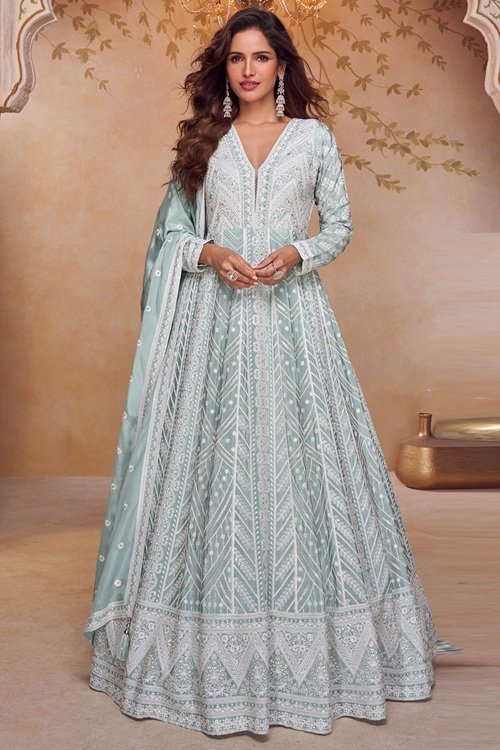
Among refined Indian suits, this continues to feel timeless because it balances elegance with comfort.
Knee-Length Anarkali
The knee-length version feels lighter and slightly more relaxed. It is often chosen for daytime celebrations, intimate gatherings and pre-wedding functions.
Printed panels, delicate embroidery and lighter fabrics give it freshness without losing its traditional character. When paired with straight trousers or tapered bottoms, the silhouette feels polished without becoming overly formal.
Short Anarkali with Sharara
This version brings more energy and movement. The shorter upper layer paired with a fuller lower silhouette creates a playful but occasion-ready look.
It works especially well for sangeet evenings, music-led celebrations and festive family events where ease of movement matters.
Which Lehenga Styles Create More Impact?
Classic Embroidered Lehenga
A classic lehenga continues to hold its place because it instantly creates an occasion presence. The skirt’s volume adds drama, while the blouse beautifully frames the upper body.
Mirror work, tonal embroidery, zari borders and textured fabrics often make this silhouette especially memorable. It is often chosen for larger celebrations where the entrance matters.

Many women selecting Indian wedding dresses naturally gravitate towards this shape because it feels celebratory from every angle.
Saree Style Lehenga
This silhouette combines draped elegance with easier wearability. It offers the visual softness of a saree without the need for constant adjustment.
That makes it particularly useful for longer functions, reception evenings and events where movement and comfort matter equally.
Corset Lehenga
The corset lehenga introduces a more sculpted feel. The fitted upper half defines the waist, while the skirt keeps the look festive and feminine.
This silhouette has become increasingly popular because it feels contemporary while still rooted in occasion dressing.
Which Works Better for Different Occasions?
The answer often depends on how the event feels.
For daytime gatherings, engagement lunches and smaller celebrations, Anarkalis often feel more natural. They move easily, sit comfortably and usually feel less structured over long hours.
For evening receptions, larger wedding celebrations and grand entrances, lehengas usually create a stronger visual impact. The shape carries more volume, which naturally draws attention.
Fashion stylists often look at three practical things before choosing:
- how long the event will last
- how much movement the occasion involves
- whether the mood feels intimate or dramatic
That small decision often makes a noticeable difference.
Can Modern Styling Change the Entire Look?
Absolutely. An Anarkali can feel more contemporary when styled with sharper jewellery, lighter dupattas or statement sleeves. A lehenga can feel softer when paired with tonal embroidery, fluid drapes or lighter blouse detailing.
This is also where modern Indo-Western dresses have influenceddifferent festive wear. Structured capes, belted drapes and cleaner silhouettes have changed how traditional pieces are now styled.
Even colour direction plays a role. Jewel tones often create evening richness, while blush, sage, ivory and muted pastels feel fresher during daytime celebrations.
What Are Stylists and Fashion Buyers Choosing Today?
A well-chosen outfit usually earns its place by being wearable more than once.
Anarkalis often lend themselves to repeat styling more easily because jewellery, trousers and dupattas can completely change the mood. Lehengas, meanwhile, often become standout pieces that remain memorable for milestone occasions.
That is why the smartest festive wardrobes usually include both. One brings graceful ease. The other brings statement presence.
Conclusion
The difference between Anarkali and lehenga is not simply about silhouette. It is about mood, movement and occasion. An Anarkali often feels elegant, fluid and effortless. A lehenga brings structure, volume and celebration. When chosen thoughtfully, both continue to deserve their place among timeless festive favourites.
