

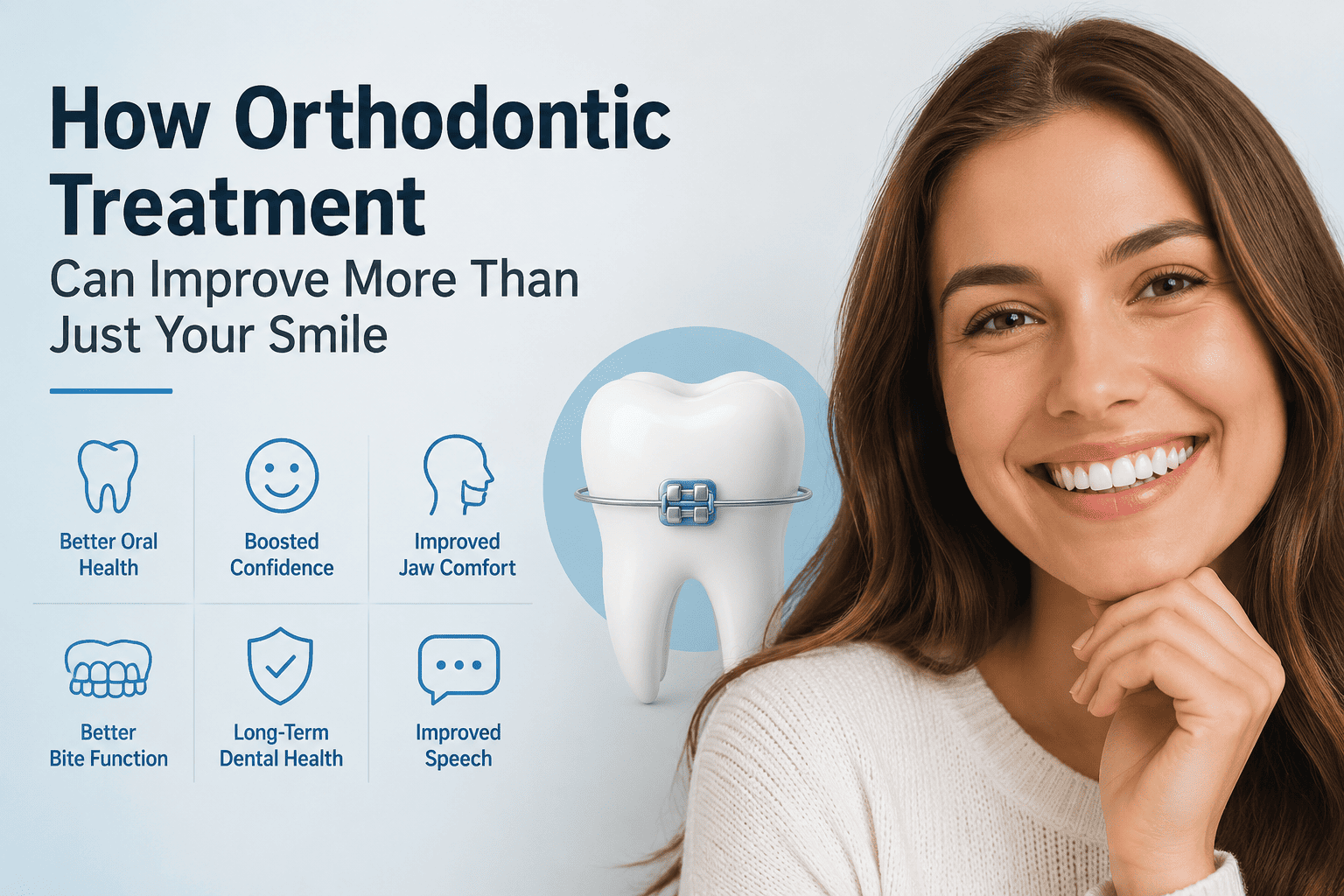
A straight smile is often the first thing people think about when orthodontic treatment comes up. That is understandable. Teeth that look aligned can make someone feel more confident in photos, conversations, and everyday social moments. But orthodontics is not only about appearance. In many cases, treatment can also support better oral function, easier cleaning, healthier bite alignment, and long-term dental comfort.
Modern orthodontic care focuses on how the teeth, jaws, bite, and facial structure work together. When teeth are crowded, spaced, rotated, or affected by bite problems, the concern is not only cosmetic. These issues can make brushing harder, place uneven pressure on certain teeth, affect chewing, and sometimes contribute to jaw strain. For children, orthodontic monitoring can also guide developing teeth and jaws before small problems become more complex. For adults, treatment can support a healthier mouth while also improving confidence.
That is why many families and adults now look at orthodontic care as an investment in both appearance and oral health. The benefits often go far beyond a better-looking smile.
Orthodontics Supports Better Bite Function
A healthy bite means the upper and lower teeth meet in a balanced way. When the bite is off, the teeth may not share pressure evenly during chewing. Some teeth may take more force than they should, while others may not contact properly at all. Over time, this imbalance can contribute to enamel wear, tooth sensitivity, chipped edges, and discomfort while eating.
Orthodontic treatment can correct many bite-related concerns, including overbites, underbites, crossbites, open bites, crowding, and spacing. The goal is not only to move teeth into a straighter position but also to improve how the bite works during daily function.
For example, a person with a deep overbite may notice that the upper teeth cover too much of the lower teeth. Someone with a crossbite may chew unevenly because the upper and lower teeth do not fit together correctly. A patient with an open bite may find it harder to bite into certain foods because the front teeth do not meet. These problems can affect comfort, function, and long-term tooth wear.
When orthodontic treatment improves bite alignment, chewing often becomes more balanced. Teeth are better positioned to do their job, and the jaw does not have to compensate as much for poor alignment.
Straighter Teeth Are Often Easier to Clean
Crowded or overlapping teeth can create tight spaces where plaque and food debris collect. Even people who brush and floss carefully may struggle to clean these areas well. When plaque remains around the gumline or between teeth, the risk of cavities, gum inflammation, and bad breath can increase.
Orthodontic treatment can make daily oral hygiene more manageable by improving tooth position. Straighter teeth often create better access for toothbrush bristles, floss, interdental brushes, or water flossers. This does not replace good hygiene habits, but it can make those habits more productive.
This is one reason orthodontics should not be seen as purely cosmetic. A smile that is easier to clean can support better oral health for years after treatment. Patients still need regular dental checkups, professional cleanings, and consistent home care, but improved alignment can remove some of the physical barriers that make cleaning difficult.
For children and teens, this can be especially useful because they are still building long-term hygiene habits. For adults, it can matter even more if crowding has made certain areas hard to maintain for many years.
Orthodontic Treatment Can Reduce Uneven Tooth Wear
Teeth are strong, but they are not designed to handle constant uneven pressure. When the bite is misaligned, certain teeth may hit first or harder than others. This can lead to abnormal enamel wear, flattening, chips, cracks, or sensitivity.
Some people do not notice this problem right away. It may develop gradually. A dentist might point out worn edges, uneven contact, or signs of stress on specific teeth. Orthodontic treatment can help by moving teeth into positions that distribute biting forces more evenly.
This is particularly important because enamel does not grow back once it is worn away. Protecting tooth structure is a long-term priority. Orthodontic care can be part of that protection when poor alignment is contributing to excessive wear.
In some cases, orthodontics may also support future dental work. Teeth that are properly aligned can make crowns, bridges, implants, or other restorative treatments easier to plan. This is why orthodontists sometimes work alongside general dentists, periodontists, oral surgeons, or other dental specialists when a patient has more complex needs.
It Can Improve Chewing Comfort
Chewing is one of the most basic functions of the mouth, but bite problems can make it less efficient. When teeth do not meet properly, certain foods may be harder to chew. A person may favor one side of the mouth, avoid certain textures, or feel discomfort after meals.
Orthodontic treatment can improve the way teeth come together, which may make chewing feel more natural and balanced. This does not mean every digestive or jaw concern is solved by orthodontics, but bite correction can remove one common barrier to comfortable eating.
For growing children, chewing issues may also signal that the teeth or jaws are not developing in the best position. An orthodontic evaluation can identify whether early treatment, monitoring, or future care may be needed. For adults, treatment may address long-standing bite problems that have affected comfort for years.
A better bite can make everyday eating feel easier. That is a practical benefit many patients appreciate once treatment is complete.
Speech May Benefit from Better Alignment
Teeth, tongue position, lips, and jaw movement all play a role in speech. Certain alignment issues can affect how sounds are formed. For example, gaps, open bites, or jaw discrepancies may contribute to lisping or unclear pronunciation in some patients.
Orthodontic treatment is not a speech therapy replacement, and not every speech concern is caused by tooth alignment. However, when tooth or jaw position is part of the issue, orthodontics may support clearer sound formation. In some cases, orthodontic care and speech therapy may work together as part of a broader treatment plan.
Parents often notice speech concerns early, especially when a child has difficulty pronouncing certain sounds. Adults may also become more aware of speech patterns in professional or social settings. An orthodontic consultation can help determine whether alignment may be playing a role.
Orthodontics Can Support Jaw Comfort
Jaw discomfort can have many causes, including stress, clenching, grinding, injury, joint concerns, and bite imbalance. Orthodontic treatment is not a guaranteed solution for jaw pain or TMJ-related symptoms. Still, in certain cases, improving bite alignment may reduce strain caused by poor tooth positioning.
When teeth do not meet evenly, the jaw may shift to find a comfortable resting or chewing position. Over time, that compensation can place stress on muscles and joints. By improving alignment, orthodontic treatment may create a more balanced bite relationship.
A professional evaluation is important because jaw discomfort should not be treated with assumptions. An orthodontist can assess the bite, jaw movement, tooth wear, and related symptoms before recommending care. Sometimes orthodontics is appropriate. Other times, the patient may need a different dental or medical approach.
It Can Improve Confidence in Daily Life
The emotional benefits of orthodontic treatment should not be dismissed. Many people feel self-conscious about crowded teeth, gaps, bite issues, or a smile they try to hide. That self-consciousness can affect how often they smile, how they speak in groups, and how comfortable they feel in photos or professional settings.
A more aligned smile can support confidence, but the change is often deeper than appearance. Patients may feel more comfortable laughing, speaking, meeting clients, attending school, or participating in social events. For teens, this confidence can matter during important developmental years. For adults, it can influence personal and professional interactions.
This is one reason orthodontic treatment is often described as life-changing. The physical transformation may be visible, but the emotional shift can be just as meaningful.
Children Can Benefit from Early Orthodontic Monitoring
Not every child needs braces at a young age. In fact, many children are simply monitored until the timing is right. However, early orthodontic evaluations can identify developing issues with jaw growth, tooth eruption, spacing, crowding, habits, and bite alignment.
Early monitoring allows an orthodontist to decide whether a child needs treatment now, later, or not at all. Some problems are easier to guide while the jaw is still growing. Palate expanders, space maintainers, or limited early treatment may be recommended in specific cases. Other children may only need observation until most permanent teeth come in.
This approach can prevent unnecessary treatment while still catching problems at the right time. Parents gain clarity, and children receive care based on growth and development rather than guesswork.
Adults Have More Treatment Options Than Ever
Many adults assume orthodontic treatment is only for children and teens. That is no longer true. Adults can often benefit from braces or clear aligners as long as their teeth and gums are healthy enough for movement.
Modern treatment options have also made adult orthodontics more appealing. Clear aligners, ceramic braces, and more discreet treatment plans can fit into professional and social lifestyles. Some adults choose orthodontics before cosmetic dental work, while others seek treatment because crowding, shifting, or bite problems have become more noticeable over time.
For adults in Ohio comparing treatment choices, Mellion Orthodontics offers information on orthodontics and braces for adults, including traditional braces and Invisalign options. This type of service page can be useful for patients who want to understand what adult treatment may involve before scheduling a consultation.
Adult treatment is not about chasing perfection. It is often about creating a healthier, more functional smile that supports long-term dental stability.
Orthodontics Can Support Long-Term Dental Planning
Teeth naturally shift over time. Missing teeth, gum changes, aging, clenching, and previous dental work can all affect alignment. When these changes are ignored, bite problems may become more complicated.
Orthodontic treatment can play a role in long-term dental planning by improving tooth position before other care is completed. For example, a patient may need space opened for an implant, crowding corrected before veneers, or bite alignment improved before restorative work. In these cases, orthodontics becomes part of a larger oral health strategy.
This is especially important for adults who have delayed care or who have multiple dental concerns. A coordinated plan can protect the teeth, improve function, and create a better foundation for future treatment.
Treatment Should Be Personalized
No two smiles are exactly alike. The right orthodontic plan depends on age, bite condition, tooth position, jaw growth, oral health, lifestyle, and treatment goals. Some patients are good candidates for clear aligners. Others may need braces because their case requires more controlled movement. Some children may need early intervention, while others can wait.
A personalized consultation is the best way to understand what is realistic. During an orthodontic evaluation, the provider may review photos, X-rays, digital scans, bite relationships, facial balance, and patient concerns. From there, a treatment plan can be created around health, function, and appearance.
Patients exploring care for themselves or their families can also review the broader orthodontic services in Ohio available through Mellion Orthodontics, including treatment options for children, teens, adults, Invisalign aligners, retainers, and related orthodontic needs.
The best orthodontic care is not one-size-fits-all. It should match the patient’s needs, stage of life, and long-term oral health goals.
A Better Smile Is Only Part of the Result
Orthodontic treatment can certainly improve the way a smile looks. That visible result matters, and it is often what motivates patients to begin treatment. But the deeper value of orthodontics is found in the way it can improve daily function, oral hygiene, bite balance, chewing comfort, confidence, and long-term dental health.
Straight teeth are easier to admire, but they can also be easier to clean. A balanced bite can make eating more comfortable and may reduce unnecessary wear on teeth. Better alignment can support speech, jaw function, and future dental care. For children, orthodontic monitoring can guide growth at the right time. For adults, treatment can correct concerns that have affected comfort or confidence for years.
Anyone considering orthodontic treatment should look beyond the cosmetic result. A healthier smile is not only about appearance. It is about how the teeth and jaws work every day, how easy the mouth is to maintain, and how confident a person feels when they speak, eat, and smile.
Orthodontic treatment can improve more than just your smile because your smile is connected to much more than how you look. It is part of your health, comfort, confidence, and quality of life.
