

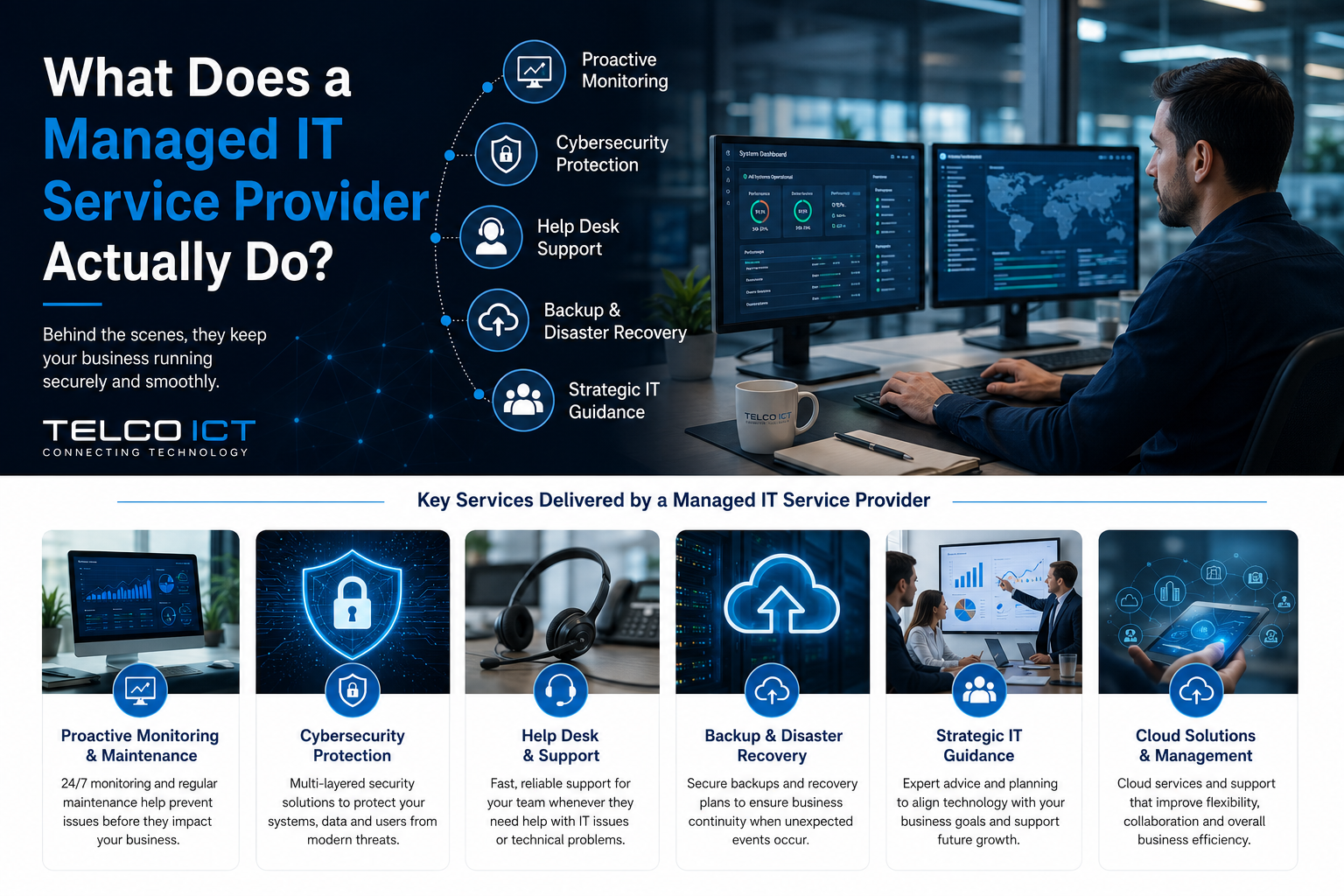
Technology plays a vital role in almost every modern business. From email communication and cloud applications to cybersecurity and remote work solutions, organisations rely heavily on their IT systems to stay productive and competitive. However, managing technology can quickly become overwhelming, especially for small and medium-sized businesses without a dedicated IT department.
This is where a Managed IT Service provider can make a significant difference. While many business owners have heard the term, not everyone fully understands what these providers actually do or how they support day-to-day operations.
Understanding the Role of a Managed IT Service Provider
A Managed IT Service provider acts as an external technology partner responsible for monitoring, maintaining, and supporting a business’s IT infrastructure. Instead of waiting for systems to fail before taking action, these providers focus on preventing issues before they impact productivity.
Their goal is to ensure that networks, computers, servers, cloud platforms, and business applications operate efficiently and securely. This proactive approach helps businesses reduce downtime, improve performance, and avoid costly disruptions.
Proactive Monitoring and Maintenance
One of the most valuable services provided is continuous monitoring. Rather than reacting to problems after they occur, managed IT professionals monitor systems around the clock for signs of performance issues, security threats, or hardware failures.
Regular maintenance may include:
- Software updates
- Security patch management
- Server health checks
- Network performance monitoring
- Backup verification
By identifying potential issues early, businesses can avoid unexpected outages and costly repairs.
Cybersecurity Protection
Cybersecurity threats continue to increase in both frequency and sophistication. A Managed IT Service provider helps protect businesses through multiple layers of security.
Common cybersecurity services include:
- Antivirus and endpoint protection
- Firewall management
- Email security
- Multi-factor authentication
- Threat detection and response
- Security awareness recommendations
Rather than relying on a single security tool, providers create a comprehensive security strategy designed to reduce vulnerabilities across the organisation.
Help Desk and Technical Support
Technical problems can occur at any time. Whether an employee cannot access their email, a printer stops working, or a network issue disrupts operations, prompt support is essential.
Managed service providers typically offer help desk support to assist staff with technical issues. This gives employees access to experienced IT professionals without the business needing to hire a large internal support team.
Data Backup and Disaster Recovery
Data loss can be devastating for any organisation. Hardware failures, accidental deletions, cyberattacks, and natural disasters all have the potential to impact critical business information.
A managed provider helps implement reliable backup systems and disaster recovery plans. This ensures important files and systems can be restored quickly if an unexpected event occurs.
Business continuity planning is becoming increasingly important as organisations depend more heavily on digital systems.
Cloud Solutions and Remote Work Support
Cloud technology has transformed how businesses operate. Employees can now access files, applications, and communication tools from virtually anywhere.
Managed IT providers assist businesses with:
- Cloud migrations
- Microsoft 365 management
- Cloud security
- Remote access solutions
- Collaboration platforms
These services help businesses remain flexible while maintaining security and productivity.
Strategic IT Guidance
The best providers do more than fix technical issues. They also help businesses make informed technology decisions.
This may include:
- IT budgeting
- Technology roadmaps
- Infrastructure planning
- Cybersecurity assessments
- Hardware lifecycle management
By aligning technology with business goals, organisations can make smarter investments and improve long-term efficiency.
How Telco ICT Supports Businesses
Many businesses choose trusted partners such as Telco ICT to help manage their technology environment. With a proactive approach to support, cybersecurity, cloud services, and communication systems, businesses gain access to experienced professionals who help keep operations running smoothly.
Rather than constantly dealing with technology problems, organisations can focus on serving customers and growing their business.
Final Thoughts
Technology is no longer just a support function—it is a critical part of business success. A reliable Managed IT Service provider helps organisations maintain secure, efficient, and resilient IT environments while reducing the burden on internal teams.
Whether your business needs cybersecurity support, cloud management, technical assistance, or strategic guidance, partnering with an experienced provider can help reduce risk and improve operational performance.
Frequently Asked Questions
What is a Managed IT Service provider?
A Managed IT Service provider is an external company that manages and supports a business’s technology infrastructure, including networks, computers, cybersecurity, cloud services, and technical support.
How is a managed service different from traditional IT support?
Traditional IT support often follows a break-fix model, where issues are addressed after they occur. Managed services focus on proactive monitoring and maintenance to prevent problems before they affect the business.
Can small businesses benefit from managed IT services?
Yes. Small businesses often gain access to enterprise-level expertise and support without the expense of maintaining a full in-house IT department.
Do managed service providers offer cybersecurity protection?
Most providers include cybersecurity services such as endpoint protection, threat monitoring, firewall management, software updates, and security best practices.
Why should businesses choose a managed IT partner?
A managed IT partner helps reduce downtime, improve security, provide expert support, and ensure technology aligns with business goals while allowing staff to focus on core operations.
