

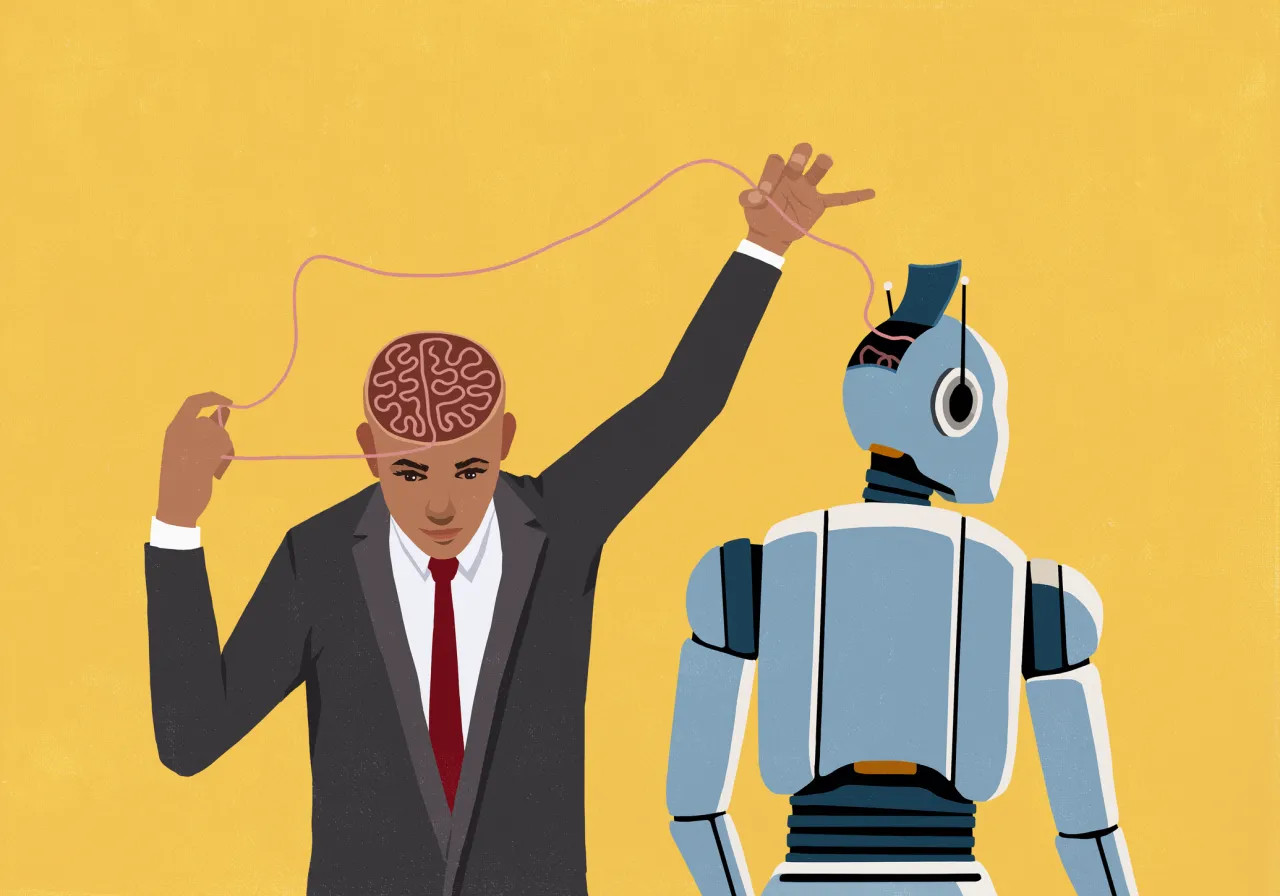
The Mechanical Turk can be described as many things, but one description that could help define the future of this product is ‘the lights have begun to go out.’ Although nothing has been formally announced, the Mechanical Turk will no longer accept new customers and will begin its phase-down on July 30, 2026, (assuming it follows the same schedule as other Amazon Web Services products.) The public is free to continue to use Mechanical Turk as long as they continue to pay for services and already have an account. As of right now, there are no indications from Amazon Web Services that they are planning to shut down the existing accounts anytime soon.
In case there is any doubt in anyone’s mind as to what is happening, I will attempt to clarify: ‘the lights are going out’ mean no new customers are being added going forward. I realize that some customers may find this difficult to accept because the service will remain operational, will continue to be maintained at current levels, and will be secure going forward. However, since Amazon is not planning to invest in new features or new customers, they must believe
the future of Mechanical Turk as a viable service is very limited. It seems that Amazon has made a very clear statement about the future of Mechanical Turk. Based upon this information, they have to expect that Mechanical Turk will eventually no longer exist. This is quite an end for a service that was first released in 2005! Or, perhaps it is the only appropriate ending for a service that spent 20 years being caught in the in-between of people and computers where they paid people to do things that computers could not do; then moving forward to build systems that would do those tasks on their own without ever having anyone do it.Eventually, it has been reported that some individuals working on the Mechanical Turk platform began to use machines instead of humans to complete their tasks – an ironic twist in the idea behind Mechanical Turk (a marketplace that was set up to allow companies, NGOs, and other organisations to find people to do small jobs they cannot do very well) and now there seems to be no longer a need for people to perform tasks for others (companies, NGOs and other groups) since they have started using machines to perform the tasks they used to perform themselves.
You couldn’t write a more ironic story about technology than this one.
The Other Side of the Human Workforce
When the Mechanical Turk service was first launched, it was a very simple concept.
There was no other way to describe it – a simple way for companies, researchers and other organizations to post small jobs known as Human Intelligence Tasks (HITs) so that workers could search for small jobs (HITs) and do them remotely and get paid for them. These small jobs could be anything from identifying items in a photo, sorting items, answering questions for a survey, checking a list of search results, transcribing short segments from an audio file, ranking or rating short sentences, determining if content is inappropriate and/or determining if content is positive or negative (this didn’t sound very high-tech to anyone involved).
Computers are fast becoming better than they have ever been at understanding a lot of things; however, computers have always struggled with smaller types of judgments as compared to humans. For example, a human could look at a blurry image of a chair and say whether it was a chair or not; a computer would take an incredible amount of time to figure this out because the computer would need a lot of direction from a human.
Mechanical Turk was able to create a way to make money by using that difference between what computers are capable of doing and what humans can do.
Need a label for 10,000 images? Send them to the crowd.
Need hundreds of people to do a survey? Post the task.
Need someone to determine if a thousand comments are angry, happy, sarcastic or neutral? There will be a person willing to do that for a couple of cents each time.
The platform demonstrated a fascinating example of how automation commonly functions in a practical manner. From outside of technology-look like there is smoothness and intelligence to its behavior. But, within the scope of the user interface there exists perhaps thousands of people who click on check boxes, correct errors, categorize data and ultimately train software to understand what our world looks like.
The presence of humans helping the machine has created the illusion of the machine being intelligent.
With Mechanical Turk the secretive nature of the arrangement was brought to the forefront.
Memento Mori
Even the platform name has a joke built into it!
The original Mechanical Turk was an 18th century chess-playing machine capable of automating the process of playing chess and competing against humans for entertainment. It appeared, based upon its concept, that the Mechanical Turk was an advanced piece of machinery. It deceptively turned out not to be an advanced piece of machinery.
Inside the apparatus of the original Mechanical Turk was a human being, who was secretly manipulating the moves made by the machine.
As such, the public perceived that they were watching a machine think and process information in an intelligent manner. However, the reality was they were in fact watching a human being at work inside the device.
Amazon made a very clever choice of a name for its digital version of the historical Mechanical Turk; to use an already famous example of a contraption that had fooled many people.
The new Mechanical Turk provided the means for someone to send work to a IT based platform system and receive a finished product, while behind the scenes real people were performing the labor necessary for the successful completion of the requested work.
The only difference was that much of the rest of the industry’s competitors may not have been clear about how they were using real human beings to complete their requested work.
In the past few years, due to the critical eye of many product/brand/technology enthusiasts and users of these systems, a new industry has been created in the technology industry associated with strange, semi-automated, artificially intelligent products developed in a manner much like the original Mechanical Turk, i.e., largely based upon the efforts of a distributed workforce of real people performing the work required to create these products. The products are presented to the public as automated or AI-type products and marketed as such.Many people have found that doing lots of the same thing over and over, while staying at home, makes them enough money to cover their daily expenses. This has led to the development of an entire industry based on what has become known as the “fake it until you make it” approach, where companies market themselves as having more automated solutions than they actually do, fill in the gaps using humans, and then hope that they will be able to actually provide those solutions eventually.
This has happened many times; there are just as many people who are waiting for their company to make good on their promise as there are people who are already through the process waiting for their time to arrive.
The Mechanical Turk platform supports the same model by providing subjectively determined human input based upon the same process used to determine whether or not a particular piece of software is making the right decision or performing the task correctly.
The Mechanical Turk platform has always been very valuable as a result of this approach.
Then, a major shift began to occur—the development of artificial intelligence (AI).
Before chatbots or “AI” were commonplace in modern society, machine learning systems needed enormous quantities of carefully curated information in order to make machine learning work.
AI does not just automatically know what an image is or what is contained in an image. There are numerous people that must provide their opinion in order for the learning system to understand what each image is as well as how to classify the images.
For example, every image with a bicycle must be designated as a “bicycle,” and every image without a bicycle must be classified by volume of bicycles present within each image. Similarly, human input is required to provide corrective information to the learning system by providing feedback to the computer each time it makes a mistake.
There are a number of reasons why crowd workers are often used in the process of providing machine learning systems with the data required to build efficient, effective, robust, and reliable learning systems; however, the most significant reason is that because of crowd workers, machines become better able to learn how to improve the way in which they operate every day. This is one of the most significant reasons crowd workers are crucial to the future growth of AI.In 2018, Amazon began promoting Mechanical Turk as a source of human labor to provide annotations for information used to create neural networks via their SageMaker AI platform.
Mechanical Turk — an old model of crowdsourcing that had been integrating itself with the development of machine intelligence for some time — found a whole new application during the rush to build artificial intelligence technology.
Contractors who previously performed basic tasks, such as completing surveys or tagging web content, can now contribute (directly or indirectly) to the growing number of machine-learning systems that aim to displace many of the types of human tasks that have long existed.
This is the same thing that has happened in previous automation projects.
People have been hired to assist in building the machines that would replace part(s) of their jobs. Factory, admin, artist, translator, writer, programmer and customer service jobs have seen this all happen in front of them.
Mechanical Turk accomplished bringing this contradiction all onto one platform.
The workers receive small amounts of money to train machines to do the job, which were traditionally done by humans — because machines were not performing the same function.
For the tech industry, it is viewed as progress.
However, for the workers, it is more complex.
More Than Just a Story Regarding Technology
Mechanical Turk quickly became both popular and controversial.
Critics of the platform have raised questions about the economic viability of a system that allows for a tremendous number of hours performing repetitive tasks at extremely low pay. Supporters of Mechanical Turk have argued that it allows for flexibility, and the ability to work remotely. Researchers have looked at using Mechanical Turk for quickly and cheaply finding participants for studies.
The discussion has not disappeared.
Is this a system for flexible digital work, or a system that allows for easier underpayment of invisible workers?Was it democratizing income access or developing a global competitive labor market based on pennies per task?
Can researchers rely on the results they get?
Can workers believe requesters will compensate them fairly?
Is there any accountability when something goes wrong?
There were no clear answers to these multiple queries many of them arose around the Mechanical Turk. In fact, it was so prevalent that before there was a Mechanical Turk there was a long history of similar organizations that spanned the internet, and it served as a conversation piece during the Cambridge Analytica scandal when Facebook was experiencing issues with handling customers.
In addition to simply being a way to earn a little money on the web for many years, Mechanical Turk was a tool that many different types of industries, including academia, marketing, data scientists, startups, and other industries that necessary required a large group of people to do many different simple tasks or earn small amounts of cash.
While this was an excellent benefit to many individuals, it is also a real weakness in that it attracts people who seek to establish automated methods for completing simple repetitive tasks.
In addition to the above, when we think about the future of Mechanical Turk we can not ignore one couple of interesting points that would be referred to later as “The Human workforce started using AI”.
As the year 2023 approached it became more common to ask a very important question, by many researchers looking at Mechanical Turk; how many of the individuals completing tasks at Mechanical Turk are actually doing the tasks themselves?
One review cited that an estimated 33% – 46% of the individuals sampled were using large language models, such as ChatGPT, to assist them in completing the tasks they received to do.
If you reflect on that detail for a moment, Mechanical Turk came into existence based upon a demand for the employment of individuals to provide intelligence to customers; and that created the base knowledge or intelligence needed to develop AI systems, and now those AI systems are utilized to aid individuals in earning money while providing very little intelligence to their customers. After these AI systems were developed, they became so widespread that humans began using these systems for completing jobs on a crowdsourcing platform based on human intelligence. The serpent was not just consuming its tail, but rather had automated the mastication process of its tail.
Researchers and businesses using crowdsourced jobs began to realize the major challenge they faced. For example, suppose you are evaluating whether a language model can determine if something is false or not, determine the emotional content of the input, generate a summary of the input, or make other determinations about the input. You would send the job to human participants for evaluation because you need a comparison to human responses.
Upon receiving their tasks, some participants used a chatbot to solve them and submitted the chatbot’s responses to the task. As a result, you are evaluating an AI’s response versus an AI’s response when you thought you were comparing an AI’s response to a human’s response.
As a consequence, your entire project is beginning to be unstable.
The issue was not that all responses assisted by AI were incorrect; the greater issue is uncertainty. The users who paid for the human responses now had no way to determine whether they were, in fact, receiving a human response.
In addition, there was a clear incentive for workers to use automation. The pay for Mechanical Turk (MTurk) was very low; therefore, if a worker could complete a task in a shorter amount of time using AI assistance than they could by themselves, they would be foolish not to use the AI assistance.
The platforms had spent a long time reducing human judgement to very small units of paid work. Now, with AI, workers can produce those units in a much shorter amount of time.
This would not be considered a flaw in the platform but rather would be considered an outcome of the platform’s own logic.Bots and Fraud are Destroying the Very Marketplace They Created
No one was surprised when Amazon said it would no longer accept new Mechanical Turk (MTurk) customers. Many people believed that the marketplace had already died due to bots and fraud, as there had been a mass exodus of both workers and researchers from the platform. In fact, one user predicted that Amazon would eventually shut down the servers as no longer being worth maintaining.
So far, that has not occurred.
For now, MTurk is in an unusual position. Though existing customers can keep using it, there are no new customers able to create accounts or join after a certain date. Maintenance will continue with improvements to security and availability, but will not include any new functionality.
Technically, MTurk still “exists,” but it has been “strategically frozen” by Amazon. Since technology companies frequently keep old products alive longer than anticipated (especially when they still have customers relying on them), it is possible that MTurk could be maintained in its current state for a considerable length of time.
However, Amazon’s closing of the door on new customers is a clear sign that MTurk’s original purpose — growth — is no longer being considered. Thus, the question now becomes, “for how long will MTurk continue to be maintained?”
It is tempting to see the recent decline of MTurk as just one more example of AI displacing human beings. Unfortunately, the reality is much more complicated than that.
There are still significant numbers of humans working on AI development and implementation. Many companies produce artificial intelligence, and because there are now so many developers creating AI products for sale, the same people who created the previous versions of those products are now creating new versions of those products; therefore, the number of humans involved in producing AI continues to grow.AI systems still require feedback, testing and other forms of assistance from humans to be successful. There is still an immense amount of human effort that goes into creating products that are marketed as being automated.
The types of human work that are required to create automated products have changed over time.
The contracts that govern that work have changed.
The platforms on which that work takes place have changed.
The way in which that work gets done (job titles) has changed.
But the person doing the work has not always disappeared with the machine.
This is why Mechanical Turk’s story is significant.
Mechanical Turk illustrated a time when the internet industry often acknowledged that software required thousands of human workers to complete tasks that could not be done by a computer.
Since that time, the machines have improved.
The tasks have changed.
The human workers have adapted.
Some of the workers are now using the machines to perform human tasks requested by the manufacturers of the machines.
Attempt to draw out that workflow on a whiteboard without laughing.
The Quiet End of a Loudly Important Experiment
Mechanical Turk is not likely to have the same kinds of dramatic farewells given to well-known consumer products.
There may not be nostalgic video tributes.
There will not be many people tweeting out pictures of their first HIT.
There will not be many emotional statements from the company regarding how their services changed the world.The decline of the Mechanical Turk platform is going to happen silently since its entire lifespan has been silent. The work performed via Mechanical Turk has always been performed in the background.
Researchers have obtained survey responses. Businesses have obtained labeled and categorized images. Startups have obtained categorized data from users. Machine learning systems have been trained using clean data compiled through Mechanical Turk. Customers see the output; workers may be somewhere else and may even be unknown.
Mechanical Turk has exposed us to one of the less pleasant truths about technology — that what seems to be automated is not always as automated as it appears to be. Behind the amazing demonstration is a person. Behind an intelligent system may be thousands of people who have labeled the examples being used in the system. Behind the seamless interface may be a person who has cleaned up the errors made by the system. Behind the machine that seems to have thought may still be a human being inside the box.
Amazon has not declared the Mechanical Turk platform to be a dead service. Customers will be able to continue using it, and the company has committed to maintaining the security and availability of the platform.
However, after July 30, 2026, no new customers will be able to sign up. For a service based on performing small tasks, the most important of the last tasks might be simply to wait.
Wait for existing customers to leave.
Wait for researchers to identify alternative methods of obtaining the kind of work that can be done through Mechanical Turk.
Wait for workers to find other work alternatives.
Wait for someone to analyze the continuing cost associated with keeping the Mechanical Turk platform functional and determine whether anyone has a need for it.
The Mechanical Turk concept began as a machine simulating being human.
Amazon has since made the Mechanical Turk into a marketplace where people help machines learn how to be better machines.
Today, as machines become better able to replicate humans and humans continue to use machines as ways of replicating themselves, the original marketplace is stuck in limbo.
The marketplace is still online. The marketplace still has functionality. The marketplace still provides some value to someone. The marketplace no longer has any value to the future that it saw created.
