

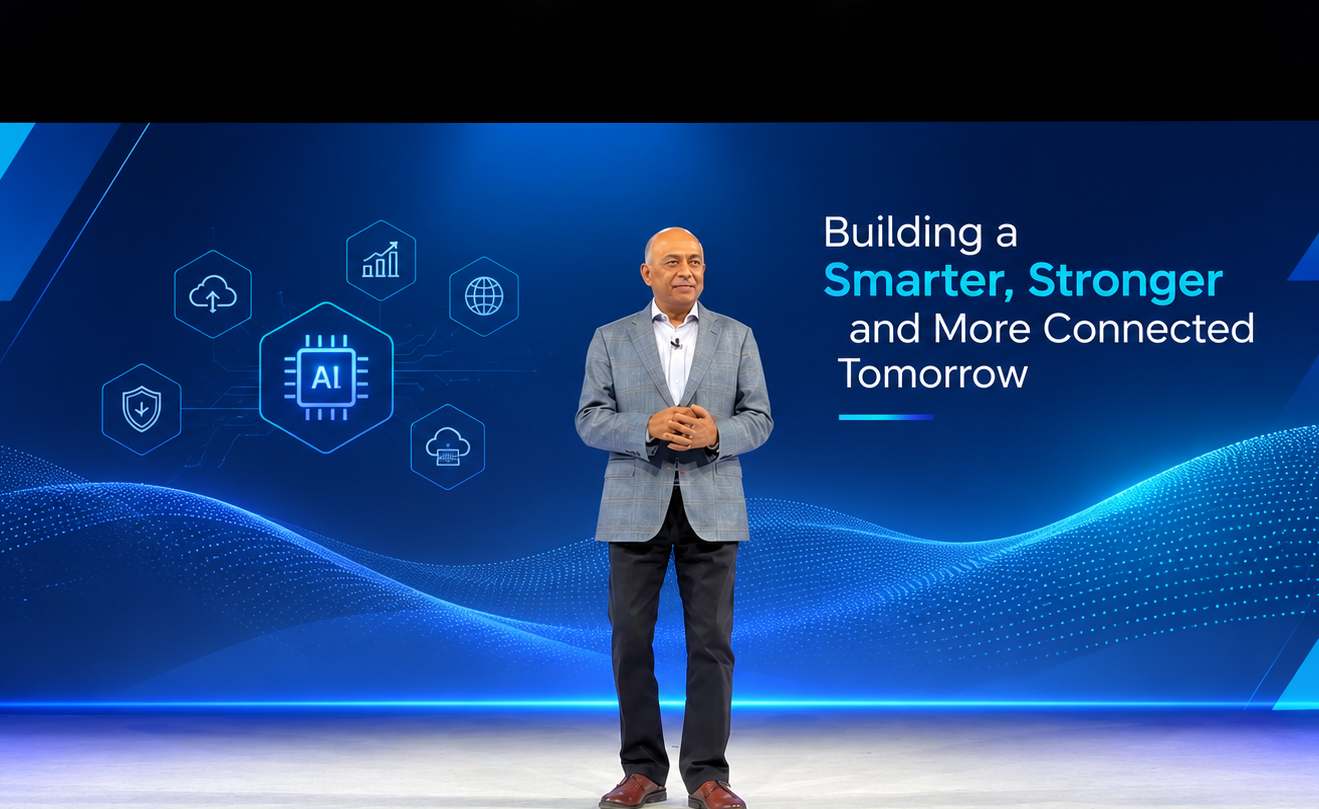
Artificial intelligence is becoming the key investment focus for companies across the globe. By spending billions on sophisticated technology able to afford complex AI loads, companies are working on transforming their infrastructure to meet the technological requirements of today’s enterprises. With enterprises racing for leadership position, several traditional technology companies are feeling the consequences of shifting spending patterns.
IBM is among such companies.
The giant’s recent quarterly report sounded disappointing as its mainstreaming business saw one of the biggest dips lately. The company reported that its revenues of its infrastructure division, including mainstreaming and flagship technology, declined strongly year-on-year.
However, IBM executives strongly rejected the notion of seeing AI as a reason for the demise of their flagship technology, supporting the statement with the argument that companies only shift their budgets to invest more into new technology.The controversy opens an essential query for all companies worldwide: Does AI substitute legacy business infrastructure, or does it merely alter the way organizations use their technology budgets?
IBM Faces Difficult Times
IBM’s recent financial performance shocked a number of experts in the sector. The company’s Infrastructure segment reported a considerable downturn with mainframe sales falling around 42% in annual terms. The drop-off contributed to the worse-than-expected profit and forced IBM to reduce the forecast for its revenue growth for the rest of the year.
Investors reacted with caution knowing that, traditionally, the mainframe segment has been crucial for IBM’s profitability. The mainframe business gives not just hardware revenue but also long-term software licenses, maintenance contracts, consulting, and enterprise support.
When hardware sales decrease, the effects usually reflect on multiple other business areas.
Meanwhile, IBM is confident that the downturn shows changes in the customers’ purchasing behavior rather than demand for mainframe technology.
AI Spending Affects the Priorities of Companies
Over the last two years, organizations have significantly increased their investments in AI infrastructure.
For enterprises to build proper AI capabilities, they need to invest a lot of money in the following:
- High-performance GPU servers
- AI accelerators
- Large storage systems
- High-speed networking
- Cloud infrastructure
- Data management solutions
Such technologies need large capital expenditures.
According to IBM executives, many clients reconsider their expenditures and now postpone their usual infrastructure-related investments in favor of AI projects.IBM CEO Arvind Krishna pointed out that businesses continue to use their existing foremost systems while looking for better options that rely on AI technology to increase productivity and gain knowledge from business insights.
Why Mainframes Still Matter
For many outside the world of enterprise IT, the term “mainframe” may sound out-of-date to some.
In fact, today’s IBM mainframes are still regarded as some of the most powerful and stable computing systems in the field.
Thousands of organizations use them every day.
Some of the major industries that still use the mainframe for critical workloads include:
- Banks and financial institutions
- Government agencies
- Insurance
- Companies in the health sector
- Airlines
- Telecommunications companies
- Big retail chains
These systems carry out millions of secure transactions every day with a high degree of confidence.
The replacement of such solutions is not as simple as moving applications to the cloud.
Many applications were developed years ago and have achieved the necessary level of performance, security, and accessibility.
AI isn’t a Replacement – It’s an Addition
One of the main arguments made by the company is that artificial intelligence works together with the enterprise infrastructure, rather than replacing it.
Modern-day AI systems require huge quantities of data processed by the enterprise.
It’s good to know that most of this data already exists in the enterprise systems, including the mainframe.
This means that organizations are seeking for opportunities to combine traditionalWhen it comes to examples of how AI operates in enterprises, we can list such cases as:
- Fraud evaluation with the help of AI for the banking sector
- Automating customer service
- Maintenance prediction for machinery in industry
- Compliance assessment automation
- Financial planning with AI
- Supply chain optimization
In most cases, AI helps to make already functioning enterprise systems more valuable instead of replacing them with new ones.
Hybrid Enterprise Architecture appeared
Enterprise computing is no longer based on just one piece of software or hardware.
Modern companies function simultaneously in several settings.
Typical enterprise tech stacks may comprise the following components:
- Mainframes
- Private clouds
- Public clouds
- Edge computing
- SaaS solutions
- AI infrastructure
IBM has been working for quite a long time to be perceived as a leader in hybrid cloud computing.
Their strategy implies combining traditional enterprise infrastructure, and Red Hat OpenShift with cloud services and AI platforms.
The main aim is to not convince clients to stop using already existing systems but rather to upgrade them step by step.
Hybrid architecture is enabling organizations to keep the decades of investments they have already done and at the same time to adopt new technology as they have time for this.
Enterprise Clients Are Careful
Enterprise IT is not taking months and even years to make such decisions.
Big organizations can hardly replace the existing core system in one day.
Banking organizations that run hundreds of thousands of transactions each day cannot afford to have downtime.
Companies such as insurance ones that need decades of clients’ history have to ensure the working of their system.
Companies representing the public sector have to comply with numerous regulatory requirements.
As a result, the process of modernization of the enterprise world takes a lot of time.
The Financial Impact of Mainframes
Mainframes add value beyond merely hardware sales.
Any mainframe installation typically includes:
- Enterprise operating systems
- Database software
- Middleware
- Security systems
- Maintenance contracts
- Technical assistance
- Consultancy
Recurring revenues have historically allowed IBM’s profit margins to be attractive.
Thus, even minor declines in hardware purchases can severely affect a company’s overall performance.
Analysts keep an eye on mainframe sales as they affect many aspects of IBM’s business ecosystem.
Could AI Decrease the Demand for Legacy Systems?
Some analysts believe that AI could eventually lessen the demand of some types of older systems.
Cloud applications are on the rise.
The new platforms are primarily aiming at the distributed cloud and not the conventional enterprise system infrastructure.
Many young technology companies do not even need to deploy mainframes since they design their products exclusively for the public cloud.
However, IBM contends that this change affects predominantly digital firms and not established businesses.
Major financial institutions, which have various legacy systems that are difficult to substitute, are still in operation.
In their case, modernization means implementing AI technologies into existing infrastructure.
IBM’s AI approach for the Future
IBM has been heavily funding AI for many years.
It aims at providing companies with technologies for responsible building and usage of AI models, using Watsonx platform.Shifting attention away from AI companies that work with regular customers, IBM focuses on businesses that want secure, compliant, and scalable AI deployments.
The company’s belief in strength lies in the combination of:
- Artificial Intelligence;
- Hybrid cloud;
- Enterprise software;
- Consulting services;
- Secure infrastructures.
Instead of channeling resources to compete with consumer AI applications, IBM wants to be the tech partner to big businesses implementing AI in operational activities.
Concerns of Investors
Despite optimism from IBM, the company is being monitored by its investors.
They are wondering:
- Will the spending on AI create delays in updating infrastructures?
- Will IBM make its mainframe business grow again?
- Is hybrid cloud likely to be a competitive edge?
- Does Watsonx possess an ability to produce enough revenues in the long run?
- How fast will clients renew postponed infrastructure investments?
The replies to the questions could influence IBM’s performance in the future.
The Larger Picture
IBM’s performance results prove the existence of the broader category of changes in the enterprise technology industry.
AI leads to changes in the allocation of technologies.
Enterprises are now stepping up their investments in AI technologies taking into account benefits that could be gained from AI in terms of efficiency and automation of processes.
However, this does not mean that all enterprises abandon their traditional forms of technology.
Current tendencies lead to co-existence of AI, cloud technologies, and legacy technology.
Corporations will gradually implement AI while relying heavily on existing technologies.
Final Thoughts
The poor quarter results of IBM indicate a strong impact of AI technologies on enterprise spending with a 42% drop in revenues from the mainframe business raising anxiety among investors.
However, IBM leadership thinks that the slowdown is due to changing buying behavior rather than a sign of the end of the mainframe time.
