

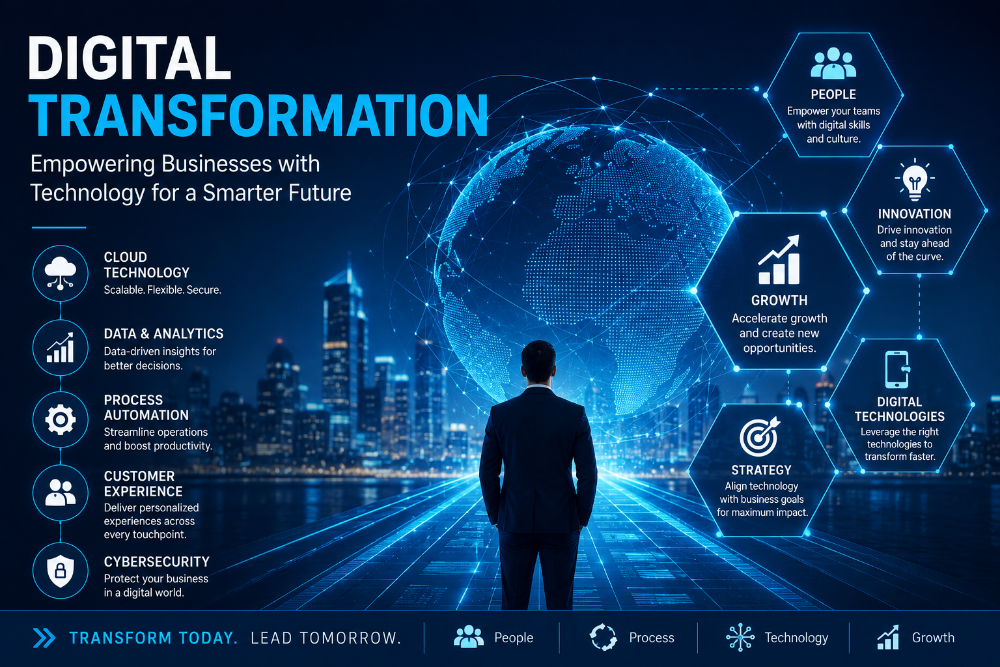
A few years ago, digital transformation meant moving files to the cloud and maybe getting a company app. Now it means something much bigger. It’s about how a business runs, how it treats customers, and how fast it can adapt when things change.
At AtechVibe, we’ve noticed that the businesses growing the fastest right now aren’t necessarily the ones spending the most on technology. They’re the ones being smart about where and how they use it.
Digital Transformation Strategies Start With the Right Problem
One mistake companies make is buying new software because it looks impressive, not because it solves a real problem. That rarely works out.
The better approach is to look at what’s actually slowing your business down. Maybe it’s slow customer response times. Maybe it’s manual data entry eating up hours every week. Once you know the problem, it’s much easier to pick the right digital transformation technologies to fix it.
Using Data to Power Business Digital Transformation
Most businesses already collect a lot of data. Sales numbers, customer behavior, website traffic. The problem is that data usually sits unused.
Business digital transformation often starts here connecting the dots between different systems so people can actually see what’s happening and make decisions based on it. You don’t need a fancy dashboard to start. Sometimes it’s as simple as getting your sales and marketing tools to talk to each other.
Automating Repetitive Tasks With Digital Transformation Technologies
Every business has tasks nobody enjoys doing. Invoicing, scheduling, answering the same customer questions over and over. These are usually the easiest things to automate, and they free up time for work that actually needs a human touch.
This is also where a lot of businesses see quick wins. You don’t have to overhaul everything at once. Start with one repetitive process, automate it, and build from there.
Improving Customer Experience Through Digital Transformation
Customers today expect things to be fast and simple. If your website is slow, your checkout process is confusing, or it takes three emails to get a support answer, people notice.
Digital transformation isn’t just about internal efficiency. It’s also about making things easier for the people buying from you. Small improvements — like faster page loads or clearer communication — can make a real difference in how customers feel about your brand.
Training Your Team for Successful Digital Transformation
New tools don’t help much if nobody knows how to use them properly. One thing we keep seeing at AtechVibe is that the businesses getting the most out of technology are also investing time in training their teams.
This doesn’t need to be complicated. Sometimes it’s just making sure everyone understands why a new tool was introduced and how it makes their job easier, not harder.
Building a Long-Term Digital Transformation Roadmap
Big transformation projects can feel overwhelming, and that’s often exactly why they stall halfway through. A more realistic approach is breaking things into smaller, manageable steps rather than trying to overhaul everything at once.
Fix one process. See how it performs. Learn from it. Then move to the next area. This kind of steady, step-by-step progress keeps your business improving without grinding operations to a halt while everyone adjusts to a massive new system all at once.
Think of digital transformation less like a single project with a finish line, and more like an ongoing habit your business builds over time.
FAQs About Digital Transformation
What does digital transformation actually mean for a small business?
It simply means using technology to work smarter — whether that’s automating tasks, improving customer service, or making better decisions with data. It doesn’t have to be expensive or complicated to start.
What are some common digital transformation technologies businesses use?
Cloud tools, automation software, customer relationship management (CRM) systems, and data analytics platforms are some of the most common starting points.
How long does digital transformation usually take?
It depends on the business, but it’s rarely a one-time project. Most companies treat it as an ongoing process, improving one area at a time instead of trying to change everything at once.
Do I need a big budget to start with digital transformation?
Not necessarily. Many businesses start small — automating one process or improving one system — and expand as they see results.
Why do some digital transformation efforts fail?
Usually because the tools were chosen before the problem was clearly understood, or because employees weren’t trained properly on how to use them.
Final Thoughts
Business digital transformation isn’t about chasing every new tool that comes out. It’s about understanding what your business actually needs and making steady, thoughtful changes.
The companies that grow well in 2026 will likely be the ones that treat digital transformation as an ongoing habit, not a one-time project. Start small, stay consistent, and keep learning what works for your team.
At AtechVibe, we’ll keep sharing what’s actually working for businesses navigating this shift practical insights, not just trends.
