

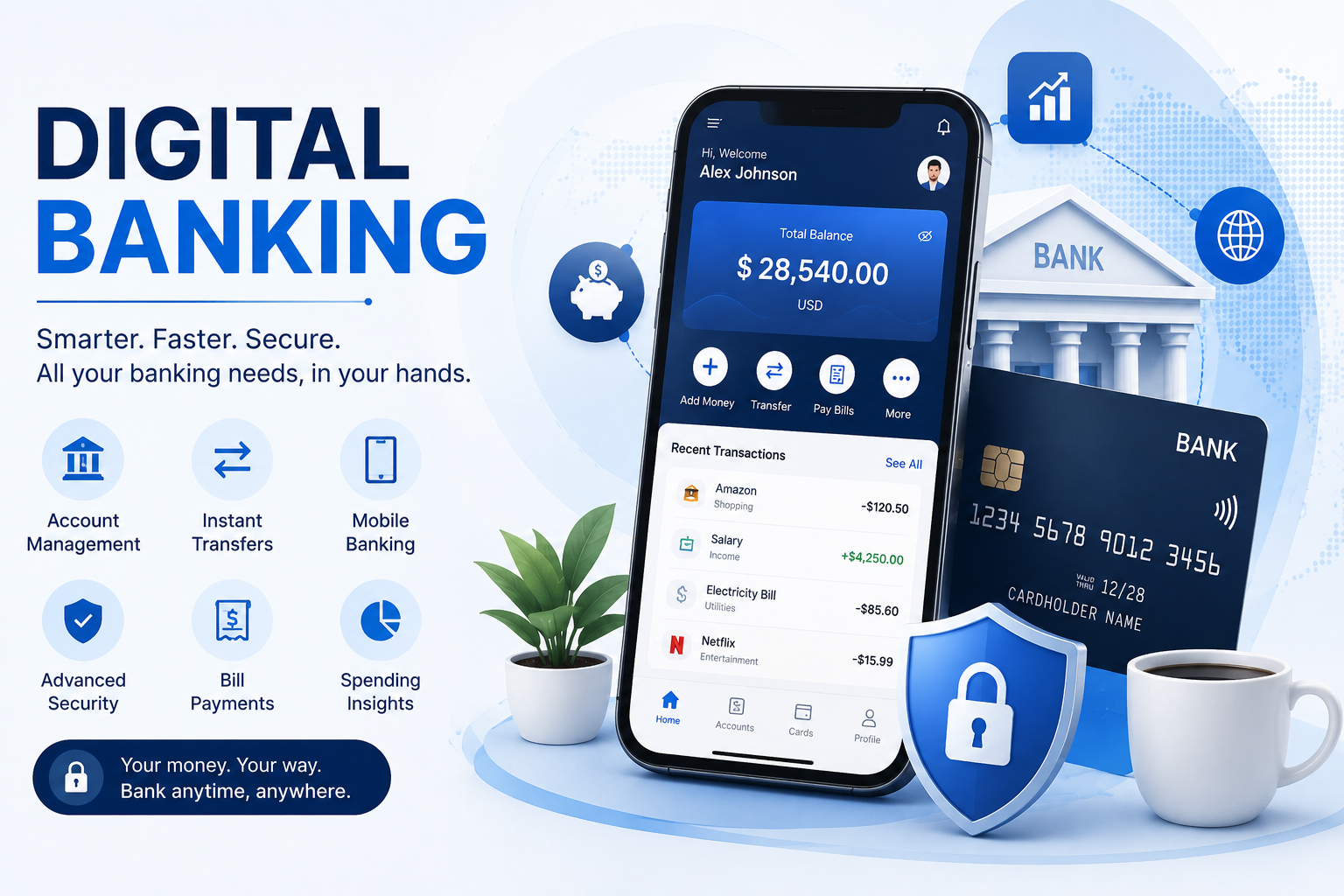
There was a time when banking meant standing in line, filling out forms, and waiting for a teller to call your number. Most people don’t think twice about that now, because digital banking has quietly rewritten what “good service” even means.
Customers today don’t compare their bank to other banks anymore. They compare it to the last app they used that felt effortless, whether that was ordering food or booking a cab. That shift is changing what people expect, and banks are having to keep up.
Convenience Is No Longer a Bonus, It’s the Baseline
A few years ago, having a decent mobile app was a nice extra. Now, it’s the first thing people check before they even open an account. If checking a balance, sending money, or paying a bill takes more than a couple of taps, customers notice.
Mobile banking has made “waiting” feel unnecessary. People expect things to happen instantly, and when they don’t, patience runs out fast.
Online Banking Set the Stage for This Shift
Online banking was really the first big step in this direction. It moved banking away from branch hours and long queues, letting people manage money whenever it suited them.
That shift trained customers to expect access on their own schedule, not the bank’s. Once that became normal, there was no going back to anything slower.
Personalization Has Become the New Normal
Customers don’t want generic advice anymore. They want their bank to actually understand their habits. That could mean getting a helpful nudge before an account runs low, or seeing spending broken down in a way that actually makes sense.
This is where a lot of banks are quietly using smarter tools behind the scenes, spotting patterns in how people spend and save, then using that to offer something more useful than a one-size-fits-all message.
Speed Matters More Than Ever
Nobody wants to wait three days for a transfer to clear or sit on hold to ask a simple question. Instant transfers, real-time notifications, and quick answers have become the standard people measure everything against.
Even a small delay can feel like a red flag now, especially to younger customers who’ve never known banking any other way.
Security Still Comes First, Just Quieter Now
People still care deeply about security, but they don’t want it to slow them down. That’s a tricky balance. Fingerprint logins, face recognition, and instant fraud alerts let banks keep accounts safe without making customers feel like they’re jumping through hoops every time they log in.
The banks getting this right make security feel invisible until it’s actually needed.
Self-Service Is Winning Over Traditional Support
Fewer people want to call a support line for something simple. They’d rather solve it themselves through the app, whether that’s freezing a card, disputing a charge, or updating personal details.
This doesn’t mean human support is disappearing. It just means customers want the option to handle small things on their own, and save phone calls for the problems that actually need a person.
What This Means for Banks Going Forward
Customer expectations aren’t slowing down anytime soon. Every smooth, fast experience someone has with any app quietly raises the bar for what they expect from their bank too.
Banks that treat their digital experience as an ongoing project, not a one-time upgrade, tend to keep their customers happier and more loyal. The ones that fall behind usually don’t realize it until customers have already moved on.
At AtechVibe, we’ve watched this shift play out across the fintech space, and one thing is clear: convenience, speed, and trust aren’t separate goals anymore. They’re all part of the same expectation customers walk in with.
Frequently Asked Questions
1. What is digital banking in simple terms?
Digital banking means managing your money through apps and websites instead of visiting a branch, covering everything from checking balances to transferring funds and paying bills.
2. How has mobile banking changed what customers expect?
Mobile banking made everyday tasks instant and available anytime, so customers now expect the same speed and ease from their bank that they get from any other app they use daily.
3. Is online banking safe to use?
Yes, most banks use strong security measures like encryption, fingerprint or face login, and real-time fraud alerts, which keep online banking secure without making it harder to use.
4. Why do customers expect personalization from their bank now?
Banks now have the tools to understand spending habits and offer relevant tips or alerts, so a generic experience feels outdated compared to what customers get elsewhere.
5. Will digital banking replace human support completely?
Not entirely. Most customers prefer to handle simple tasks themselves through the app, but they still want the option to talk to a real person for bigger or more complicated issues.
Final Thoughts
Digital banking didn’t just change how people manage money. It changed how patient they’re willing to be, how much effort they’re willing to put in, and how quickly they’ll switch if something feels clunky.
For banks, keeping up isn’t really about chasing every new feature. It’s about paying attention to what actually frustrates customers, and fixing that before it becomes a reason to leave.
