

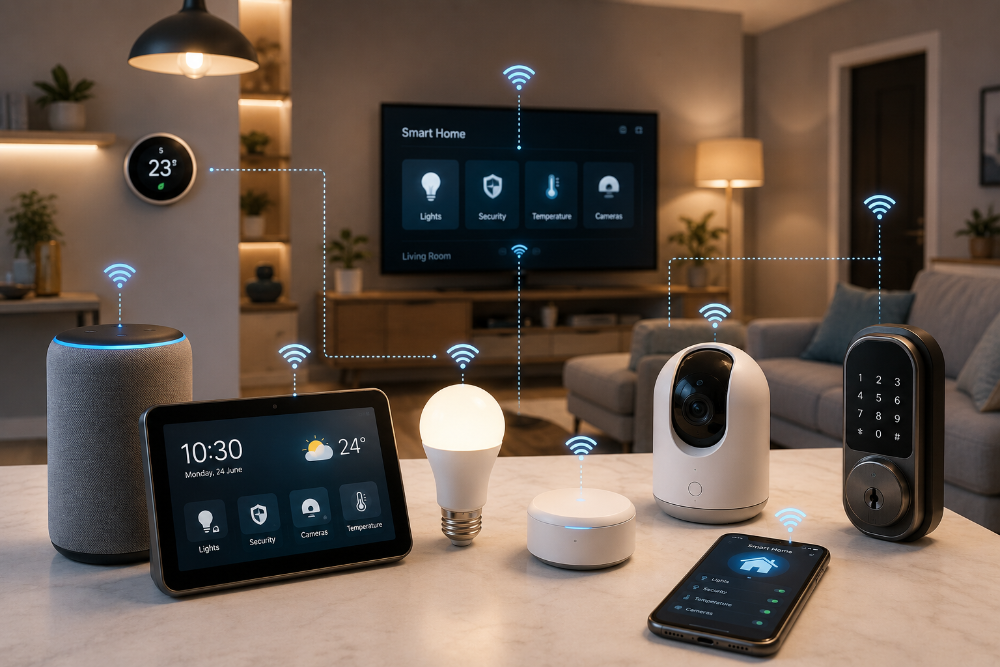
Walk into any electronics store today and you’ll find shelves packed with smart home gadgets, all promising to make life easier. Smart bulbs, video doorbells, robot vacuums, voice assistants. It’s a lot to take in, and honestly, most of it starts to blur together after a while.
So how do you actually pick the right one? Not the flashiest, not the one with the most five-star reviews, but the one that actually fits your home and how you live in it. More brands keep entering the space every year, from big names to smaller players like AtechVibe, which only makes it more important to know what you’re looking for before you start scrolling through listings.
Figure Out the Problem Before You Shop
The biggest mistake people make is buying smart home devices because they look cool, not because they solve anything. A gadget that just sits there looking impressive isn’t worth the money.
Before buying anything, think about what’s actually annoying you. Keep forgetting to lock the front door? A smart lock could fix that. Never sure who’s at the door when you’re out? A video doorbell handles that instantly. Tired of walking into a dark house every evening? A few smart bulbs on a schedule solve that.
Start with a real problem, and the shopping part gets a lot easier.
Make Sure It Plays Well With What You Own
This is where most people trip up. Not every smart device speaks the same language. Some run on Wi-Fi, some need a separate hub, and some only work with specific ecosystems like Google Home, Amazon Alexa, or Apple HomeKit.
Check what you already own before buying anything new. If your whole house runs on Alexa, a gadget that only works with Apple HomeKit is going to be a hassle. It might still technically function, but now you’re juggling two apps, two logins, and two systems that should really just work together.
Doing a bit of homework here pays off. Some manufacturers, AtechVibe included, design products that work across multiple ecosystems instead of locking you into just one, and that flexibility matters more than people realize until they’re stuck with a device that won’t talk to the rest of their setup.
Setup Matters More Than the Ads Let On
Plenty of smart home gadgets look amazing in ads, then turn into a nightmare the moment you try to install them. Complicated wiring, confusing apps, endless firmware updates. None of that sounds fun, because it isn’t.
A good gadget should make life simpler, not add another chore to your list. It’s worth checking a few video reviews or scrolling through real owner comments before you buy. People tend to be brutally honest about how painful, or painless, setup actually was.
Pay attention to how long setup takes and whether it needs professional installation. Some devices are genuinely plug-and-play, while others require drilling or a call to an electrician. Knowing this ahead of time saves you from an unpleasant surprise on install day.
Check Who’s Still Supporting the Product
Smart home devices aren’t like a toaster you buy once and forget about. They depend on apps, software updates, and sometimes cloud servers just to keep working. If a company stops supporting a product, or shuts down altogether, that expensive gadget turns into a very fancy paperweight.
Stick with brands that have a track record of sticking around and keeping their products updated. It’s not always the biggest name that lasts. A quick search into how long a company has supported its older devices usually tells you what you need to know.
Reading the fine print on warranty and update policies isn’t exciting, but it can save you from replacing a “smart” device far sooner than you expected.
Take a Minute to Weigh Your Options
It’s tempting to grab the first thing that shows up in a search, but a few extra minutes of comparing usually pays off. Check the battery life, if it needs one. Find out whether it works offline or depends entirely on an internet connection. Some of the best smart home gadgets fall apart during a power outage or Wi-Fi drop, which is a real problem if you’re counting on them for security.
Reading through actual user reviews, not just the star rating, gives a far clearer picture than any product photo ever will. If several reviews mention the same issue, a laggy app or a battery that dies too fast, take that seriously.
A Higher Price Tag Isn’t a Guarantee
Spending more doesn’t automatically get you a smarter or more reliable gadget. Sometimes a mid-range smart plug does exactly what you need, while the premium version just piles on features you’ll never touch.
Set your budget around the problem you’re solving, not around what looks impressive on a product page. A $30 smart plug that reliably turns your lights on and off is often more useful than a $150 gadget loaded with features you’ll forget exist by next week.
It also helps to think long-term. A slightly pricier gadget with better support and reliability can end up cheaper than replacing a budget option every year.
Final Thoughts
Choosing the right smart home gadget in 2026 comes down to knowing what you actually need, checking it works with what you already have, and picking a brand likely to stick around. Skip the hype, focus on solving a real problem in your home, and everything else tends to fall into place.
A smart home doesn’t need to be complicated. It just needs to work.
