

Not long ago, companies were fine sending data off to the cloud, waiting a beat, and getting an answer back. Nobody minded the wait. A few seconds here or there wasn’t a big deal.
That’s changed. A few seconds now feels like forever. Customers expect instant responses, machines need to react before something breaks, and businesses can’t afford to sit around waiting on a server halfway across the country. This is where edge computing steps in.
What Edge Computing Actually Means
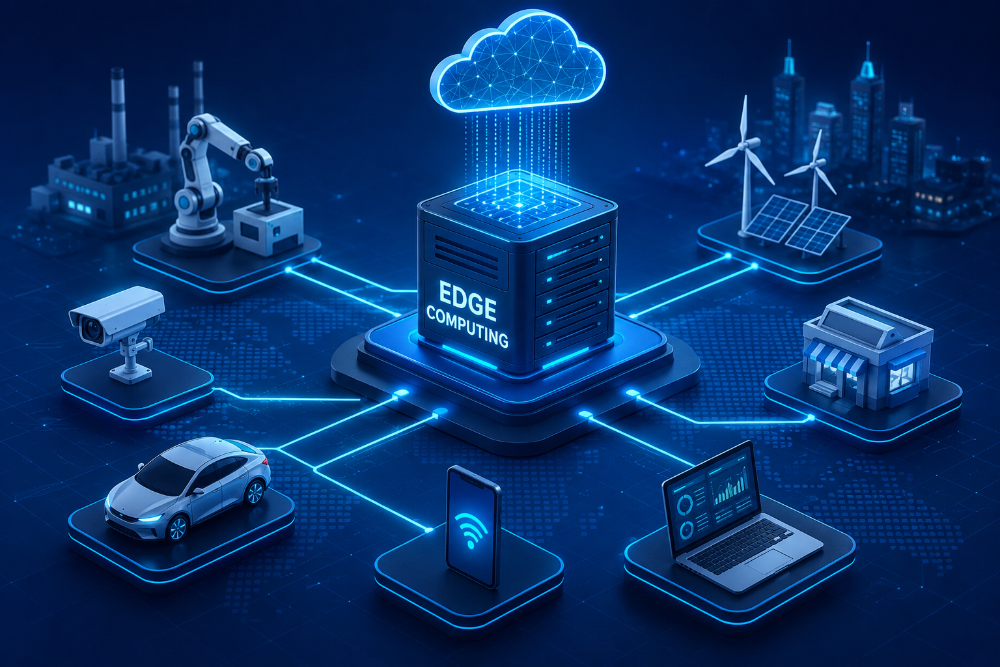
Strip away the jargon, and edge computing is pretty simple: process data close to where it’s created, instead of shipping it off to a distant data center first.
Picture a sensor on a factory floor, a delivery van, or a camera watching the aisles of a store. Instead of that device sending everything to the cloud and waiting for instructions, the work happens right there, or somewhere close by.
It sounds like a small tweak, but it changes the whole equation. Shorter distance, shorter delay. And when the delay shrinks, businesses can act on things as they happen instead of finding out ten minutes later.
Why This Matters to Businesses Right Now
Speed has always been the goal in business technology, but the pressure has ramped up. More devices are connected than ever, data keeps piling up by the second, and people simply won’t tolerate lag anymore. An app that pauses to “think” feels broken, even when it’s just doing its job a little slowly.
Edge technology closes that gap. It cuts out a lot of the back-and-forth between a device and some central server, so things feel snappier and hold up better under pressure.
Where Edge Computing Applications Show Up in Real Life
Theory only gets you so far here, so a few examples help.
Retail chains use edge devices to keep tabs on inventory as it changes, so a shelf doesn’t sit empty for hours while some far-off system slowly catches up.
On a factory floor, edge sensors flag equipment trouble the second it starts, well before a machine grinds to a halt.
Logistics companies track trucks and shipments as they move, rerouting on the fly instead of waiting for a status report an hour later.
In healthcare, edge-based monitoring can pick up on changes in a patient’s condition right away, and in an emergency, that speed can matter more than almost anything else.
None of this is speculative. It’s already running quietly in the background of businesses people interact with every day.
The Bigger Picture Beyond Speed
It’s tempting to think edge computing is only about shaving off milliseconds, but that’s really just the headline. There’s a network side too. When data doesn’t have to keep traveling back and forth to a central hub, there’s less strain on the whole system, and that often means real cost savings.
Security plays a part as well. Data that stays closer to where it’s generated, instead of constantly moving across networks, has fewer chances to get exposed along the way. For industries handling sensitive information, that’s not a small thing.
Where AtechVibe Fits Into This
At AtechVibe, the focus has been on helping businesses put edge technology to work in ways that actually fit how they operate day to day, rather than treating it as another buzzword to throw around. That starts with figuring out where delays are genuinely costing time or money, then working out where edge computing applications can realistically fix that.
This isn’t about abandoning the cloud. It’s about knowing when speed should win over centralization, and building around that decision instead of ignoring it.
What Comes Next
Edge computing isn’t a passing trend. As more devices come online and people keep expecting faster responses, companies that get ahead of this now will have a much easier time later.
It won’t replace everything at once. But for decisions that need to happen in real time, for responses that can’t lag, it’s shifting from a nice-to-have into something closer to a requirement.
The businesses paying attention to this shift today are the ones likely setting the pace a few years from now.
Conclusion
Once you strip away the buzzwords, edge computing is a fairly simple idea: put processing power where it’s actually needed instead of routing everything through one distant hub. That one change is already reshaping how retail, manufacturing, logistics, and healthcare get things done day to day.
For businesses still leaning entirely on centralized systems, that gap is only going to get more obvious. Companies willing to rethink where and how their data gets processed, whether on their own or alongside a partner like AtechVibe, will be the ones keeping pace as real-time expectations keep climbing.
FAQs
What is edge computing in simple terms?
It means processing data close to where it’s created, on a device or a nearby server, rather than sending everything to a distant data center first.
How is edge computing different from cloud computing?
Cloud computing centralizes processing in large, often far-off data centers. Edge computing flips that around by keeping processing close to the source, which cuts down on delay.
Which industries benefit most from edge computing applications?
Retail, manufacturing, logistics, and healthcare are seeing some of the biggest gains right now, mainly because all four depend on fast, real-time decisions.
Does edge computing replace the cloud completely?
No. Most businesses run both together. The cloud still handles heavier, less time-sensitive processing, while the edge takes on the tasks that need an instant response.
Is edge computing only useful for large enterprises?
Not anymore. As edge technology becomes more affordable and accessible, smaller businesses are picking it up too, especially in retail and logistics, where speed directly shapes the customer experience.
How does AtechVibe help businesses with edge computing?
AtechVibe works with businesses to pinpoint where delays are genuinely costing time or money, then builds practical edge solutions around those specific problems instead of applying a one-size-fits-all approach.
