

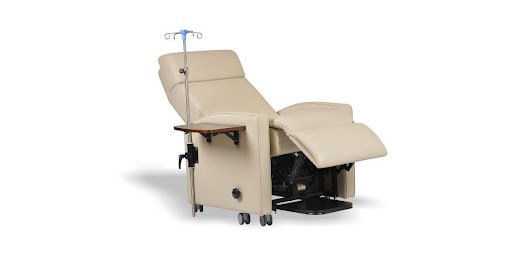
Long treatment sessions in healthcare settings-for infusion, oncology, or dialysis-often mean that patients will be seated or semi-reclined for hours. This extended period of time requires more than a simple chair that means they need a thoughtful design that supports the body, eases tension, and promotes dignity. The right piece of furniture can make a measurable difference in patient comfort and care quality. Among the best options on the market are specialized solutions such as the oncology recliner chair and advanced medical power recliners that respond to both comfort and clinical demands.
What Are Medical Power Recliners?
Medical power recliners are electrical chairs specifically designed for health care environments to handle patients who may spend long stretches of time in one position. Unlike regular recliners that are placed in one’s home, these chairs have motorized adjustments, sturdy frames, and upholstery suitable for frequent cleaning and heavy use. For instance, Esthetica Medical Furniture’s medical recliner is manufactured with a reinforced, powder-coated steel frame to provide strength and durability. It is ideal for use in areas such as infusion, dialysis, oncology, and phlebotomy.
The term oncology recliner chair generally refers to a version of the medical power recliner optimised for chemotherapy or cancer treatment suites. Ergonomics, mobility, patient access, and comfort are built into its design.
Why Are These Recliners Important During Long Treatment Sessions?
These problems that arise when a patient is kept in one position for several hours include pressure build-up under the body, muscle fatigue, compromised circulation, and general discomfort. Such complications can increase anxiety, reduce treatment tolerance, and may even prolong recovery periods.
The patient’s comfort is not just a nice-to-have. In some observations, discomfort during prolonged infusion sessions was significantly reduced with adjustable and ergonomic seating. While the source of the exact figure is different, the conclusion is the same, that is better seating is equal to better experience.
Medical power recliners help in tackling these issues in various ways. They provide recline adjustments to have the patients rest in semi-upright or flat-bed positions, thus easing pressure on the back and legs. Good models feature fold-down side tables, IV-pole stands, and easy access features such as swing-away arms that make entry and exit simpler. A typical example is the Esthetica Medical Furniture design, with fold-down side tables on either side, a retractable footrest, a built-in food tray, and caster wheels for mobility.
This means that this kind of design incorporates the patient’s comfort into the therapeutic environment rather than making it solely an afterthought.
When Should Healthcare Facilities Use an Oncology Recliner Chair?
Facilities should consider the adoption of an oncology recliner chair or an advanced medical power recliner when:
- Patients receive long-duration treatments quite often, such as chemotherapy sessions that last between 2-4 hours or even more.
- There is a need for flexible seating that can support reclining, semi-supine, and flat positions to ease back or leg strain.
- Patient feedback, when he faces discomfort, difficulty in entry/exit, or fatigue during treatment.
- The facility would like to enhance the patient experience, reduce strain on staff-for instance, by reducing lifting or repositioning-and offer a more modern, patient-centered environment.
In short, any healthcare facility where people spend prolonged and repetitive time in one chair deserves an upgrade to a high-quality recliner. When you finally realize that seating isn’t incidental but part of the treatment support, you will know it’s time.
Where Can These Medical Power Recliners Commonly Be Used Today?
These chairs find their use in the following contexts in healthcare:
- Oncology suites, where chemotherapy infusion sessions require comfort and adjustability.
- Dialysis centres, treatment can take several hours, and the repositioning of patients is very important.
- Infusion therapy units for pain management, autoimmune treatments, etc.
- This includes outpatient clinics where repeated therapies are conducted with patients and thus require seating that is ergonomic for comfort and safety.
- Recovery or observation areas in hospitals where the patient may be lying or reclining for an extended period.
Across all these environments, the settings are increasingly moving away from clinical furniture to designs that emphasize comfort, hygiene, and functionality. Medical power recliners are just one representation of that shift.
How Do Medical Power Recliners Improve Patient Comfort?
Let’s break down the practical ways these chairs make a difference:
- Motorised Adjustments: The ability to raise or lower the back, tilt the footrest, or transition to a flat position means the patient does not need to manually reposition themselves or be lifted by a caregiver. This reduces effort and improves posture.
- Multi-position support: A quality chair can enable a patient to move from upright for conversation to semi-reclined for rest to flat-bed for sleep or observation. Esthetica Medical Furniture offers a recliner with the following dimensions: length 177 cm in flat bed, width options suited to side armrests or none.
- Ergonomic Padding and Accessibility: Longer sessions put pressure on the under-body surfaces. The seat cushion of the Esthetica chair is engineered for maximum comfort during extended use. Swing-away side arms enable good patient access and exit. 3-inch caster wheels assist in repositioning for better mobility.
- Safety and Functionality Features: Fold-down side tables, built-in food tray, IV pole stand, and handle-operated remote control are all features included in the Esthetica design.
These features mean that patient comfort is maintained without compromising clinical functionality. In short, an oncology recliner chair or other medical power recliner shifts the experience of the patient from “just waiting in a chair” to “resting in a therapeutic seat”. That shift can reduce discomfort, anxiety, and treatment fatigue, and enable better interaction between patients and caregivers.
Conclusion
Comfort during long treatment sessions is not an optional extra as it is a foundational part of quality healthcare delivery. When a patient sits for hours, each part of the seat counts: frame strength, upholstery, adjustability, ergonomics, caregiver accessibility and mobility. Employing a dedicated oncology recliner chair or advanced medical power recliners shows that a facility values not just the treatment, but the patient’s experience. Above all, for medical clinics and hospital facilities in need of a trustworthy supplier, one can consider Esthetica Medical Furniture. Based in India, the company specializes in medical furniture created to combine durability and comfort with well-considered design. The Medically Powered Recliner is a good example of how engineering meets human-centred care-from a reinforced steel frame to easy-to-clean upholstery, mobility casters, fold-down tables, and to motor controls. By investing in such seating solutions, the provider conveys a clear message to patients that their comfort is equally crucial, if not much more important, than the provided treatment.
