

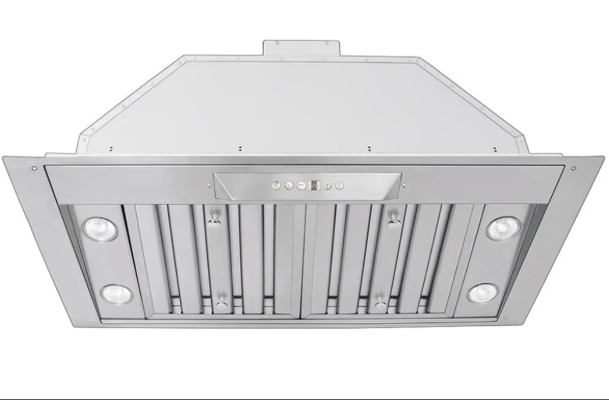
Designing a high-performance kitchen requires careful attention to ventilation, especially when using large professional-style ranges. Cooking at high heat produces smoke, grease particles, and airborne contaminants that demand powerful extraction systems. For expansive cooktops, selecting a 48-inch kitchen hood ensures broader coverage and improved capture efficiency across all burners. Proper airflow management not only protects indoor air quality but also prevents grease buildup and lingering odors. Homeowners investing in premium appliances should prioritize ventilation that matches cooking output, making airflow efficiency a critical factor in long-term kitchen performance and overall comfort.
Understanding Airflow Requirements for Large Ranges
Airflow efficiency is measured in cubic feet per minute, or CFM, which indicates how much air a ventilation system can move. When selecting a 48-inch kitchen hood, matching the CFM rating to the total BTU output of your range is essential for effective smoke and heat removal. Professional-style gas ranges often produce significantly higher BTUs than standard cooktops, requiring stronger ventilation performance.
Industry guidelines suggest approximately 100 CFM for every 10,000 BTUs of cooking power. For example, a 120,000 BTU range may require at least 1,200 CFM to maintain optimal air quality. Inadequate airflow allows smoke and grease particles to escape into the kitchen, reducing efficiency and increasing surface buildup. Properly calculated airflow ensures contaminants are captured before spreading throughout the home.
Importance of Hood Size and Coverage Area
Beyond airflow capacity, physical coverage plays a critical role in performance. A 48-inch kitchen hood is specifically designed to align with large cooking surfaces, ensuring that rising smoke and steam are captured effectively from edge to edge. Undersized hoods may leave outer burners exposed, reducing overall efficiency and allowing fumes to circulate.
Depth and mounting height also influence capture rates. Ideally, the hood should extend slightly beyond the cooktop width and be installed at the manufacturer’s recommended height above the range. Deeper canopy designs improve containment by preventing airflow from dispersing sideways. Selecting the correct size ensures consistent ventilation across all cooking zones, particularly during high-heat tasks like searing or grilling.
Ducted vs Ductless Ventilation Systems
Ventilation systems are typically categorized as ducted or ductless. When choosing a 48-inch kitchen hood, ducted systems are generally preferred for maximum airflow efficiency because they expel contaminated air outdoors rather than recirculating it. This method provides superior removal of smoke, grease, and combustion byproducts.
Ductless systems use charcoal filters to clean and recirculate air back into the kitchen. While easier to install, they may not deliver the same performance for heavy cooking applications. For homeowners prioritizing strong airflow and long-term air quality, ducted configurations typically offer better results. Evaluating your kitchen layout and access to exterior venting will determine the most practical solution.
Motor Power, Noise Levels, and Energy Efficiency
High airflow capacity should be balanced with noise control and energy performance. A well-designed 48-inch kitchen hood incorporates multiple fan speeds, allowing users to adjust power levels according to cooking intensity. Variable speed controls reduce unnecessary energy consumption while maintaining effective ventilation during lighter tasks.
Modern systems often include insulated housings and advanced motor technology to minimize operational noise. Quieter operation enhances comfort, particularly in open-concept homes where the kitchen connects to living areas. Additionally, LED lighting integrated into hood designs improves visibility over the cooktop without significantly increasing energy use. Evaluating motor quality and construction materials ensures durability alongside efficient performance.
Conclusion
Selecting the right ventilation system for a large kitchen requires careful evaluation of airflow capacity, coverage dimensions, installation requirements, and overall design compatibility. Matching hood size to cooktop output ensures effective capture of smoke, grease, and heat, preserving indoor air quality and maintaining kitchen cleanliness. For homeowners exploring alternative ventilation options where exterior ducting is limited, solutions such as ductless range hoods in wall-mount models can provide flexibility while supporting modern kitchen layouts. Duct configuration, motor efficiency, and structural design all contribute to long-term performance and reliability.
