

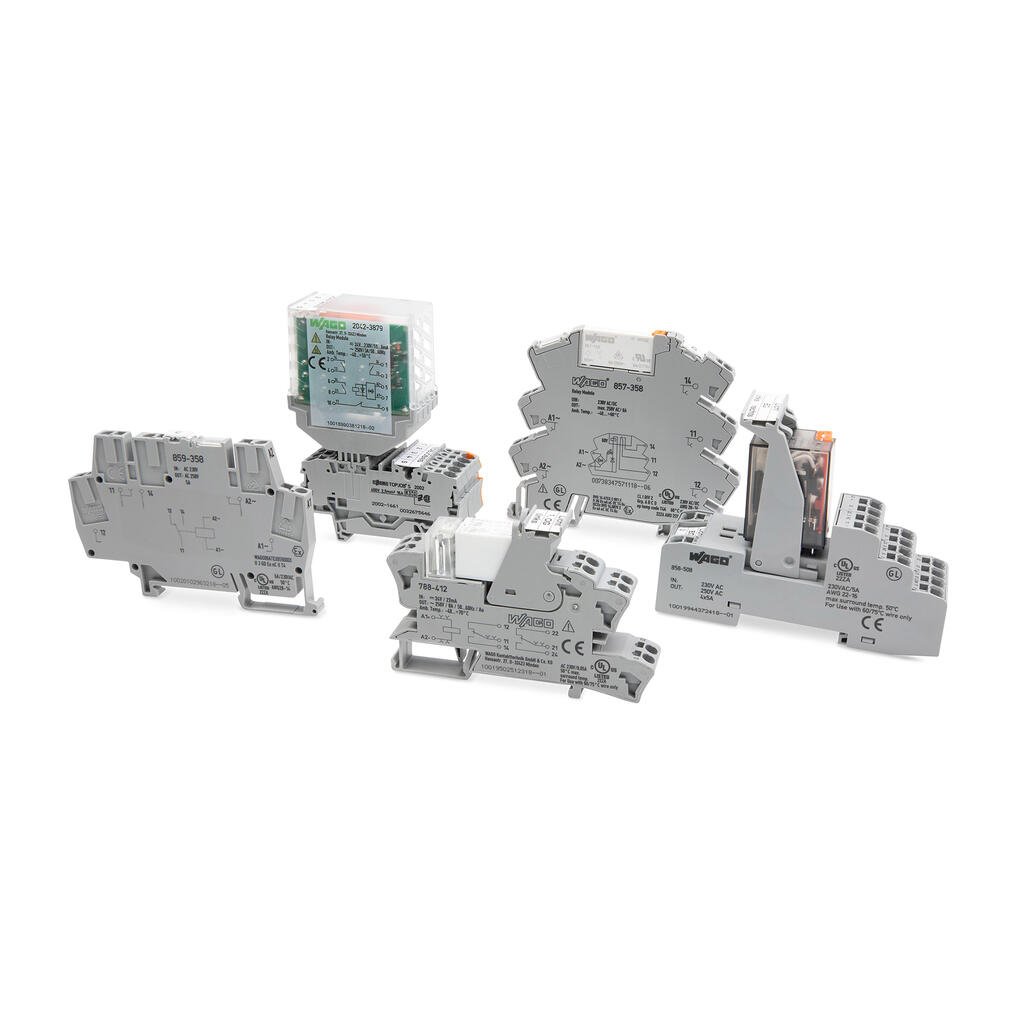
Modern factories run on complex networks of signals and power. Every machine needs precise commands to function safely. Industrial automation requires fast, precise signal switching to maintain continuous production-line operation. The standard control systems face difficulties in operating under extreme electrical noise and power load variations. Sensitive electronics can be damaged through these variations, while system failures occur through these same variations. Engineers must ensure total signal isolation to protect expensive hardware from high voltage spikes.
Relay modules and Optocoupler modules serve as the essential bridge between low-power controllers and high-power machinery. These interface components act as a shield for the brain of the system. They guarantee that every command reaches its destination without interference.
Let’s talk to understand in detail!
What Are Relay and Optocoupler Modules?
Relay modules are electrically operated switches. They allow a low-power signal to control much higher-power loads. Think of them as a remote-controlled gate for electricity. An advanced relay module ensures safe and reliable switching, offering strong protection against electrical interference and stable performance in demanding industrial environments.
Optocoupler modules are solid-state devices. They transfer electrical signals using light rather than mechanical parts. This method provides perfect signal isolation without any physical contact between circuits.
Bridging the Gap in Control Systems
These modules sit between the control system and field devices. They translate small digital pulses into physical actions. This interface layer keeps the sensitive controller safe from the heavy power found on the factory floor.
The global relay and industrial control market is expected to be worth about $155.4 billion by 2025 and $161.14 billion by 2026.
Comparison Between Relay, Solid-State Relay, and Optocoupler
Relays operate by using physical movement to create a closed circuit. This mechanical action is reliable but slower than electronic options. Solid-state relays use semiconductors for switching. The system provides faster operation with an extended lifetime because it does not have any components that can experience wear. Optocouplers focus primarily on isolation rather than high-power switching.
| Feature | Electromechanical Relay | Solid-State Relay | Optocoupler |
| Switching Speed | Slower | Very Fast | High Speed |
| Durability | Limited by wear | Extremely High | Extremely High |
| Load Capacity | Very High | High | Low |
| Isolation | Physical Gap | Semiconductor | Optical |
How Relay Modules Enable Signal Switching
A Relay module works on the principle of electromagnetism. An internal coil activates when it receives a small current. This creates a magnetic field that pulls a metal contact into place. This movement completes the circuit for the connected device. Relay modules can handle both AC and DC loads across a massive range of currents. They are perfect for controlling heavy actuators and large industrial motors. You will find them powering lamps and heavy equipment in every sector. Their ability to function across multiple applications makes them an essential component of every electrical panel.
Role of Optocoupler Modules in Signal Isolation
Optocouplers use an internal LED and a light-sensitive transistor. The input signal lights the LED. The transistor detects this light and activates the output circuit. This creates total optical isolation between the two sides. There is no electrical path for noise or surges to travel through. This design protects against ground loops and sudden voltage spikes. Sensitive control environments rely on this technology for clean signal transmission. It ensures that data remains pure even in noisy electrical environments.
Key Benefits in Industrial Applications
- Reliable switching for diverse load types
- Complete electrical separation between circuits
- Significant reduction in signal interference
- Better system stability during power surges
- Extended hardware life with less maintenance
- Simplified troubleshooting for technicians
Applications in Industrial Systems
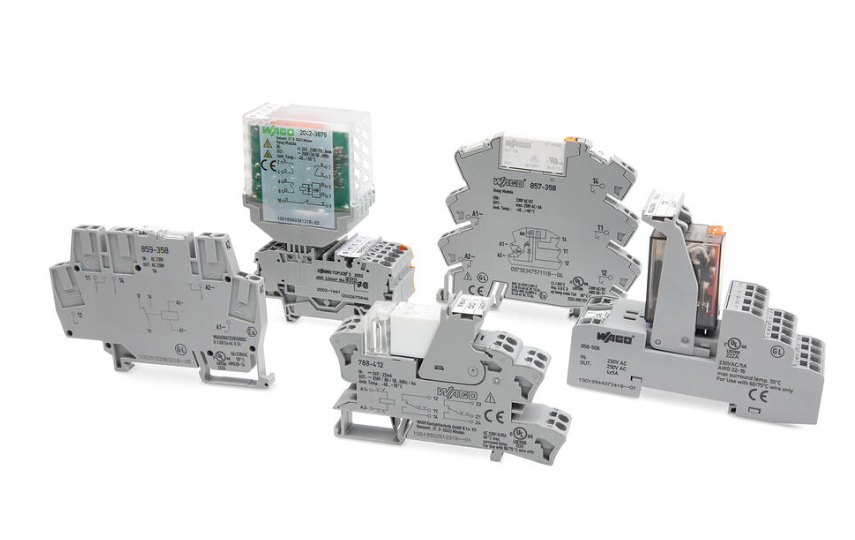
Control cabinets use these modules to link PLC outputs with field equipment. They manage the heavy lighting loads in large warehouses. Motors and conveyor belts rely on their switching capabilities every day. Process automation systems use them for signal coupling between different machine zones. You can see them in action within power plants and railway signaling systems. Manufacturing lines depend on their rugged design to keep operations running 24/7.
Integration in Control Cabinet Design
Engineers love the compact design of modern modules. They save valuable space inside crowded control cabinets. Most modules fit directly onto standard DIN rails for quick installation. This modular approach allows for easy system expansion. They work perfectly with standard wiring systems and terminal blocks. Maintenance teams can replace a single module in seconds without rewiring the entire panel. The process efficiency enables quick repairs and upgrades because it minimizes the time for system downtime.
Future Outlook of Relay and Interface Modules
The industry is moving toward solid-state and hybrid switching technologies. These offer even better performance and reliability. Control cabinets are becoming denser and more compact every year. Interface modules will remain a critical part of industrial automation.
Choosing the right switching module is vital for any successful project. Relay and optocoupler modules provide the safety and reliability that modern industry needs. They protect your investments and keep your systems running smoothly. Reliable signal switching is the secret to a long-lasting and efficient industrial setup. These small components make a massive difference in the world of automation.
FAQ’s
1. What is a relay module used for in industrial applications?
It enables a low-power controller (such as a PLC) to make high-power equipment (such as motors and heaters) safe to switch.
2. How does an optocoupler provide signal isolation?
It carries light to pass messages over a physical distance such that the input and the output sides are not electrically connected.
3. What is the difference between a relay and a solid-state relay?
In a typical relay, the components (electromagnet and contacts) are moved in a mechanical manner, but in a solid-state relay, semiconductor chips are used to switch power on or off, and none of the parts move.
4. When should you use an optocoupler instead of a relay?
An optocoupler is to be used when very high-speed switching is necessary or only when the data signals being transferred need the utmost protection against electrical noise.
5. Can relay modules and optocouplers be used together?
Yes. Many systems use optocouplers for high-speed signal processing and relays for the final stage of switching heavy electrical loads.
