

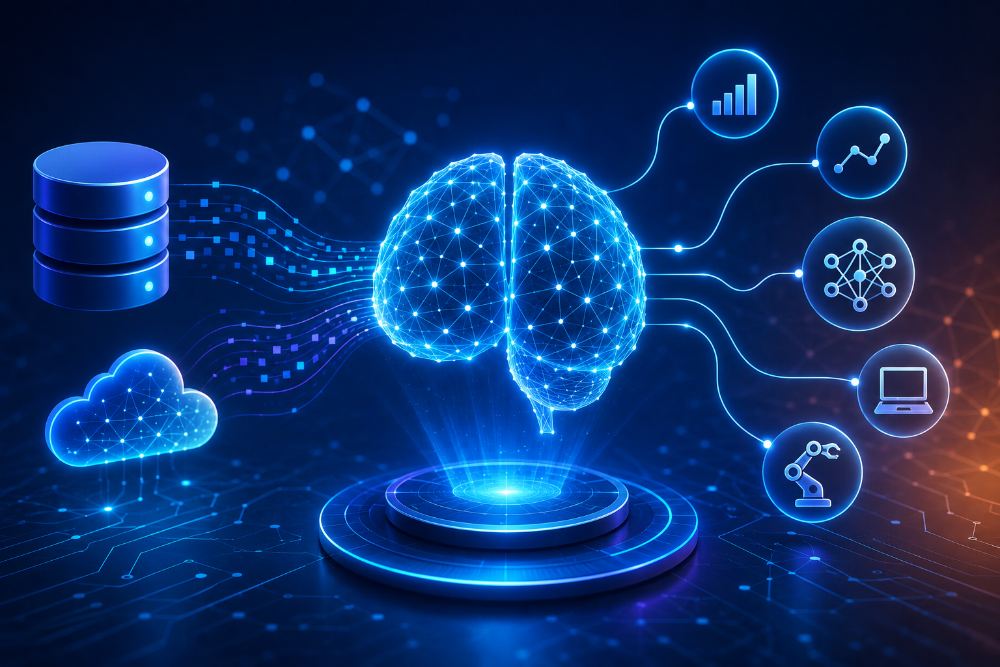
You know that feeling when a website seems to read your mind? It suggests the exact product you were about to search for, or a chatbot fixes your issue in under a minute instead of leaving you on hold for twenty minutes listening to bad music. That’s not chance. There’s machine learning working behind the scenes, quietly shaping the interaction before you even notice it.
At AtechVibe, we spend a lot of time looking at how technology reshapes daily life. Few things have reshaped the customer journey as much as machine learning has over the past few years. It’s stopped being a buzzword tossed around in marketing decks and turned into the actual infrastructure behind how businesses treat the people who buy from them. Companies that once relied on gut instinct and broad assumptions about their customers now have tools that learn, adjust, and get sharper with every interaction.
Here’s what’s really going on.
What Machine Learning Actually Does
Machine learning lets computers learn from data rather than follow a rigid set of rules someone typed out in advance. Instead of a company guessing what customers want based on a survey from three years ago, the system watches real behavior — what people click, what they buy, what they return, what they complain about — and gets better at making decisions the more it sees.
That shift is a big reason AI-driven customer experience feels so much more personal now than it did ten years ago. Back then, “personalization” often meant slapping your first name into an email subject line. Now it means the entire experience adjusts itself based on patterns a human analyst would probably never spot on their own, simply because there’s too much data to sift through by hand.
Personalization That Doesn’t Feel Forced
There was a time when every visitor saw the exact same website, the same homepage, the same generic banner ad regardless of who they were or what they’d bought before. That’s mostly gone now, at least among companies that are paying attention.
Machine learning helps companies figure out what a specific person actually wants. Streaming services build recommendations off your watch history instead of just showing you whatever’s trending that week. Online stores show you items close to what you already browsed, sometimes catching things you didn’t even realize you wanted yet. Even the timing of a promotional email gets tailored to when you’re statistically most likely to open it, rather than blasting every subscriber at 9 a.m. sharp.
The result doesn’t feel like marketing in the traditional, pushy sense. It feels like the brand actually pays attention to who you are, which is a strange thing to say about a piece of software, but it’s true.
Support That Moves Faster
Nobody wants to sit on hold. Chatbots and virtual assistants — powered by machine learning — now handle common questions instantly, which cuts that wait time down dramatically. Ask about a return policy or a shipping delay, and there’s a decent chance you’ll get an answer before you’d have even finished navigating a phone menu.
What’s interesting is that these systems don’t stay static once they’re built. Every conversation they handle teaches them something new, whether that’s picking up on tone, understanding context better, or recognizing when a customer’s frustration is starting to boil over. Fewer clunky exchanges, faster answers, less repeating yourself three times to three different people.
That doesn’t mean human agents are disappearing, despite what some headlines suggest. It means they’re freed up from answering the same five questions all day long and can spend their energy on the problems that genuinely need a person’s judgment — the messy, emotional, or complicated stuff that no algorithm handles well yet.
Catching Problems Before Customers Complain
One of the more overlooked uses of machine learning is prediction. Companies can now notice patterns that suggest a customer is losing patience or quietly thinking about leaving — often well before that customer ever files a complaint or writes an angry review.
That gives businesses a chance to act first instead of playing defense. Sometimes it’s a discount showing up at just the right moment. Sometimes it’s a helpful email answering a question the customer hasn’t even asked yet. Sometimes it’s as simple as a quick check-in call. Either way, catching the problem early can turn someone who was ready to walk away into someone who sticks around for another year.
Recommendations That Actually Fit
Ever notice how certain apps seem to know what you’ll want before you do? That’s machine learning comparing patterns across huge numbers of users and lining them up against your own specific habits, purchase history, and browsing quirks.
It’s not about throwing random products at you and hoping something sticks. It’s about cutting through the noise so what you actually see is relevant to your life, not just relevant to whoever paid for the best ad placement. Less scrolling, less irrelevant clutter, more finding what you came for in the first place.
Why It Matters for Businesses
People expect convenience now, and that expectation isn’t going away. Quick answers, relevant suggestions, interactions that don’t feel like you’re talking to a machine even when you technically are. Machine learning lets companies deliver all of that without needing to hire an army of employees to watch every single interaction manually.
For a business, that translates into happier customers, better retention, and support teams that aren’t burned out from answering the same tickets over and over again. For customers, it just means things feel smoother, faster, and a little less like a chore.
Final Thoughts
Machine learning isn’t some distant, futuristic idea anymore — it’s already woven into how we shop, get help from support teams, and use the apps we rely on every single day. As it keeps improving, the line between “decent customer service” and “customer service that actually gets you” keeps getting thinner and thinner.
At AtechVibe, we’ll keep watching these changes closely, because understanding how machine learning is reshaping customer experience today is one of the better ways to see where both technology and customer expectations are headed next.
