

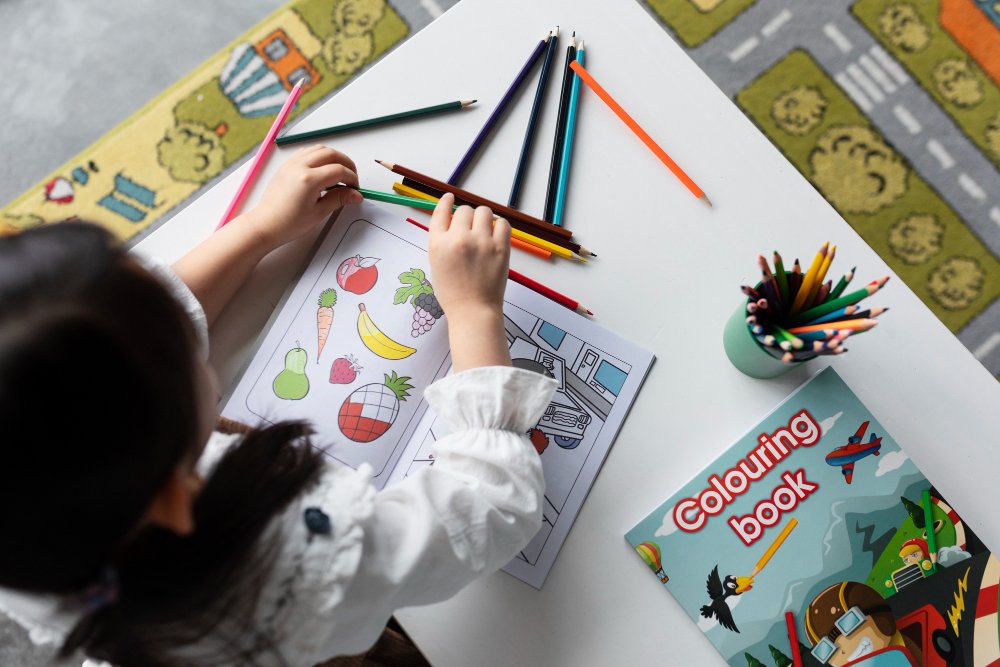
Have you ever noticed how a child can sit with crayons and paper for twenty minutes straight… completely quiet… completely focused?
It looks simple from the outside. Just coloring. Just doodling.
But we all know something deeper is happening.
Sometimes children do not have the right words. We ask, “What happened at school?” and they shrug. “Nothing.” And then a few minutes later they are drawing a giant purple monster with sharp teeth. Or a tiny stick figure standing in the rain.
That is not random. That is their feelings finding a way out.
Big Feelings… Tiny Vocabulary
Let us be real. Even we struggle to explain how we feel sometimes. So imagine being five years old and trying to describe jealousy. Or embarrassment. Or that weird mix of anger and sadness.
It is hard.
That is where children’s colouring books and drawing quietly step in. When children cannot say it, they can show it. The paper becomes their safe place. No one interrupts. No one corrects them. No one says, “That does not make sense.”
Because it does make sense. Just not in words.
And honestly… that matters more than we think.
Coloring Is Not Just Filling Spaces
We used to think coloring books were just something to keep kids busy at restaurants. Hand them crayons. Keep them quiet.
But have you ever watched closely?
The way they press harder when they are upset. The way they slow down when they start calming down. The way they choose dark colors one day and bright ones the next.
It is not about staying inside the lines. It is about releasing something.
The steady movement of coloring helps their breathing slow down. Their body relaxes. Their mind settles a little. And when their body feels safe, their emotions feel less scary.
And let us be honest… a stack of coloring pages and a box of crayons is one of the simplest tools we can offer.
Stories Do Something Special Too
Now think about bedtime stories.
We sit next to them. We read about a character who feels nervous on the first day of school. Or angry at a friend. Or scared of the dark.
And suddenly our child looks at us and says, “That happened to me.”
There it is.
Stories help children see that feelings are normal. They are not the only ones who get scared. Or mad. Or left out. When they connect with characters, it gives them permission to feel.
Sometimes they will not talk about their own feelings directly. But they will talk about the character.
“Why is she sad?”
That is usually our opening.
Creativity Makes Space Without Pressure
Here is something we have learned… when we sit down and ask too many direct questions, kids shut down.
But when we sit next to them and color? Or build something? Or read quietly?
That is when the talking starts.
No pressure. No spotlight.
They might say, “This boy in my picture is mad.”
And we can gently ask, “Oh… what happened to him?”
We are not forcing anything. We are just creating space.
Sometimes that is all they need.
It Is Not About Being Good at Art
Let us clear this up right now.
It does not matter if the drawing looks messy. It does not matter if they color outside the lines. It does not matter if the sun is purple.
Processing emotions is not neat. It is not perfect. It is real.
What matters is the process. The scribbling. The erasing. The starting over. The quiet focus. That is where the magic sits.
And honestly… we do not need fancy supplies. A few crayons. Scrap paper. A simple story before bed. That is enough.
Small moments. Big impact.
Over time, children learn something powerful… feelings are not monsters. They can be explored. They can be understood. They can even turn into something beautiful on a page.
That lesson stays.
FAQs
1. How do coloring books help children manage anger?
Coloring slows the body down. It gives children something safe to focus on when emotions feel too big. Instead of yelling or shutting down, they can press those feelings into the paper.
2. At what age can creative activities start helping with emotions?
Very young. Even toddlers benefit from scribbling and simple picture books. They may not explain their feelings clearly, but they are already expressing them.
3. Should we interpret every color or drawing?
Not really. Sometimes red is just red. Instead of guessing, we can ask gentle questions and let them lead the conversation.
4. Are books really helpful for emotional growth?
Yes. Stories help children see that others feel the same things they do. That connection makes hard emotions feel less lonely.
5. How often should children do creative activities?
There is no strict rule. A few short sessions each week is great. Even ten quiet minutes after school can help them reset.
If we give children crayons, stories, and a little bit of our time… we are giving them something steady to hold onto.
And that feels like a pretty good start.
