

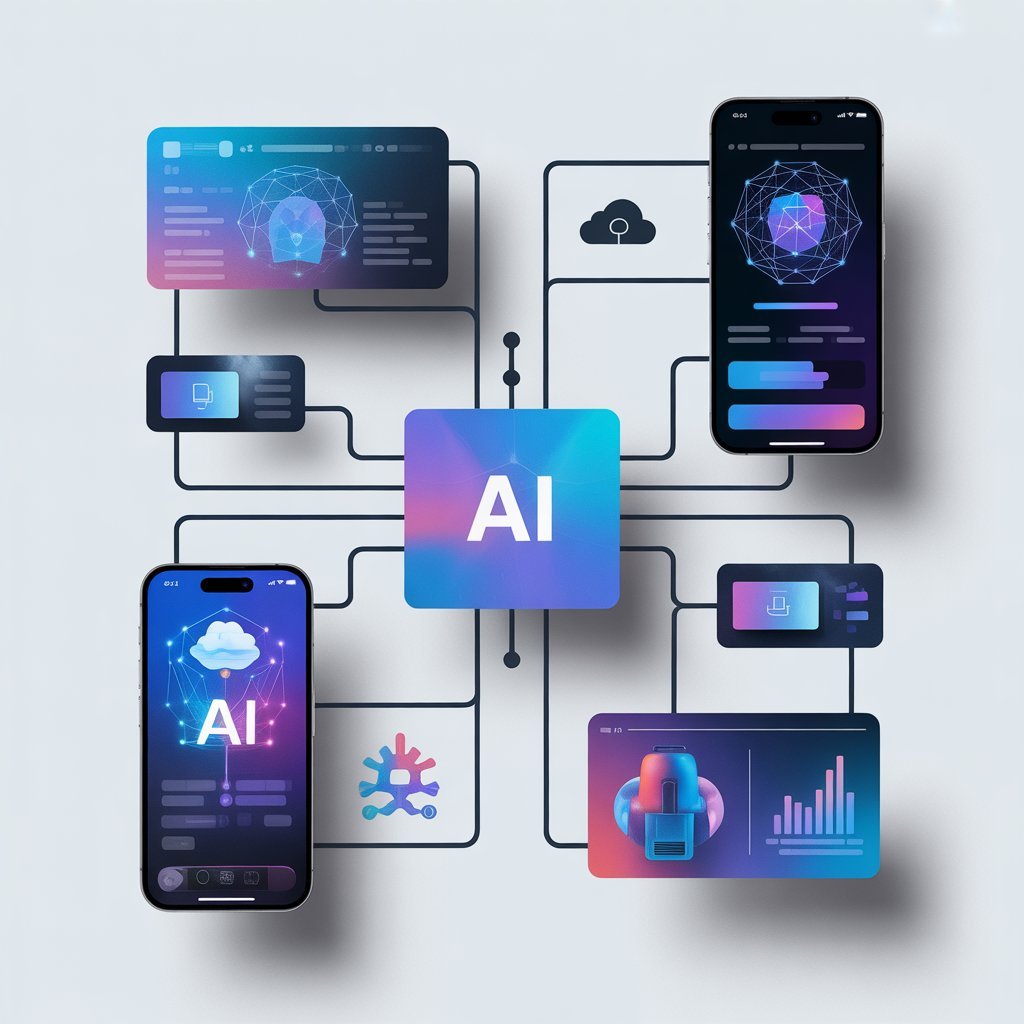
Artificial intelligence is reshaping the way software applications are designed, built, and deployed. Businesses today want faster innovation, smarter automation, and more personalized digital experiences. As a result, many organizations are exploring AI App Development Services to build intelligent applications that can analyze data, automate tasks, and improve decision-making.
However, traditional software development is still widely used for building web and mobile applications. This raises an important question for businesses and startups: should you choose AI app development services or traditional development methods?
Understanding the differences between these two approaches can help organizations make better decisions based on their goals, budget, and technical requirements. This article explores how AI-powered development compares with traditional development in terms of speed, cost, flexibility, and long-term scalability.
What Are AI App Development Services?
AI App Development Services refer to specialized services that focus on building applications powered by artificial intelligence technologies. These applications use machine learning models, natural language processing, computer vision, and predictive analytics to deliver intelligent features.
Instead of simply executing predefined logic, AI-powered apps can learn from data, automate decisions, and improve over time.
Typical AI-powered applications include:
- AI chatbots for customer support
- Recommendation engines for ecommerce platforms
- Fraud detection systems for financial services
- Predictive analytics tools for business intelligence
- AI-driven automation platforms
AI development services typically include strategy planning, data preparation, model training, integration, testing, and deployment.
What Is Traditional App Development?
Traditional development refers to the conventional method of building software using programming languages such as JavaScript, Python, Java, or Swift. Developers manually write code to define how an application behaves.
The process typically includes:
- Frontend development (user interface)
- Backend development (server logic and APIs)
- Database design and management
- Testing and debugging
- Deployment and maintenance
Traditional development focuses on building applications with predefined rules and logic rather than systems that learn from data.
Key Differences Between AI App Development Services and Traditional Development
While both approaches aim to create functional applications, they differ significantly in how they operate and the value they provide.
Intelligence and Automation
The most significant difference lies in the level of intelligence within the application.
AI App Development Services enable applications to analyze patterns, make predictions, and automate decisions based on data. This allows businesses to create smarter systems that continuously improve performance.
Traditional applications, on the other hand, rely on fixed rules and manual programming. They perform tasks exactly as coded but do not adapt or learn from new data without additional development work.
Speed of Innovation
AI-powered development often accelerates innovation because many AI tools and frameworks are already available. Developers can integrate pre-trained models and AI APIs to quickly build advanced features.
Traditional development may take longer because each function must be manually coded, tested, and optimized.
However, the timeline for AI projects can also depend on data preparation and model training, which can add complexity in certain cases.
Development Cost
Cost is another important factor.
AI App Development Services may require initial investment in data infrastructure, machine learning models, and specialized expertise. However, these systems can automate many processes and reduce long-term operational costs.
Traditional development generally requires a team of developers, designers, testers, and DevOps engineers. While it may be simpler initially, ongoing maintenance and feature development can increase long-term expenses.
Skill Requirements
AI app development requires expertise in multiple disciplines, including:
- Machine learning
- Data science
- AI model training
- Data engineering
This means businesses often rely on specialized development services or AI engineers.
Traditional development focuses primarily on software engineering skills such as coding, system architecture, and database management.
Flexibility and Customization
Traditional development offers maximum flexibility because developers have complete control over the application architecture and codebase. This makes it ideal for complex enterprise systems with highly customized requirements.
AI development services also offer flexibility but often depend on data availability and model capabilities. Certain AI systems may require large datasets or specialized infrastructure to function effectively.
Scalability and Performance
Both approaches can scale effectively when built properly. However, they scale in different ways.
AI-powered applications can scale intelligence. For example, recommendation engines become more accurate as more user data becomes available.
Traditional applications scale primarily through infrastructure and performance optimization rather than learning capabilities.
When AI App Development Services Are the Better Choice
Businesses should consider AI App Development Services when they want to build applications that rely on intelligent automation or data-driven insights.
AI development is particularly useful for:
- Customer support automation through chatbots
- Personalized product recommendations
- Predictive analytics and forecasting
- Fraud detection systems
- AI-powered content generation tools
If your application requires advanced automation or pattern recognition, AI development services can provide a powerful advantage.
When Traditional Development Is the Better Choice
Traditional development remains the best option for many applications that require straightforward functionality without complex data analysis.
Examples include:
- Standard ecommerce websites
- Simple mobile apps
- Content management systems
- Internal business dashboards
- Applications with strict compliance requirements
In these cases, traditional development may offer faster implementation and simpler maintenance.
The Hybrid Approach: Combining AI and Traditional Development
In reality, many modern applications combine both approaches. A traditional application architecture can serve as the foundation while AI services provide intelligent features.
For example:
- An ecommerce app may use traditional development for the storefront while integrating AI-powered recommendation engines.
- A customer service platform may combine standard backend systems with AI chatbots for automation.
- A marketing platform may use traditional infrastructure alongside AI-powered analytics tools.
This hybrid model allows businesses to enjoy the reliability of traditional development while leveraging the intelligence of AI.
Future Trends in AI-Powered App Development
The rise of generative AI, automation platforms, and AI-assisted coding tools is making intelligent application development more accessible than ever.
In the coming years, businesses will increasingly adopt AI-powered tools to accelerate development cycles and improve software capabilities. AI development services will likely become a standard component of digital transformation strategies.
At the same time, traditional development will continue to play an important role in building scalable and customizable software architectures.
Conclusion
Choosing between AI App Development Services and traditional development depends on the specific needs of your project. AI-powered development enables intelligent automation, predictive insights, and adaptive applications, making it ideal for data-driven products. Traditional development, however, remains essential for building stable, customizable systems with clearly defined functionality. Many successful businesses now combine both approaches to create powerful hybrid solutions that balance reliability with innovation. By understanding the strengths of each method, organizations can make strategic decisions that support long-term growth and technological advancement.
For more details visit AI Builder Battle
