

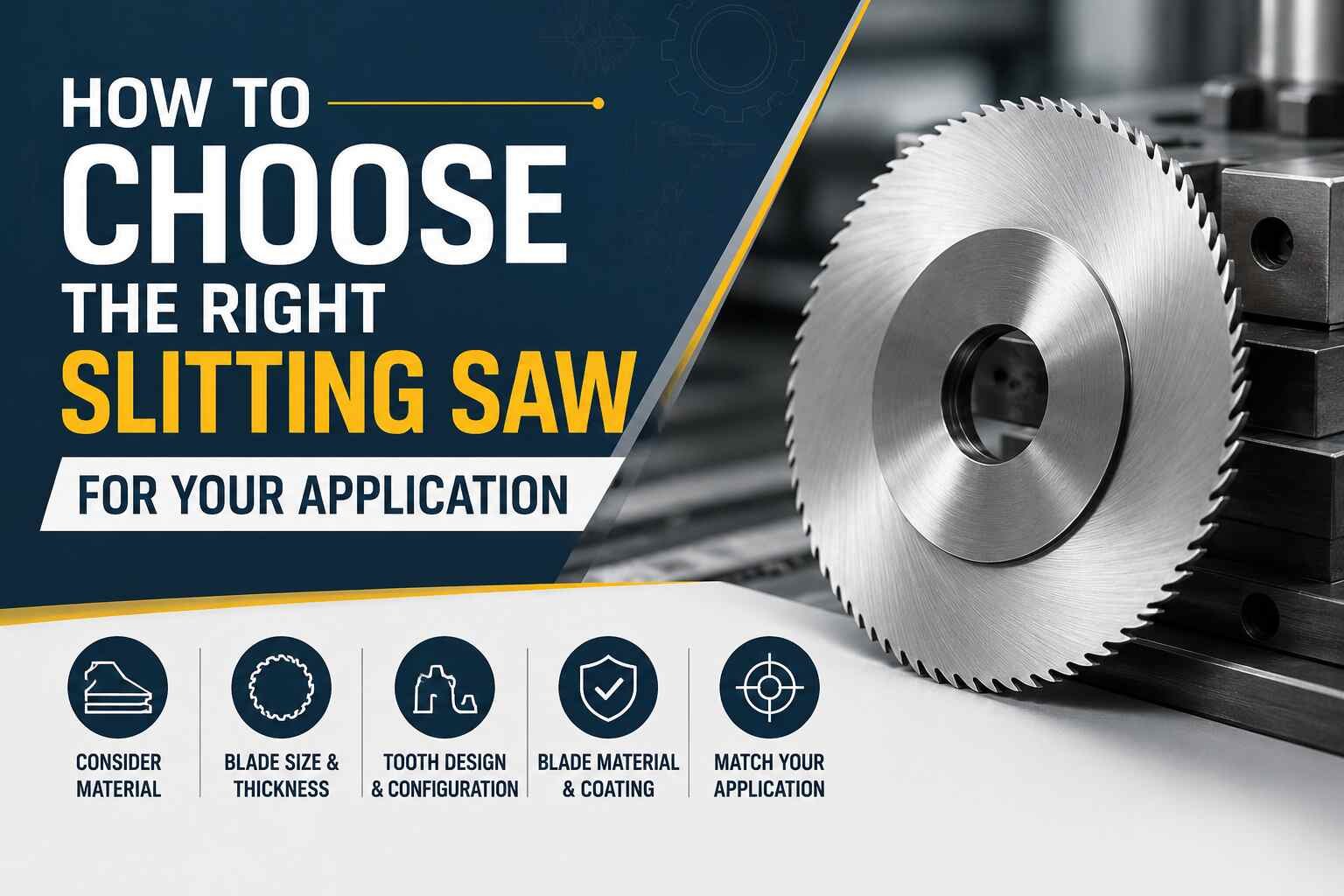
Selecting the right cutting tool is essential for achieving precise results, maximizing productivity, and reducing operational costs in machining processes. Among the many cutting tools used in industrial manufacturing, the slitting saw is one of the most effective for producing narrow slots, grooves, and precision cuts in a wide variety of materials. However, choosing the right tool requires careful consideration of several factors, including material type, blade dimensions, tooth configuration, and operating conditions.
This guide explains the key considerations that can help manufacturers, machinists, and production managers select the ideal slitting saw for their specific application.
1. Understand the Material Being Cut
The first step in choosing the right cutting tool is identifying the material you plan to machine. Different materials require different blade characteristics to ensure clean cuts and long tool life.
For softer materials such as aluminum, brass, and plastics, blades with larger tooth spacing are often preferred because they allow chips to evacuate more efficiently. Harder materials such as stainless steel, tool steel, and titanium require stronger cutting edges and more durable blade materials to withstand increased cutting forces.
Matching the blade to the material not only improves cut quality but also minimizes wear and prevents premature tool failure.
2. Consider Blade Material
The performance of a cutting tool largely depends on the material from which it is manufactured. Common options include:
- High-Speed Steel (HSS)
HSS blades offer excellent versatility and affordability. They are suitable for general-purpose machining and can handle a wide range of materials. Many workshops use HSS tools for routine cutting operations due to their balance of durability and cost-effectiveness.
- Cobalt High-Speed Steel
Cobalt-enhanced blades provide greater heat resistance and wear resistance compared to standard HSS. They are particularly useful when cutting harder metals or operating at higher speeds.
- Carbide-Tipped Blades
Carbide tools deliver exceptional hardness and extended service life. They are ideal for high-production environments where precision and consistency are critical. Although carbide blades have a higher initial cost, they often provide greater long-term value through reduced downtime and longer operational life.
3. Select the Appropriate Diameter
Blade diameter directly affects cutting depth and machine compatibility. Larger diameters can achieve deeper cuts, while smaller diameters are often preferred for delicate or precision operations.
When selecting a diameter, consider:
- Required cutting depth
- Machine spindle capacity
- Available workspace
- Material thickness
Choosing the correct size helps ensure stable cutting performance and prevents unnecessary strain on equipment.
4. Evaluate Blade Thickness
Blade thickness plays a major role in determining the width of the cut and the overall efficiency of the machining process.
Thin blades create narrow slots and minimize material waste. They are commonly used in precision manufacturing applications where accuracy is essential.
Thicker blades provide greater rigidity and stability, making them suitable for heavy-duty cutting operations. They can withstand higher cutting forces and reduce the risk of blade deflection.
Finding the right balance between precision and strength is important when selecting a slitting saw for industrial use.
5. Choose the Correct Tooth Configuration
The number of teeth and tooth design significantly influence cutting performance.
- Fine-Tooth Blades
Fine-tooth configurations are ideal for thin materials and applications requiring smooth finishes. They produce cleaner cuts but may generate more heat if chip evacuation is restricted.
- Coarse-Tooth Blades
Coarse-tooth blades are better suited for thicker materials and higher feed rates. The larger spacing between teeth allows chips to clear efficiently, reducing heat buildup and improving productivity.
Manufacturers should evaluate their production requirements and desired finish quality when selecting tooth geometry.
6. Consider Cutting Speed and Feed Rate
Every machining operation has specific speed and feed requirements. Using the wrong combination can lead to poor cut quality, excessive wear, or blade damage.
A properly selected slitting saw should be capable of operating within the recommended speed range for the material being cut. Following manufacturer guidelines helps maintain tool performance and ensures consistent production results.
Monitoring cutting conditions and making adjustments when necessary can further extend blade life and improve efficiency.
7. Assess Surface Finish Requirements
Different industries have varying quality standards. Aerospace, automotive, and medical manufacturing often require extremely precise cuts with smooth surface finishes.
If finish quality is a priority, choose blades specifically designed for precision machining. High-quality tooth grinding, advanced coatings, and optimized geometries can significantly improve final results.
Investing in a premium slitting saw can reduce secondary finishing operations and help manufacturers meet strict production tolerances.
8. Check Machine Compatibility
Before purchasing any cutting tool, verify that it is compatible with your equipment. Factors to review include:
- Arbor size
- Spindle speed range
- Machine power capacity
- Mounting configuration
Using an incompatible blade can result in vibration, poor cutting performance, and potential safety risks. Proper matching ensures stable operation and maximizes productivity.
9. Evaluate Coatings and Surface Treatments
Modern cutting tools often feature specialized coatings that enhance performance and durability.
Common coating options include:
- Titanium Nitride (TiN)
- Titanium Aluminum Nitride (TiAlN)
- Aluminum Titanium Nitride (AlTiN)
These coatings improve wear resistance, reduce friction, and increase heat tolerance. For demanding applications, coated blades often provide superior performance compared to uncoated alternatives.
10. Balance Quality and Cost
While budget considerations are important, focusing solely on the lowest purchase price can be costly in the long run. Higher-quality tools typically deliver:
- Longer service life
- Improved cutting accuracy
- Reduced downtime
- Lower replacement frequency
- Better production efficiency
Evaluating total operating costs rather than initial purchase price often leads to better investment decisions.
Conclusion
Choosing the right slitting saw requires careful evaluation of material type, blade material, diameter, thickness, tooth configuration, machine compatibility, and production requirements. A well-selected tool can significantly improve cutting accuracy, productivity, and overall manufacturing efficiency.
Whether you are producing precision components or handling high-volume industrial operations, investing in the correct slitting saw helps ensure reliable performance and long-term value. By understanding your application requirements and selecting a high-quality slitting saw designed for those needs, you can achieve cleaner cuts, reduce operating costs, and maximize the productivity of your machining process.
