

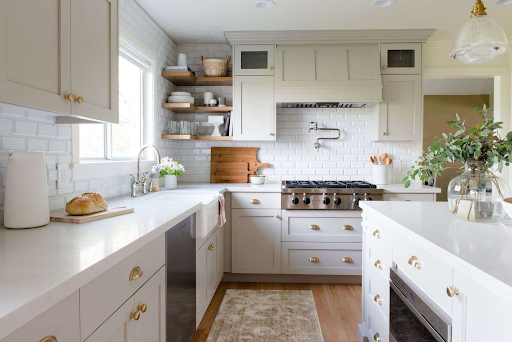
You’ve been thinking about it for a while. Maybe you walked through a friend’s renovated kitchen and couldn’t stop staring at the countertops. Maybe you stood in a stone yard and ran your hand across a cool, smooth slab. Whatever sparked it, marble has your attention now.
So the real question is: can you actually afford it?
The honest answer is yes if you plan carefully. Plenty of homeowners here in Milwaukee have done it without blowing their budget. The difference between a renovation that stays on track and one that spirals into stress comes down to one thing: knowing the numbers before you start.
This guide walks through everything. Materials, labor, hidden costs, money-saving tricks, and realistic budget ranges all in plain language. No fluff, no vague estimates. Just what you actually need to know.
If marble kitchen countertops are on your list, it’s worth understanding why they cost what they cost. Marble is a natural stone. Every slab comes from the earth, gets shipped across the world or across the country, and is shaped by hand in a fabrication shop. That process takes real skill — and the price reflects it.
I. Why the Price Varies So Much
Not all marble is priced the same. Walk into any stone yard and you’ll see slabs ranging from $40 per square foot to well over $200. That gap isn’t random.
Here’s what drives the price up or down:
- Type of marble: Carrara is the most common and affordable. Calacatta and Statuario are rarer, with bolder veining and a much higher price tag.
- Where it comes from: Italian marble typically costs more than domestic stone. Both can look stunning in the right space.
- Grade: Commercial-grade marble is budget-friendly. Premium and rare slabs carry a significant markup.
- Finish: Polished finishes are the most popular. Honed and leathered finishes are trending but may cost a bit more depending on the fabricator.
The good news is that once you understand these factors, you can make smart trade-offs. You don’t have to spend at the top of the range to get a stunning result.
II. Breaking Down Every Cost You’ll Face
Materials
This is usually the largest line item. Marble slabs are priced per square foot, and you’ll pay for the full slab not just the usable area. Always account for 10–15% extra for cuts, waste, and mistakes.
Skipping that buffer is one of the most common budgeting mistakes. Fabricators see it constantly. You run short, you need more stone, and now you’re paying rush fees or scrambling to find a matching piece.
Fabrication
Raw stone doesn’t arrive at your home ready to install. A fabricator cuts it to your measurements, shapes the edges, polishes the surface, and drills cutouts for sinks and faucets. Budget $10–$30 per square foot for this work on top of materials.
Edge profiles matter here. A simple eased or beveled edge is affordable and looks clean. An ogee or waterfall edge costs more sometimes significantly. If you love a premium edge, apply it only to the visible front of an island and use simpler profiles elsewhere.
Labor and Installation
Milwaukee contractors typically charge $35–$100 per hour for countertop installation. Some quote a flat per-square-foot rate instead. Either way, get clarity on what’s included before you agree to anything.
Old countertop removal is often billed separately usually $50–$150. That number seems small but it catches homeowners off guard when it’s not in the original quote.
Cutouts and Custom Work
Each sink cutout typically runs $50–$200. Faucet holes, cooktop openings, and any custom shaping add to that. List every cutout you need when requesting quotes so there are no surprises at invoice time.
Sealing
Marble is porous. It stains if left unsealed. Your contractor should seal it at installation — confirm this is included. After that, plan on resealing every one to two years. DIY sealing kits run $30–$60. Professional service costs $100–$200.
III. Hidden Costs That Quietly Break Budgets
These are the costs that don’t show up in the first quote but tend to surface mid-project. Knowing about them upfront is half the battle.
- Cabinet reinforcement: Marble is heavy. Older cabinets sometimes need added support before installation.
- Plumbing reconnection: Disconnecting and reconnecting sink plumbing adds $100–$400 depending on complexity.
- Backsplash updates: New stone countertops often make an old backsplash look out of place. Budget for updates if needed.
- Delivery fees: Large slabs require special transport. Charges vary by supplier and distance.
- Permits: Some Milwaukee renovation projects require a permit. Ask your contractor upfront — don’t assume.
The simplest protection against these surprises is an itemized quote. If a line item isn’t listed, ask your contractor to account for it explicitly.
IV. Understanding the Price Per Square Foot
This is the most searched question homeowners have when researching stone renovations — and one of the most confusing to answer because the range is genuinely wide.
The marble price per square foot depends on the type, grade, and where you source it. Here’s a straightforward breakdown:
| Marble Type | Material Cost (per sq ft) | Best For |
| Carrara | $40–$80 | Budget-conscious renovations |
| Calacatta | $90–$180 | Premium kitchens and bathrooms |
| Statuario | $150–$250+ | Luxury, high-end projects |
| Emperador | $60–$120 | Dark, dramatic spaces |
| Domestic options | $30–$60 | Cost-saving without sacrificing beauty |
Keep in mind: materials are just one part of your total. Add fabrication and labor and your installed cost will typically run 2–3x the slab price alone.
In Milwaukee, local stone yards and fabricators sometimes offer much better pricing than big-box home improvement stores. It’s worth calling two or three local suppliers before making any decisions. The difference can be hundreds of dollars on the same project.
V. Building a Budget That Actually Works
Once you understand the cost pieces, putting together a realistic budget is straightforward. Here’s a general range based on project size:
- Small bathroom vanity (under 20 sq ft): $800–$2,500 fully installed
- Average kitchen (40–60 sq ft): $3,500–$7,500 fully installed
- Large kitchen with island (70+ sq ft): $8,000–$15,000+
These figures include materials, fabrication, and labor. They don’t account for backsplash work, plumbing changes, or structural modifications.
One rule worth committing to: always add 15–20% on top of your estimate as a contingency buffer. Something always comes up. A buffer means you handle it without panicking.
VI. How to Get Quotes the Right Way
Never accept the first quote you get. Aim for at least three bids from different contractors. This gives you a sense of the true market rate in Milwaukee and protects you from overpaying.
Give every contractor the same information when requesting a quote: exact square footage, marble type, edge profile, number of cutouts, and whether old countertops need to be removed. Inconsistent information leads to incomparable quotes which makes it impossible to evaluate fairly.
Watch out for these warning signs:
- A bid that’s dramatically lower than the others quality cuts are usually the reason
- Lump-sum quotes with no itemized breakdown
- No mention of sealing, removal, or delivery costs
- High-pressure tactics to sign quickly
In Milwaukee, contractor licenses can be verified through the Wisconsin Department of Safety and Professional Services. Two minutes of verification can save you months of regret.
VII. Practical Ways to Reduce Your Total Cost
There’s nothing wrong with looking for savings. Here are strategies that actually work:
Look for remnant slabs. Fabricators regularly have leftover pieces from larger jobs. For stone countertop installation projects in smaller spaces bathroom vanities, bar tops, laundry rooms remnants are a genuinely excellent option. You get the same quality stone at a fraction of the cost.
Buy direct from a local stone yard. If you want better pricing on affordable marble countertops for your kitchen in Milwaukee, going straight to a wholesale supplier cuts out the markup. Many Milwaukee stone yards sell directly to homeowners. Just call ahead and ask.
- Use standard edges on hidden surfaces. Reserve the premium profile for the front of your island. Use simpler edges everywhere else.
- Handle demo yourself. Removing the old countertops before the crew arrives can save $100–$200 in labor.
- Schedule in the off-season. Winter months tend to be slower for contractors. You may negotiate a better rate.
- Consider domestic marble. It looks nearly identical to imported stone in many applications — at a noticeably lower price.
Strategic choices in the planning stage can realistically save you $500–$1,500 on a full kitchen project.
VIII. Marble Long-Term Maintenance and Resale Value
Marble isn’t just a surface. It’s an investment. Done right, it raises your home’s value and makes your kitchen or bathroom more appealing to future buyers.
That said, marble does require regular care. Here’s what that looks like in practice:
- Seal annually: Use a penetrating impregnating sealer. The whole process takes about 30 minutes.
- Clean with pH-neutral products: Acidic cleaners — vinegar, lemon juice, anything citrus-based etch marble. Avoid them completely.
- Wipe spills immediately: Red wine, coffee, and oil are the most common culprits for staining.
- Use cutting boards and trivets: Marble scratches. Protect the surface from daily wear.
Milwaukee real estate agents consistently note that natural stone countertops are a selling point that buyers specifically ask about. Homes with marble or granite surfaces appraise higher than comparable homes with laminate or synthetic materials.
When you account for the added value and the decades-long lifespan, the upfront cost of marble starts to look a lot more reasonable.
IX. Financing Options Worth Considering
If paying everything upfront isn’t realistic, there are smart ways to finance a renovation:
- Home equity line of credit (HELOC): Often the lowest interest rate for homeowners with built-up equity
- Home improvement loans: Fixed-term personal loans available through most banks and credit unions
- Contractor financing: Some Milwaukee fabricators offer in-house payment plans
- 0% APR credit cards: Useful for smaller projects if you can pay off the balance within the promotional window
Whatever option you choose, make sure the monthly payment is genuinely comfortable. A beautiful kitchen isn’t worth financial stress every time the bill arrives.
Final Thoughts
Marble is not an impulse buy. It’s a decision worth taking your time on.
But it’s also not out of reach. With honest budgeting, a solid contingency plan, and a contractor you trust, marble countertops are a realistic goal for Milwaukee homeowners at almost every budget level.
Know your square footage. Pick a marble type that fits your budget. Get three quotes. Add your buffer. Don’t skip the sealing. Follow those steps and you’ll have countertops you’re genuinely proud of — for decades.
Frequently Asked Questions
How much does marble countertop installation cost in Milwaukee?
For an average kitchen, expect $3,500–$8,000 fully installed. Smaller bathrooms can come in under $2,500. Large kitchens with islands can reach $15,000 or more. The final number depends on marble type, square footage, and the contractor you hire.
Is marble harder to maintain than granite or quartz?
A little, yes. Marble is softer and more porous than granite or engineered quartz. It needs sealing and careful cleaning. But with basic maintenance, it lasts decades and develops a beautiful patina over time.
Can I install marble countertops myself?
You could but it’s not recommended for most people. Marble slabs are very heavy and unforgiving. One wrong cut can ruin an expensive piece. Hiring a professional fabricator is almost always the better call.
What is the most affordable type of marble?
Carrara marble is the most widely available and affordable natural marble option. Domestic marble varieties and remnant slabs are also great ways to keep material costs down without sacrificing the look.
Does marble add resale value to a Milwaukee home?
Yes, consistently. Natural stone countertops are among the top kitchen upgrades that improve appraisal values. In Milwaukee’s housing market, quality countertops are something buyers actively look for and are willing to pay more for.
How often does marble need to be resealed?
Most experts recommend resealing once a year in a kitchen and every 18–24 months in a bathroom. You can test if sealing is needed by dropping a few beads of water on the surface. If they absorb quickly, it’s time to reseal.
