

A few years ago, “going digital” mostly meant having a website and maybe a company email address. That’s not the case anymore. Today, businesses of every size are rethinking how they work, sell, and serve customers and that shift has a name: digital transformation.
If you run a business or work in one, you’ve probably heard the term thrown around a lot. But what does it actually mean for you, right now? Let’s break it down in plain terms.
What Digital Transformation Really Means
At its core, digital transformation is about using technology to change how a business operates — not just adding new tools, but rethinking old processes altogether. It’s the difference between scanning paper invoices into a computer and building a system where invoices are created, approved, and paid automatically.
It’s not a one-time project either. It’s an ongoing shift in mindset, and that’s exactly why keeping up with digital transformation trends matters so much right now.
Why This Shift Is Happening Faster Than Ever
Customers expect quick answers. Employees expect flexible tools. And competitors are moving fast, often without the baggage of outdated systems holding them back.
Businesses that delay updating their processes tend to fall behind not because their products are worse, but because their operations are slower and harder to scale. That pressure is pushing companies of all sizes to take digital transformation seriously.
Here’s a look at some of the trends shaping how businesses are approaching this change.
AI in Digital Transformation
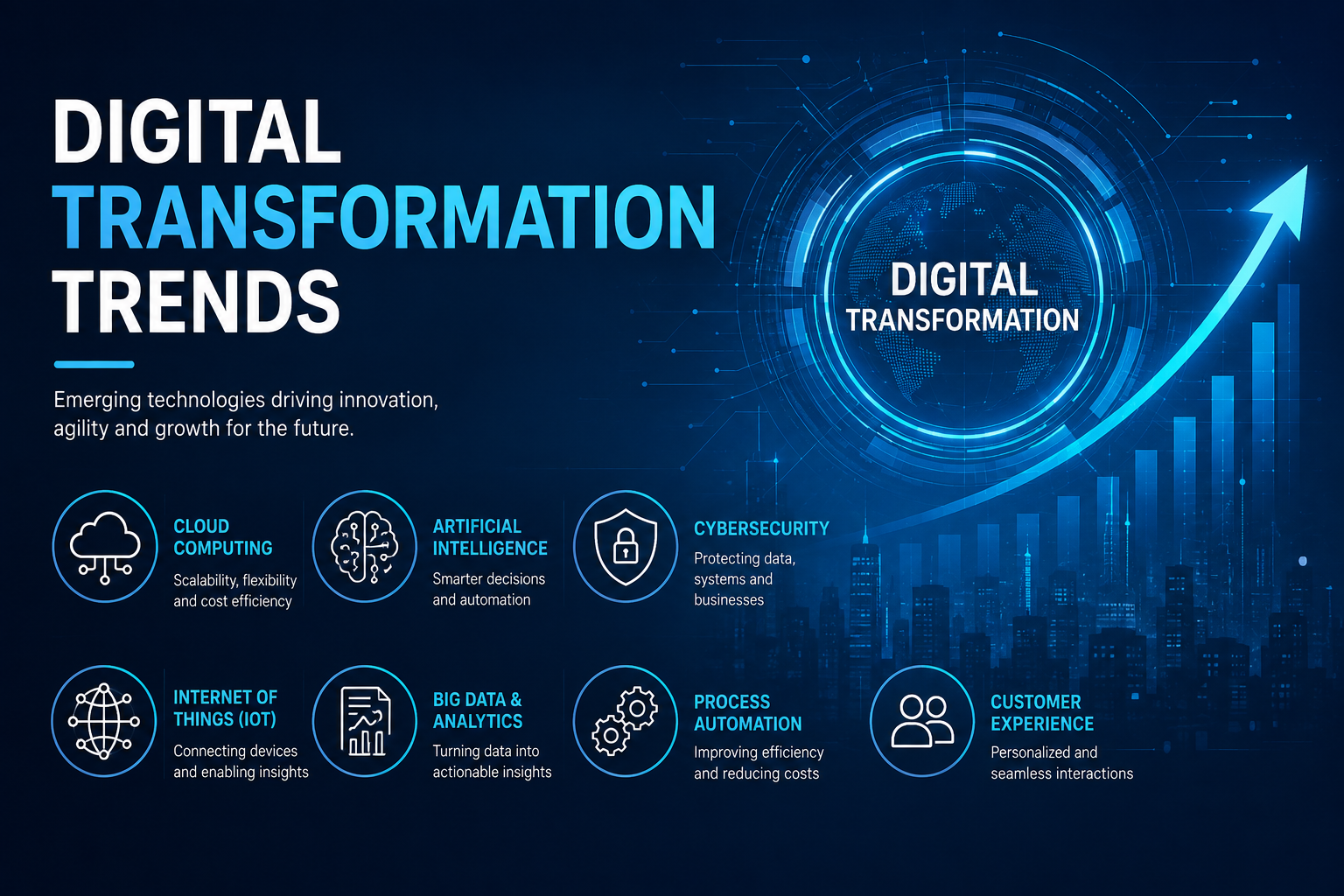
This is probably the biggest shift happening right now. AI in digital transformation isn’t just about chatbots anymore. Companies are using it to spot patterns in sales data, predict when equipment might fail, personalize marketing messages, and even help teams write reports faster.
What’s changed is accessibility. A few years back, AI tools needed a data science team to run. Now, many are built into everyday software CRMs, accounting tools, customer support platforms so smaller businesses can use them without hiring a specialist.
The businesses getting real value from AI aren’t the ones chasing every new tool. They’re the ones picking one or two problems worth solving and starting there.
Cloud-First Operations
Running everything on local servers is quickly becoming the exception rather than the rule. Cloud platforms let teams access files, tools, and data from anywhere, which matters a lot more now that remote and hybrid work are permanent parts of how people operate.
Beyond convenience, cloud systems also make it easier to scale up or down without buying new hardware every time the business grows.
Automation of Everyday Tasks
Not every part of digital transformation needs to be flashy. A lot of it is quiet and practical automating tasks that used to eat up hours every week. Think invoice processing, appointment scheduling, or sending follow-up emails after a purchase.
These small changes add up. Teams get more time to focus on work that actually needs a human touch, instead of repetitive admin tasks.
Data-Driven Decision Making
Businesses used to rely a lot on gut feeling. That’s shifting. With better tools to collect and understand data, companies can see what’s actually working which products sell, where customers drop off, what marketing channels perform best instead of guessing.
The trend now is making this data easy to understand, not just easy to collect. Dashboards and simple reporting tools are replacing spreadsheets full of raw numbers that only one person on the team knows how to read.
Better Customer Experience Through Technology
Customers today expect things to be simple. They want fast responses, personalized recommendations, and support that doesn’t require repeating themselves three times to three different people.
Digital transformation is helping businesses meet these expectations through better CRM systems, live chat tools, and AI-assisted support that can handle simple questions instantly, leaving more complex issues for real people to solve.
The Challenges Businesses Still Face
None of this happens overnight, and it’s worth being honest about that. Common hurdles include:
- Employees resisting new systems they’re not used to
- Budget limitations, especially for smaller businesses
- Old software that doesn’t easily connect with newer tools
- Uncertainty about which trends are worth investing in
The businesses that handle this well usually start small. They pick one process to improve, get it working well, and then move to the next one rather than trying to overhaul everything at once.
Where This Is All Heading
Digital transformation isn’t slowing down. If anything, the pace is picking up as AI tools become more capable and more affordable. Businesses that treat this as a one-time upgrade will likely find themselves needing to catch up again in a year or two. The ones that treat it as an ongoing habit reviewing tools, processes, and customer needs regularly will have an easier time staying ahead.
At AtechVibe, we keep a close eye on how these shifts play out for real businesses, not just in theory. Whether it’s AI adoption, cloud tools, or simple process automation, the goal is the same: helping businesses work smarter without losing what makes them, them.
Final Thoughts
Digital transformation can sound like a big, intimidating idea, but it doesn’t have to start big. It can start with automating one task, moving one process to the cloud, or trying out one AI tool that solves a real problem you already have.
The businesses that succeed with this aren’t necessarily the biggest or most tech-savvy. They’re the ones willing to keep adjusting as things change which, if the last few years are any indication, they will keep doing.
