
Ask any developer who’s been in the field for ten years or more, and they’ll tell you the job used to mean something a little different. Long stretches of typing. Endless trial and error. A dozen browser tabs open just to figure out one error message. That routine is fading. Not because the work got easier, but because the tools around it got smarter.
At AtechVibe, we sit close to this shift every day. And the more we watch it unfold, the more one thing becomes obvious: this isn’t about machines replacing people. It’s about people learning to work differently.
Developers Aren’t Going Anywhere, They’re Just Doing Something Different
Let’s get one myth out of the way. Software developers are not being pushed out of a job. If anything, the ones who know what they’re doing have become harder to replace, not easier. What’s actually shifting is how they spend their hours.
Rather than typing out every function from zero, a lot of developers now begin with something a machine drafted for them, then mold it until it fits the real problem in front of them. The part that requires actual thought, does this solve the right problem, does it make sense for the person using it, still comes from a human brain. No tool has managed to take that over.
Why AI Coding Tools Spread So Quickly
AI coding tools didn’t take years to catch on. They landed, proved their worth almost overnight, and spread across dev teams faster than most people expected. A few reasons stand out:
They handle the repetitive parts.
Writing the same setup code for the hundredth time is nobody’s favorite task. Letting a tool churn it out in seconds means more energy left for the tricky problems.
They flag issues sooner.
An extra set of eyes, even a digital one, tends to catch small mistakes before they turn into bigger, costlier ones down the road.
They shorten the learning curve.
Jumping into a new language or framework used to mean hours lost in forum threads. Now a quick question gets you pointed in the right direction almost instantly.
None of this replaces thinking. It just clears out the parts of the job that never needed a human in the first place.
Where AI Code Generation Tools Actually Help
It’s worth being straight about what these tools are good at and where they fall short.
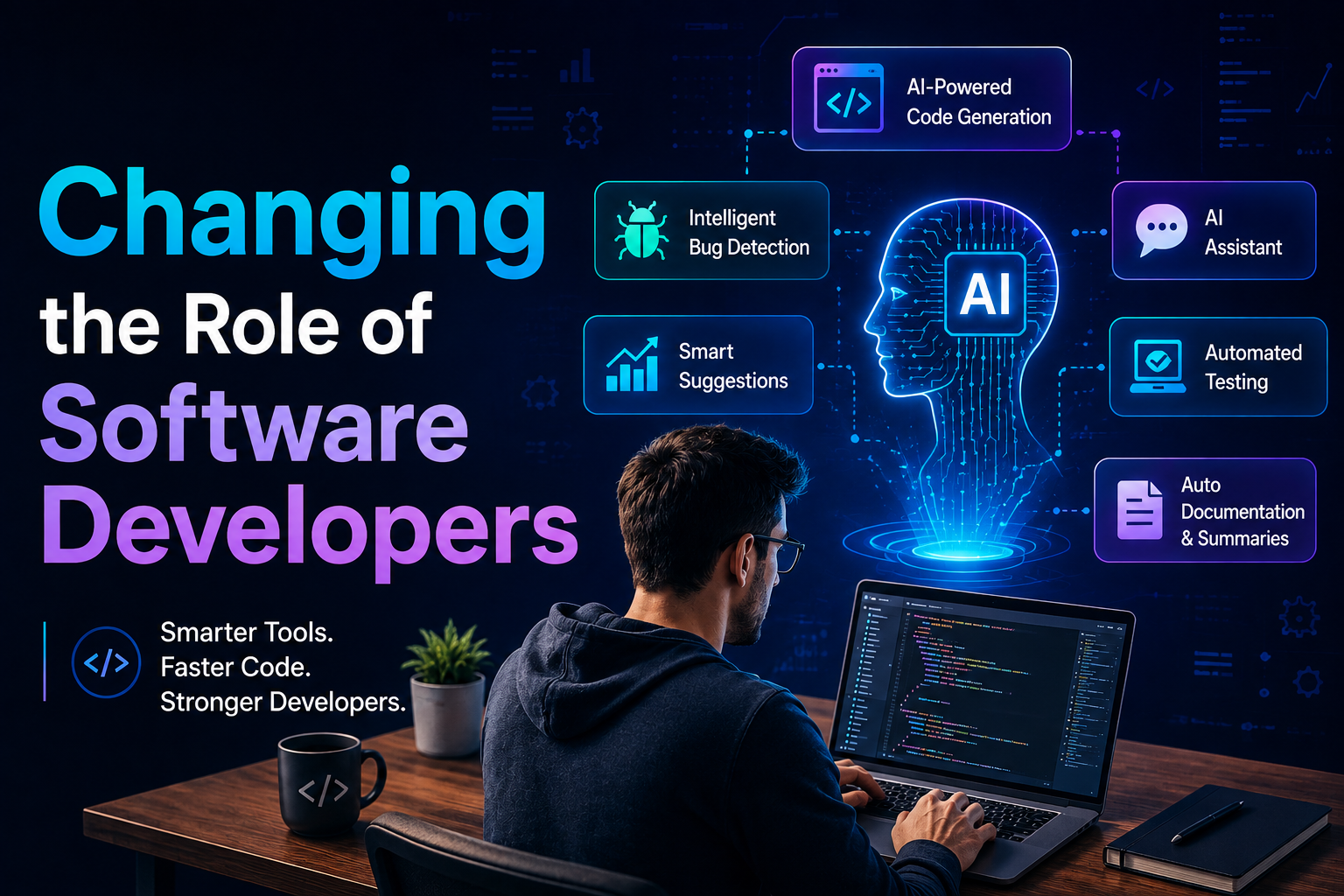
AI code generation tools handle working code snippets well, spot common bugs, and manage the kind of repetitive patterns that show up in nearly every project. They don’t get tired. They don’t lose focus halfway through.
What they don’t have is context. They don’t know why a client insisted on a strange workaround last spring, or why one feature has to behave a certain way because of a compliance issue nobody wrote down anywhere obvious. That knowledge lives in the people who’ve been on the project, not in a model.
That’s why the teams getting the most out of these tools treat them as support, not a substitute. A person still checks the work, runs the tests, and signs off before anything ships.
A Look at the Workflow, Then and Now
Picture someone building a new feature.
A few years back, that meant mapping out the logic by hand, writing every line, testing it, hitting a wall, digging through documentation, and starting the cycle again.
Today, it often looks like this: describe what’s needed, get a starting draft from an AI tool, shape it to match the existing codebase, run it through tests, and refine from there. The problem-solving hasn’t disappeared. It’s just further along the process than it used to be.
This is the kind of shift that comes up a lot in conversations at AtechVibe. Nobody’s trying to cut corners. It’s about putting human effort where it actually counts.
The Skills That Matter Now Look a Little Different
Writing solid code is still non-negotiable. But there’s a newer skill showing up in job listings more and more: knowing how to work alongside AI effectively.
That covers writing clear instructions, knowing when a suggestion needs a second look, and understanding where these tools tend to get things wrong. Developers who build this skill tend to move through their work faster without cutting quality.
Think of it like a carpenter picking up a new power tool. The tool speeds things up, but it doesn’t make the craftsmanship. That still comes from the person holding it.
Why the Human Part Still Carries the Most Weight
Here’s something easy to overlook. Building software was never just about writing code. It’s about deciding what gets built, how it gets built responsibly, and whether it actually helps the people using it.
A model can suggest a function. It can’t sit across the table from a frustrated client and understand what’s really going on. It can’t weigh a quick fix against a long-term solution based on years of getting burned by shortcuts. That kind of judgment still belongs to people, and probably will for a long time.
So even as the daily tasks of software developers keep shifting, what they bring to the table hasn’t lost any value.
Where This Is Headed
Nobody can predict the future with total accuracy, but the pattern so far is fairly clear. AI coding tools and AI code generation tools will keep improving and keep working their way deeper into everyday workflows. Developers who lean into that change, instead of pushing back against it, tend to find the work more engaging, not less.
The role is shifting from someone who writes every line by hand to someone who directs, reviews, and shapes the final product, with a capable tool doing some of the groundwork.
That’s not a smaller job. It’s a different one. And at AtechVibe, keeping pace with that change is simply part of doing the work well.
Conclusion
AI hasn’t taken the developer out of software development. It’s changed what the job looks like day to day. The typing might be faster, and the first draft might come from a tool instead of a blank page, but the thinking, the judgment, and the responsibility for getting things right still sit with the people doing the work.
Teams that treat AI coding tools and AI code generation tools as a starting point rather than a finish line are the ones getting the most out of them. And developers who take the time to learn how to work with these tools well are positioning themselves for a role that’s more interesting, not less relevant. At AtechVibe, that’s the mindset we keep coming back to: use the tools, but never hand over the thinking.
FAQ
Will AI replace software developers?
Not in any way that’s likely soon. AI can produce code, but it can’t understand business context, make judgment calls, or take responsibility for a product the way a developer can. It’s a tool that supports the work, not a stand-in for the person doing it.
What exactly do AI coding tools do?
They assist with writing code, spotting bugs, suggesting fixes, and speeding up repetitive tasks. Think of them as a fast, tireless assistant that still needs a human reviewing its work.
Are AI code generation tools reliable enough to use without checking the output?
No. They’re strong at producing working snippets and common patterns, but they can miss context, introduce subtle errors, or misunderstand the specific needs of a project. Everything they generate still needs a human review before it ships.
Do developers need to learn new skills to work with AI tools?
Yes, to some extent. Writing clear prompts, knowing when to trust a suggestion, and understanding where these tools tend to fall short are becoming just as useful as traditional coding skills.
How is AtechVibe adapting to these changes?
By treating AI coding tools and AI code generation tools as support for the team, not a replacement for it. The focus stays on combining faster tooling with the judgment and experience that only people bring to a project.
Is this shift good or bad for developers?
For developers willing to adapt, it’s a net positive. Less time gets spent on repetitive tasks, and more time goes toward solving harder, more interesting problems.
