

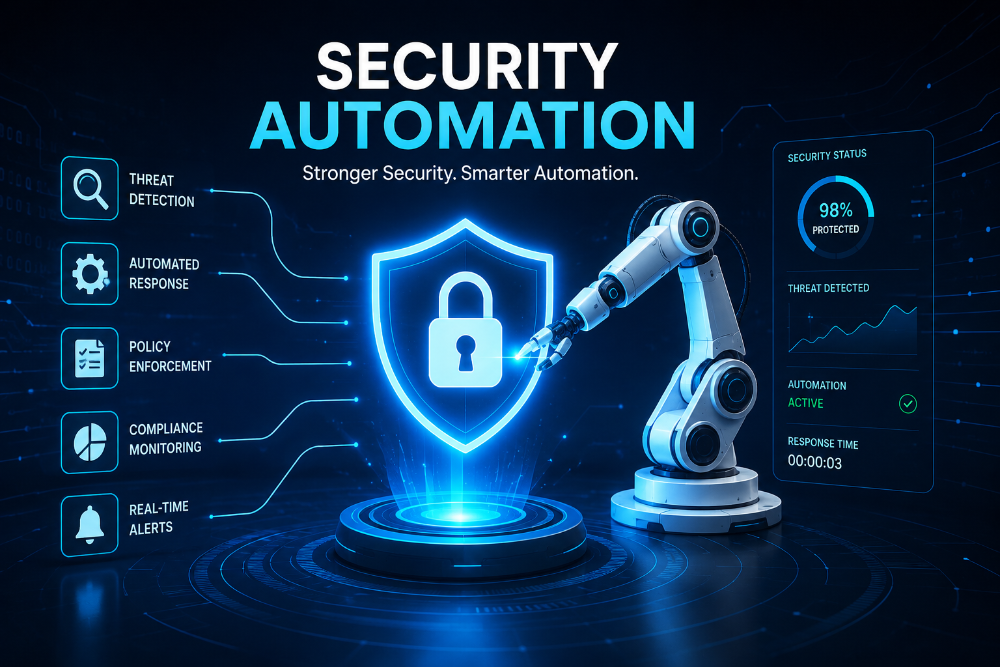
A few years back, a security team could get by watching dashboards and jumping in when something looked off. Those days are pretty much gone. Alert volumes have climbed to a point where no team, however sharp, can manually work through everything that comes in. That’s the gap security automation is filling, and it’s changing how these teams operate day to day.
Security Teams Are Under More Pressure Than Ever
Picture a normal day for a security team. They’re watching network traffic, checking login attempts, sorting through flagged emails, and trying to catch patterns that hint something’s wrong. Now scale that up to hundreds or thousands of alerts every single day. Most turn out to be nothing but somebody still has to look at each one.
That constant grind wears people down. Analysts end up burning hours on repetitive checks instead of chasing actual threats, and mistakes creep in. A real warning can get lost in the noise without anyone meaning for it to happen. It’s not that these teams lack skill the workload has simply outpaced what people can handle by hand.
What Actually Changes Once Automation Steps In
Security automation takes on the repetitive, rule-based side of the work. Rather than a person combing through every single alert, automated systems sort them, surface the ones worth a closer look, and can even act on their own in some cases blocking a suspicious IP, say, or isolating a device that’s been compromised.
People aren’t out of a job because of this. They’re just no longer stuck on the routine stuff, which means they can put their attention toward the problems that genuinely need human judgment. Automation clears the busywork so analysts can spend their time where it actually matters.
Catching What a Person Might Never Notice
Good security automation isn’t just running down a fixed checklist. It can learn what’s normal for a particular user or system over time, then flag anything that breaks from that pattern even when there’s no explicit rule covering it.
Say an employee’s account starts pulling files it’s never touched before, at 3 a.m. An automated system can flag that as odd on its own, without anyone having written a rule that says “this exact scenario is suspicious.” That kind of pattern recognition used to rely entirely on an analyst happening to notice something strange. Now automation often catches it first and puts it in front of a person right away.
What Teams Notice After Making the Switch
Teams that have brought automation into their workflow tend to report the same handful of changes:
- Response times drop, since systems react in seconds rather than waiting on someone to spot the problem
- Fewer threats slip through, because nothing gets buried in a backlog of unread alerts
- Analyst burnout eases up, since they’re not repeating the same manual checks all day
- Skilled staff get used better, spending their time investigating instead of sorting
Automation isn’t a cure-all, though. It still needs to be configured properly, watched, and tweaked as threats shift. But the move away from purely manual work toward a mix of automation and human oversight something the team at AtechVibe has seen play out firsthand has genuinely helped teams that were struggling to keep pace.
Where This Leaves Things Going Forward
Cybersecurity isn’t getting any easier. Threats keep multiplying, and they move faster than they used to. Teams still relying entirely on manual processes are going to keep falling behind. The ones that bring automation into the mix are simply better positioned to catch problems early and act before real damage sets in.
The Bottom Line
Security automation isn’t about pushing people out of the picture. It’s about giving them room to do their jobs properly instead of drowning in alerts that don’t deserve their attention. Pair that with automation’s knack for spotting patterns a person might miss, and you end up with a security operation that runs faster, more accurately, and with a lot less exhaustion built in. That balance is what’s really reshaping cybersecurity operations right now and it’s only going to matter more as threats keep evolving.
FAQs
What is security automation?
It’s the use of technology to handle repetitive security tasks scanning alerts, flagging threats, taking basic response actions without a person needing to do it by hand every time.
Is it only worth it for large companies?
Not at all. Smaller teams often get even more out of it, since they usually have fewer people covering the same alert volume as bigger organizations.
Does automation replace the security team?
No. It clears out the repetitive workload so analysts can focus on investigating real threats and making the calls that need human judgment.
How does it catch threats that don’t match a known rule?
Some tools are built to learn what normal activity looks like for a given user or system, so they can flag anything unusual even without a rule written specifically for it.
Is security automation hard to set up?
It takes some planning and the right tools, but most organizations start small — automating a few repetitive tasks first and build from there as they see results.
