

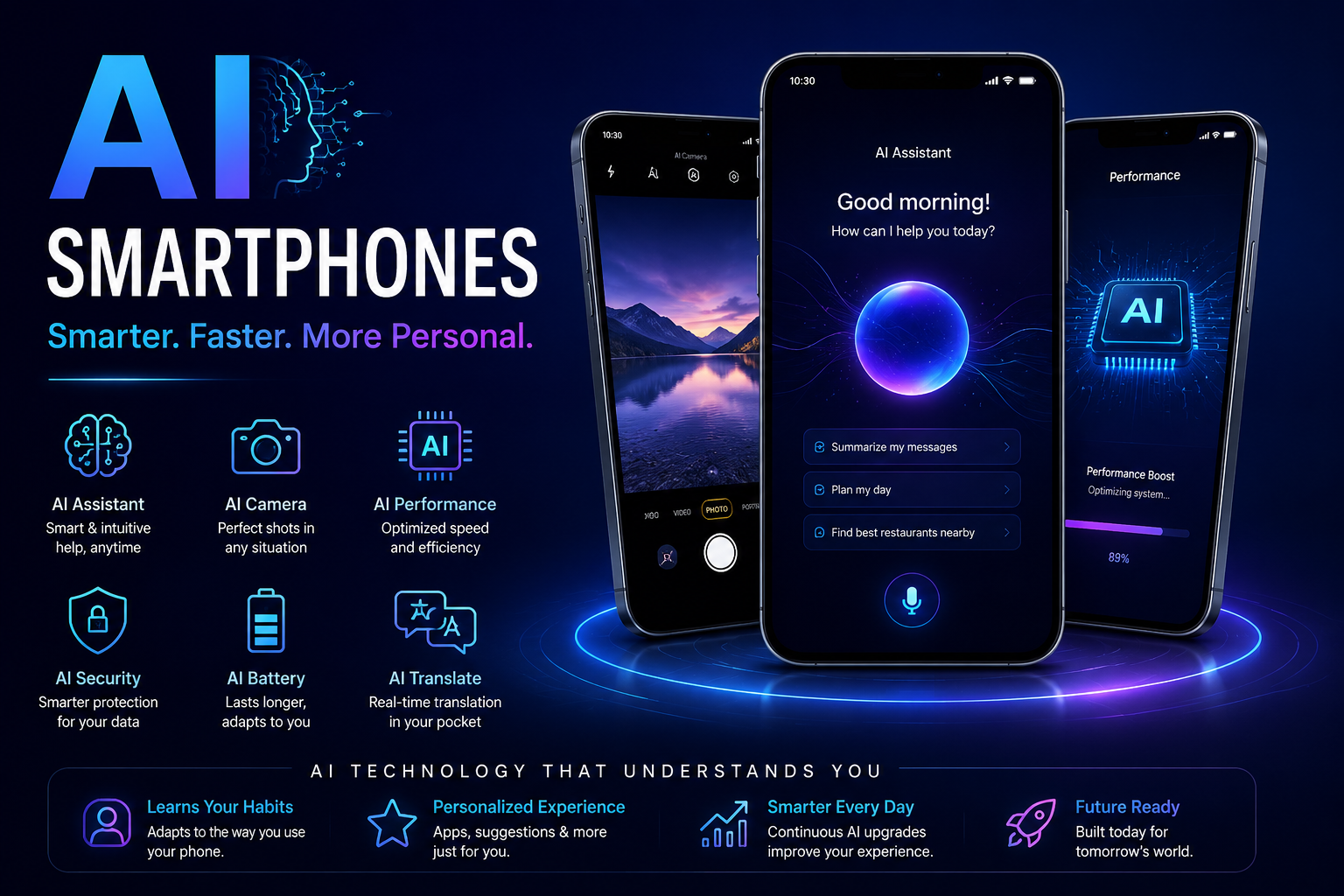
A few years ago, calling a phone “smart” just meant it could browse the internet and run a few apps. That’s not really what smart means anymore. Today’s AI smartphones can predict what you’re about to type, clean up a blurry photo before you even notice it’s blurry, and quietly manage your battery so you’re not scrambling for a charger by 4 p.m.
It’s easy to miss how much has changed because it happened gradually. But if you compare the phone in your pocket to the one you had five years ago, the difference is huge. AI isn’t a bonus feature anymore it’s baked into almost everything mobile devices do.
At AtechVibe, we like digging into these shifts before they become obvious to everyone. So let’s talk about what’s actually different, and why it matters for how you use your phone every single day.
Your Phone Is Learning Your Habits
One of the quieter changes in mobile technology is how much your phone now pays attention to you in a helpful way, not a creepy one.
It notices when you usually check your email, which apps you open right after waking up, and even how you type. Over time, it starts adjusting things on its own: suggesting the right app before you search for it, or predicting your next word so accurately it feels like it’s finishing your thoughts.
This isn’t magic. It’s on-device processing at work, where the phone analyzes patterns locally instead of sending everything to a server. That means faster responses and, often, better privacy too.
AI Camera Technology Has Changed What “Good Photo” Means
Remember when taking a decent night photo meant holding your phone perfectly still and hoping for the best? Those days are mostly gone.
AI camera technology now handles a lot of the heavy lifting behind the scenes. It recognizes what you’re photographing a face, a plate of food, a sunset and adjusts settings in real time to match. Low light used to be the enemy of mobile photography. Now phones can brighten a dim room shot without making it look grainy or unnatural.
Portrait mode, for instance, isn’t just a blur effect anymore. The camera identifies edges around a subject with impressive precision, separating hair strands from the background in ways that used to require professional editing software.
It’s not perfect you’ll still get the occasional over-smoothed skin tone or an odd color shift but it’s come a long way from the guesswork days.
Everyday Tasks Feel Less Like Chores
This is probably the change people notice most, even if they don’t think about why it’s happening.
Voice assistants used to be a novelty you’d use once to show a friend and then forget about. Now they actually get things done setting reminders, reading messages aloud while you’re driving, or pulling up directions without you touching the screen.
Search has changed too. Instead of typing exact phrases, you can describe something loosely “that restaurant I saved last week near downtown” and your phone often figures out what you mean.
None of this is flashy. It’s just small friction being removed, over and over, until you barely notice how much easier things have gotten.
Battery Life Gets Smarter, Not Just Bigger
For years, the only real fix for bad battery life was cramming in a bigger battery. That’s changed. Mobile devices now use AI to figure out which apps are draining power in the background and which ones you actually use often.
Instead of treating every app the same, your phone starts prioritizing. The apps you check constantly stay fast and ready. The ones you open once a month get throttled back so they’re not quietly eating battery while you’re not looking.
The result is a phone that often lasts longer, not because the hardware improved dramatically, but because it’s simply not wasting energy anymore.
Where This Is Headed
AI smartphones are still evolving, and honestly, we’re probably only seeing the early stages of what’s possible. Real-time translation during phone calls, smarter accessibility tools for people with visual or hearing impairments, and even more natural voice conversations with your phone are already rolling out in some devices.
What’s interesting is that most of these changes don’t feel like “AI features” when you’re using them. They just feel like your phone getting a little better at understanding what you need — which, honestly, might be the whole point.
FAQs
What makes a smartphone an “AI smartphone”?
It’s a phone that uses built-in AI chips or software to handle tasks on its own like adjusting camera settings, predicting text, or managing battery use instead of relying only on manual settings.
Do AI smartphones need the internet to work?
Not always. Many AI features run directly on the device using on-device processing, which is faster and doesn’t require sending your data to a server.
Is AI camera technology actually better than manual camera settings?
For most everyday users, yes. It saves time and produces solid results without needing to understand exposure, ISO, or focus manually. Photography enthusiasts may still prefer manual control for specific shots.
Does AI drain the battery faster?
Generally, no. Most AI processes are designed to save battery by managing background apps and screen usage more efficiently, not the other way around.
Will AI smartphones replace the need for separate apps?
Not entirely, but they’re reducing how often you need them. Built-in AI can now handle tasks — like translation or scheduling — that once required downloading a dedicated app.
Final Thoughts
The shift toward AI smartphones hasn’t been loud or dramatic. It’s been steady, almost invisible, built into the small moments of using your phone every day a sharper photo, a faster reply, a battery that lasts a bit longer than expected.
Mobile technology isn’t just adding new features anymore. It’s rethinking how phones should work with you, not just for you. And as AtechVibe continues to track these changes, one thing seems clear: the smartest thing about your phone might not be a spec on a page it’s how little you have to think about it working well.
