

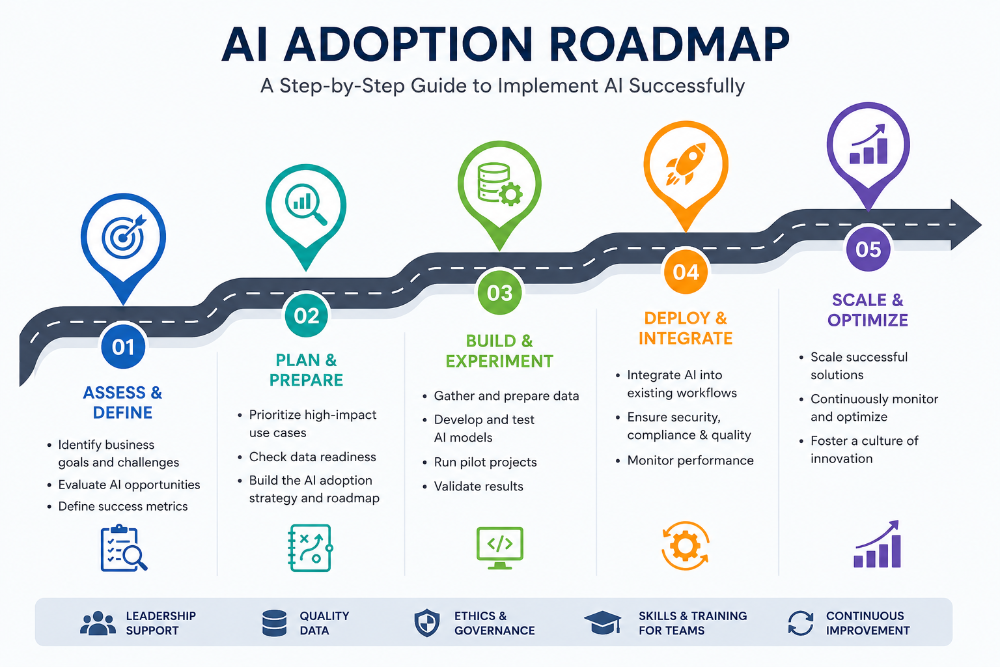
You’ve probably reached the point where the word “AI” makes you want to close the tab. Everyone’s got an opinion on it. Almost nobody tells you how to actually start using it without ending up with three half-used tools and a team that’s more confused than before.
That’s the gap an AI adoption roadmap fills. Nothing complicated about it — it’s just a plan that tells you where AI actually fits in your business, what to test first, and how to keep from burning money on tools nobody ends up touching.
At AtechVibe, we hear from small business owners almost every week who want to get moving on AI but keep stalling out at “where do I even start.” So here’s the answer, laid out in a way you can actually follow.
The Roadmap Comes Before the Tool, Not After
Here’s the mistake most people make: they find a tool that looks impressive, buy it, and then try to reverse-engineer a use for it. Six months later it’s sitting untouched in a browser tab.
Flip that order around. Look at your business first — where time actually leaks out, what tasks repeat every single day, what customers complain about most often. Once you know those answers, matching them to the right kind of AI for business becomes a lot easier. Every tool earns its place instead of just showing up because it seemed trendy.
Step 1: Track Where Your Hours Are Actually Going
Before touching any software, spend a week just watching your own schedule. Where does the time go? Answering the same three customer questions on repeat? Juggling appointments? Writing the same kind of product description over and over? Chasing down invoices?
Small business AI does its best work on the boring, repetitive stuff — not the parts of your job that need a human touch. Once you can point to exactly where the hours disappear, you’ll know exactly where AI might actually pull its weight.
Step 2: Pick One Real Goal, Not a Vision Statement
Skip the “we’re going to transform the whole business with AI” mindset. That’s the fastest route to burnout, and most people give up somewhere around month two.
Instead, pick something specific. Cut your customer response time in half. Get marketing content out the door faster. One clear target turns your AI adoption roadmap into something you can measure — not a vague ambition sitting on a whiteboard.
Step 3: Test Small Before You Go Wide
This is the step people are most tempted to rush, and it’s the one that matters most.
Choose a single process. Run an AI tool against it for a few weeks. Don’t hand it to your entire team on day one — that’s how small hiccups turn into company-wide frustration. Watch what actually happens. Ask the people using it what they think. Be honest about whether it’s saving real time or just adding another thing to manage.
If it works, roll it out further. If it flops, no harm done — you tested it on one process instead of betting the whole operation on it.
Step 4: Bring Your Team Along, Don’t Just Announce It
Most AI rollouts don’t fail because the tool is bad. They fail because nobody bothered explaining it properly. People get uneasy around new tech fast, especially when there’s a whisper that it might replace their role.
Walk your team through what the tool does, what it doesn’t do, and where it actually makes their day easier. Even a 20-minute session beats dropping a new app into their inbox with no context. People pick things up faster when they understand the “why” behind it.
Step 5: Check the Numbers, But Don’t Obsess Over Them
You don’t need a spreadsheet full of formulas to know if something’s working. Time saved. Faster replies. Fewer mistakes. Happier customers. That’s usually enough.
Look at it once a month, maybe. If it’s not delivering, tweak it or drop it. If it is, that’s your green light to build the next piece of the roadmap on top of it.
Step 6: Figure Out What’s Next
Once your first project is running without a fuss, take another look at the roadmap. What’s the next bottleneck? Inventory getting messy? Reports taking too long to pull together? Onboarding new customers feeling clunky?
That’s really how AI adoption should unfold — one solid piece at a time, not one massive rollout that leaves half the team lost.
Common Mistakes to Avoid
- Don’t jump on every new AI release.
Stay with your plan and only bring in tools that solve something you’ve actually identified as a problem.
- You don’t need enterprise pricing.
Plenty of tools built for small teams get the job done without the big price tag.
- Pay attention to data privacy.
Know what customer information a tool touches and where that data ends up — even a five-person business has this responsibility.
- Some things don’t need AI at all.
There’s nothing wrong with sticking to the old way when it still works better.
Final Thoughts
An AI adoption roadmap isn’t about chasing whatever’s trending this month. It’s about making the day-to-day a little easier, one honest step at a time. Start with a real problem, test it small, bring your team into the process, and expand from there.
AI for business doesn’t have to mean a big budget or a complicated rollout. With a roadmap that actually fits your business, even a five-person shop can put AI to work in a way that helps rather than gets in the way.
If you’re only just getting started, take it slow. Adjust the plan as you go — you’ll learn more from one working test than from any amount of planning on paper.
