

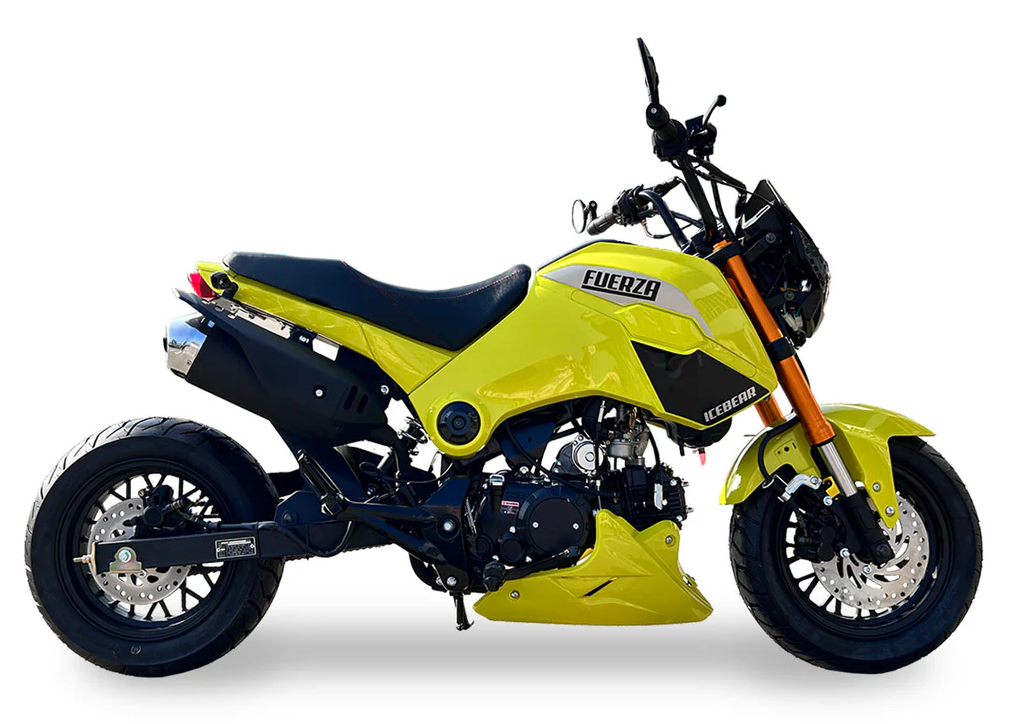
The most common mistake first-time off-road motorcycle buyers make is choosing a bike based on where they want to be as a rider rather than where they actually are. The result is a machine that could be harder to control, slower to learn on, and more likely to end the riding experience before it really begins. Starting on the right-sized bike is not a compromise. It is the fastest route to becoming a confident, capable rider.
Why Smaller Displacement Builds Better Riders
There is a widely held assumption in powersports that a bigger engine means a better experience. For experienced riders, that logic holds. For first-time buyers, it works against them. A mini motorcycle or smaller displacement machine responds more predictably to throttle input, brakes with less drama, and gives the rider room to make mistakes without serious consequences. Those early mistakes are not failures; they are the foundation of every skill a rider develops over time.
A beginner on a smaller bike learns throttle control, body positioning, braking technique, and cornering balance without fighting a machine that amplifies every error. When those fundamentals are genuinely in place, stepping up in engine size feels natural and controlled rather than intimidating.
What Smaller Displacement Actually Looks Like
For new riders, the right starting point depends on age, body size, and whether the buyer is shopping for a youth rider or an adult:
- 50cc to 110cc: The appropriate entry range for young beginners ages 4 to 12. These bikes are lightweight, low to the ground, and pair well with automatic or semi-automatic transmissions and throttle limiters for parent-controlled speed management.
- 110cc to 150cc: A strong starting range for older youth riders ages 12 to 15 and lighter adult beginners. Enough power for trail riding without exceeding what a developing rider can manage.
- 150cc to 230cc: The right starting point for most adult beginners. These machines handle varied terrain and real trail conditions while remaining forgiving of the throttle and braking inconsistencies that are normal during the learning phase.
A mini motorcycle in the lower displacement ranges is not a toy or a stepping stone to be rushed past. It is a legitimate training tool that produces better riders when given enough time and seat hours.
When You Are Ready to Move Up
Moving into a larger, more capable machine is the natural next step for a rider who has logged consistent seat time, demonstrates confident throttle control and braking technique across varied terrain, and needs a bike that can handle more demanding conditions.
For riders whose lifestyle involves both trail access and road travel between destinations, enduro motorcycles are one of the most practical choices at this stage. These bikes carry a full DOT-compliant lighting package, mirrors, and meet emissions standards for street registration in most states, making them genuinely dual-purpose machines rather than trail-only vehicles.
Reaching for this category before the foundational skills are established adds unnecessary complexity to an already demanding riding environment. The progression should be earned, not assumed.
The Physical Fit Factor
Engine size is only part of the equation. Seat height, frame weight, and overall bike dimensions all affect how well a rider can manage a machine, especially at low speeds and during stops. A rider who cannot touch the ground comfortably with at least one foot while seated will struggle with stability and confidence regardless of skill level. Always cross-reference seat height against the rider’s inseam measurement before committing to any purchase, and prioritize fit over the appeal of a larger engine class.
Transmission Type at Each Stage
Beginner riders in the lower displacement ranges are best served by automatic or semi-automatic transmission, which reduces the number of simultaneous inputs the rider must manage. Semi-automatic requires gear shifts but removes the clutch, making it a practical bridge between fully automatic beginner bikes and the full manual transmission standard on mid-size and larger machines. The full manual should only be introduced once the rider is consistently comfortable on a semi-automatic machine.
MotoBuys carries one of the most reliable and top-rated off-road motorcycle lineups in the USA, from entry-level mini motorcycles to full-size enduro motorcycles, all backed by free certified technical support and free nationwide shipping. With MotoBuys, you can find the right starting point for any rider and trust that a knowledgeable team supports the purchase every step of the way.
