

Breastfeeding is one of the most beautiful and emotional experiences for a mother. It establishes a strong connection between the baby and the mother, providing the baby with all the necessary nutrition and comfort. However, this journey isn’t always straightforward. Many mothers feel exhausted and worry about the appropriate place to breastfeed.
That’s where a breast pump becomes a useful and essential source for expressing milk. The right one can help you make your breastfeeding experience a less stressful, more comfortable, and effective one. This guide will take you through what you need to know, from breastfeeding to how to compare an electric vs. manual breast pump, to make the best decision on your behalf.
What makes breastfeeding valuable beyond nutrition?
Breastfeeding is a way of feeding a baby with milk that is produced by the mother’s breast. It supplies all the necessary nutrients that a baby requires to boost their immune system. Apart from nutrition, it also forms an emotional bond between mother and child.
Nevertheless, sometimes mothers also need some help due to an extra workload, inadequate milk production, or health issues. There, a breastfeeding pump manual or breastfeeding pump electric can ease the process to some extent.
Breast Pump
A breast pump is a machine that is used to express milk from the mother’s breast. It operates by establishing mild suction, which resembles the natural sucking habits of a baby. Also, it enables mothers to store milk to be used later.
There are many pumps that require manual operation, and others operate using electricity or batteries. As a rule, a breast pump is more efficient and effective as compared to a manual breast pump that is simpler and portable.
Parts of a Breast Pump
The knowledge of your pump’s parts can help you make better use of it:
- Breast Shield (Flange): A nipple-shaped cup made up of a cone. The right size should be selected to be comfortable and to allow the milk to flow properly.
- Pump Mechanism: Forms suction. It can be either manual (lever-operated) or motorized.
- Milk Container: This container is used to store pumped milk for later.
- Control Panel (Electric Pumps): It gives you the opportunity to control the suction levels and modes.
- Lever (Manual Pumps): This lever is a type of pump that was manually used to generate suction.
All designs can be slightly different but have the same fundamental operation.
Types of Breast Pumps
There are four main types of breast pumps, each suited to different needs.
Manual Breast Pump
A manual breast pump operates with a hand-powered suction to express milk. It is generally portable, noiseless, and does not require electricity, making it a viable alternative when it comes to occasional use or traveling.
Electric Breast Pump
An electric breast pump operates with an inserted motor that features automatic creation of suction with variable speed and power options. It is significantly quicker and less exhausting compared to a manual pump and therefore is a great choice for working moms or for pumps on a regular basis.
Difference between a manual and an electric breast pump
Before deciding whether to choose a breast pump electric or a manual breast pump, one must be totally aware of the differences between the two.
| Feature | Manual Breast Pump | Electric Breast Pump |
| Working | Operated by hand using a lever to create suction. | Uses an electric motor to create automatic suction |
| Potential required | Requires less effort. | Requires more effort |
| Speed & Effectivity | Minimum and less effective. | Maximum and more effective. |
| Portability | Light in weight and easy to carry. | Slightly heavy in weight and less portable. |
| Cost Factor | Affordable and budget-friendly. | Usually pricier. |
Single vs. Double Pump
Another important factor in the difference between manual and electric breast pumps is their functionality:
- Single Pump: It expresses milk on one side of the breast at a time and can be useful for occasional hours.
- Double Pump: It expresses milk from both the breasts at the same time, which saves time and produces more milk.
The double pumps are especially more useful for busy mothers or those who pump on a frequent basis.
How to Choose the Best Pump?
Depending on your lifestyle and needs, you can opt to get an electric or a manual breast pump:
- Choose the manual breast pump when you used to pump rarely or occasionally.
- Instead, you can use the breast pump electric, especially when you used to pump frequently or when you require it to be efficient.
- Use a double electric pump in case of time shortage.
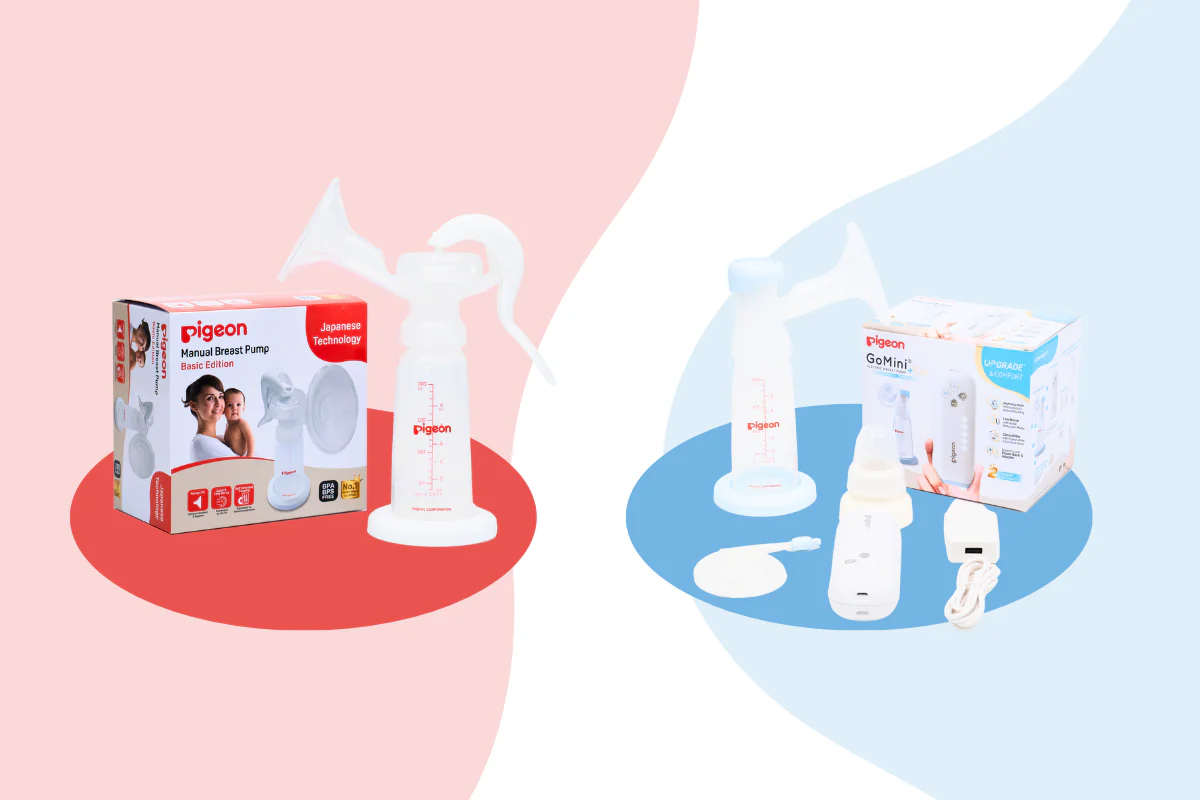
It is not a universal approach for all situations; whatever fits your routine and level of comfort is the best decision. Although, we would recommend some of the best breast pumps from Pigeon, a trusted brand for both baby and mother essentials. They make breastfeeding easier and more comfortable. Their range includes:
- Manual Breast Pump Essential, completely made from silicone, also has adjustable pumping, which is necessary for every mother’s comfort.
- Handy Fit + Electric Breast Pump, the best electric breast pump, is especially designed for working moms for their convenience. Also, the suction part is removable, which helps in effective cleaning.
These are all designed to ease the breastfeeding experience and make it more comfortable and successful.
Wrapping It Up
By covering up all the merits and demerits, both manual and electric breast pumps have their own importance and uses. It totally depends on your way of living, whether you’re a working mother or a housewife. Choosing the right breast pump and simply knowing which one feels comfortable and easy to use can make a big difference in your breastfeeding journey. In case you have not made up your mind on what to buy yet, Pigeon has a variety of quality breast pumps, thoughtfully designed to meet the needs of modern moms, to ease the process of breast milk feeding.
