

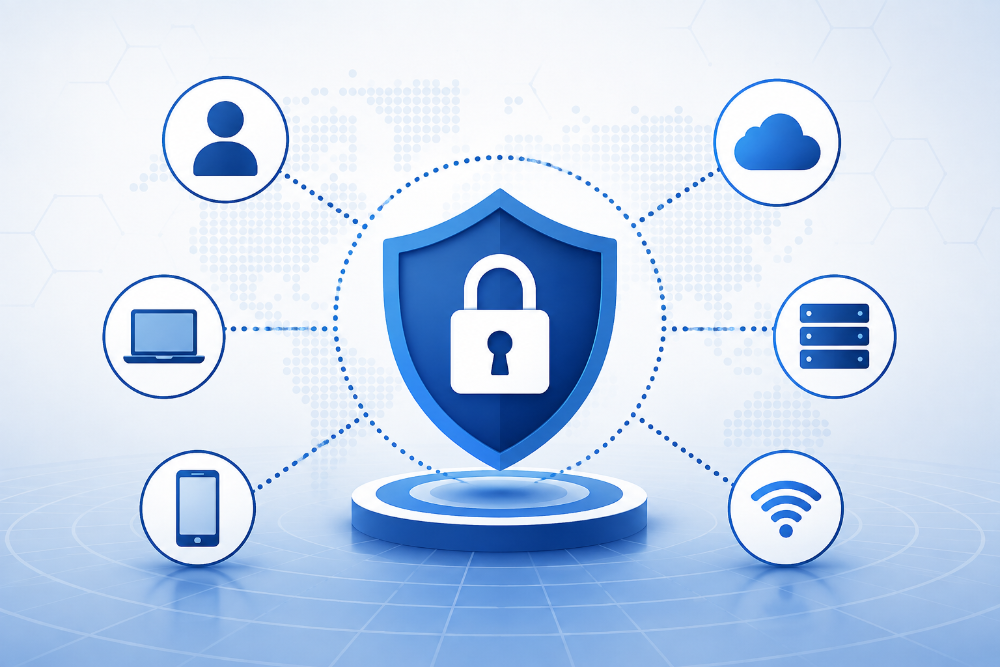
There was a time when a firewall was basically all a business needed to feel safe online. Put one up, keep the bad traffic out, and trust whatever was happening inside your network. Simple.
That approach doesn’t hold up anymore, and honestly, it hasn’t for a while.
At AtechVibe, we talk to a lot of businesses trying to figure out their next move on security, and one term keeps coming up again and again: zero trust security. It’s not just a trend. It’s quickly becoming the standard way companies protect their data.
So what’s actually going on here, and why are so many businesses walking away from firewalls in favor of this new approach?
The Problem With Just Trusting the Firewall
Old-school firewalls work on one basic assumption: anything outside the network is dangerous, and anything inside is fine. Once you’re in, you’re trusted.
That made sense back when everyone worked from the same office, on the same network, using the same few computers. But that world barely exists anymore.
Now people log in from home, from their phones, from cafes, from other countries. Files live in the cloud instead of a server down the hall. And if a hacker manages to steal just one password, a firewall won’t stop them from wandering around freely once they’re inside.
This is exactly the gap that zero trust security was built to close.
What Zero Trust Security Actually Means
The idea behind zero trust is pretty straightforward once you break it down: don’t automatically trust anyone, even people already inside your network. Every request has to prove itself, every time.
It sounds strict, and it kind of is. But that’s the point. Instead of one big wall around everything, zero trust checks each person and each device individually, over and over, no matter where they’re logging in from.
Nobody gets a free pass just because they made it past the front door.
How the Zero Trust Model Works
A zero trust model isn’t one single product you install. It’s more like a set of habits and tools working together.
Here’s what that usually looks like in practice:
- Confirming identity through things like multi-factor authentication, not just a password
- Giving people access only to what they actually need for their job, and nothing extra
- Breaking the network into smaller sections, so one compromised account can’t spread everywhere
- Watching activity continuously instead of just checking once at login
- Blocking access from unfamiliar or unsecured devices, even if the login itself looks correct
None of this is flashy. It’s mostly about being careful and consistent, which turns out to matter a lot in security.
Why Zero Trust Architecture Fits Today’s Businesses Better
Zero trust architecture was really built for how companies actually operate now, not how they used to operate ten years ago.
Remote work isn’t going away. Neither is the reliance on cloud tools like email platforms, CRMs, and file storage that live completely outside a traditional office network. There’s no single “inside” left to protect the old way.
With zero trust, security follows the person and the device, not a building or a network boundary. That matters a lot more when your team could be logging in from five different cities on any given day.
What Businesses Actually Gain From Making the Switch
Companies that move toward zero trust security usually notice a few clear benefits pretty quickly.
Stolen passwords alone stop being enough to get in, since extra verification is required. If something does go wrong, the damage tends to stay contained instead of spreading across the whole system. And for teams working remotely or across multiple locations, security stops depending on where someone happens to be sitting.
It also tends to make compliance easier, since a lot of industry regulations are already leaning in this same direction.
Getting Started Doesn’t Have to Be Overwhelming
Switching to a zero trust model doesn’t mean tearing everything down and starting over. Most businesses ease into it.
A reasonable starting point looks something like this:
- Turn on multi-factor authentication wherever it’s missing
- Take a real look at who has access to what, and trim anything unnecessary
- Start separating critical systems so they’re not all connected the same way
- Add basic monitoring to catch unusual login activity early
Small steps, done consistently, add up to a much stronger setup than one firewall ever could on its own.
Final Thoughts
Firewalls aren’t useless, but they were designed for a version of business that doesn’t really exist anymore. Zero trust security fits how companies actually work today — spread out, cloud-based, and constantly on the move.
For any business thinking seriously about protecting its data in 2026, zero trust architecture isn’t some far-off idea anymore. It’s quickly becoming the baseline. And at AtechVibe, we’d say the businesses making that shift early are the ones putting themselves in a much safer position going forward.
