

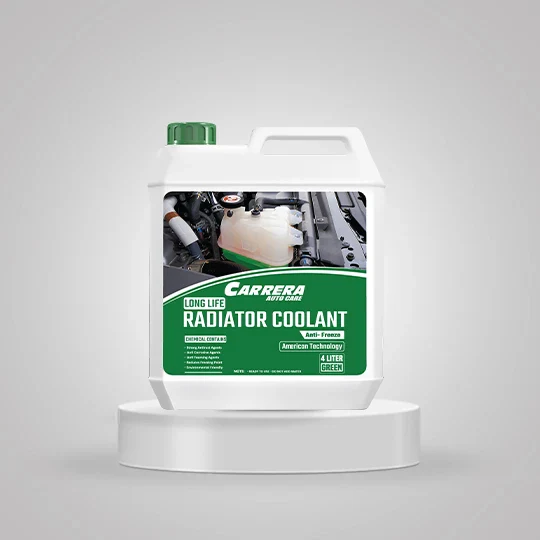
If you drive in Pakistan, your engine faces a tougher life than most. Long summer heatwaves, heavy traffic, dust, stop-and-go driving, and steep climbs toward northern areas all increase engine temperature and stress the cooling system. That’s why choosing the right Carrera coolant for car isn’t a “nice-to-have”—it’s essential protection.
Many drivers only think about coolant when the temperature needle rises or steam appears from the bonnet. But the real job of coolant isn’t only to reduce heat. A quality coolant helps prevent internal rust, protects the radiator and water pump, reduces scale buildup, and supports stable engine performance in both hot and cold weather.
This guide will help you understand how coolant works, how to pick the right type for your vehicle in Pakistan, the best mixing practices, how often to replace it, and the common mistakes that lead to overheating. If you want reliable protection, smooth performance, and long engine life, this is the checklist you need—especially if you’re choosing a trusted brand like Carrera.
What Is Car Coolant?
Car coolant (also called radiator coolant or antifreeze) is a specially formulated liquid designed to circulate through the engine and radiator to control temperature and prevent corrosion. It’s not just water—coolant contains chemicals that improve boiling resistance, protect metal parts, and reduce internal wear.
A typical coolant formula includes:
- Base fluid (often ethylene glycol or propylene glycol) to improve heat performance and temperature stability
- Corrosion inhibitors to protect aluminum, steel, copper, and rubber components
- Additives that reduce foaming, prevent scale, and improve overall system health
In simple words: coolant keeps your engine at the right temperature and keeps the cooling system healthy from the inside.
How Coolant Works Inside Your Engine
Your engine produces intense heat during combustion. Without cooling, metal parts expand, oil breaks down, seals fail, and the engine can seize. Coolant prevents that by doing three big jobs:
1) Heat Transfer
Coolant absorbs heat from the engine block and cylinder head, then carries it to the radiator. The radiator releases the heat into the air, helped by the fan.
2) Boiling & Freezing Protection
Coolant is designed to handle temperatures beyond what plain water can tolerate. It raises the boiling point and lowers the freezing point—helpful not only in cold regions but also for high-heat driving.
3) Corrosion & Deposit Control
Inside your cooling system are metals (like aluminum) and rubber seals. Coolant inhibitors protect these parts from rust, corrosion, and mineral deposits that block coolant flow.
Why Coolant Choice Is Critical in Pakistan
Pakistan’s climate and road conditions create specific cooling system challenges:
Extreme Summer Heat
Cities like Karachi and Lahore can push engines hard in summer traffic. Even a healthy engine can overheat if coolant quality is weak or the mixture is wrong.
Stop-and-Go Traffic
In Islamabad and other urban centers, frequent braking and low-speed driving reduces airflow through the radiator. That means the fan and coolant quality matter more.
Dust, Mud, and Mixed Driving
Dust clogs radiator fins and reduces cooling efficiency. Combine that with highway speeds, sudden braking, and long idling—your cooling system must be in top shape.
Hard Water Risk
Many drivers top up coolant with tap water. In much of Pakistan, water contains minerals that create scale inside the radiator and engine passages. Scale reduces heat transfer and can lead to overheating.
Types of Coolant: IAT, OAT, HOAT (Explained Simply)
Not all coolants are the same. The difference is in the inhibitor technology—how the coolant protects metals and how long it lasts.
IAT (Inorganic Acid Technology)
- Common in older vehicles
- Often requires more frequent replacement
- Strong immediate protection but shorter lifespan
OAT (Organic Acid Technology)
- Often used in modern cars
- Longer life compared to IAT
- Better long-term corrosion protection
HOAT (Hybrid Organic Acid Technology)
- Mix of inorganic and organic inhibitor benefits
- Used by many manufacturers for balanced performance
- Often a strong choice for mixed driving conditions
Important: Don’t choose coolant only by color. Color is not a reliable standard across brands. Always focus on compatibility/specification and your car’s manual recommendation.
How to Choose the Best Coolant for Car (Pakistan-Focused Checklist)
Choosing the right coolant is about compatibility, not marketing claims. Use this practical method:
1) Check Your Owner’s Manual First
Your manufacturer recommends a coolant type or standard. Matching that is the safest way to avoid corrosion, seal damage, or sludge buildup.
2) Don’t Mix Random Coolants
Mixing incompatible types can cause chemical reactions that form gel or sludge. That blocks passages and reduces cooling—one of the fastest ways to invite overheating.
3) Choose Based on Driving Reality
If you drive daily in traffic, take long trips, or use the AC heavily in summer, you need a coolant that offers:
- High-temperature stability
- Strong corrosion protection
- Long-life performance (if recommended for your car)
4) Look for Quality Additive Protection
A good coolant helps protect: radiator, water pump, thermostat housing, heater core, hoses, and engine block.
Carrera coolants are typically chosen by drivers who want a balanced approach: temperature control plus system protection suitable for harsh conditions.
Concentrate vs Premix: Which Is Better for Pakistan?
Coolant usually comes in two formats:
Concentrate Coolant
You mix it with water yourself. This is useful if you want control over the ratio and use distilled or demineralized water.
Premixed Coolant
Ready-to-use. Convenient and safer for people who want a consistent ratio without mixing mistakes.
Pakistan Tip: If your local water is mineral-heavy, premix can be a safer option because it avoids tap-water scaling problems.
The Right Coolant Mixing Ratio (And Why People Get It Wrong)
A common safe recommendation is a 50/50 mix (coolant concentrate + distilled water) for many vehicles, but your exact requirement depends on manufacturer guidance and the coolant type.
Why ratio matters
- Too much water: less corrosion protection and lower boiling resistance
- Too much concentrate: can reduce heat transfer performance and may stress seals
Best practice: Use the ratio recommended for your specific vehicle and coolant type. When in doubt, choose premix or consult a mechanic—because an incorrect ratio can quietly reduce cooling performance over time.
How Often Should You Change Coolant in Pakistan?
There’s no one-size rule because it depends on coolant technology, vehicle type, and driving conditions. But Pakistan’s heat and dust can shorten “perfect world” intervals.
Signs your coolant may need changing
- Coolant looks rusty, muddy, or oily
- Overheating occurs more frequently
- Sweet smell near the engine bay (possible leak)
- Heater performance weak (coolant flow issue)
- Coolant level keeps dropping (leak or internal consumption)
A smart maintenance habit
Even if you use long-life coolant, it’s wise to inspect coolant condition regularly and follow the manufacturer interval for replacement. Preventive replacement is far cheaper than head gasket repair.
How to Check Coolant Level Safely (Step-by-Step)
Coolant checking is simple, but safety matters.
- Park on level ground and let the engine cool fully
- Locate the coolant reservoir (usually translucent plastic tank)
- Check the level between MIN and MAX marks
- If low, top up with the correct coolant (or correct premix)
- Do not open the radiator cap when hot—pressure can cause serious burns
If the level drops again soon, you likely have a leak and should inspect hoses, clamps, radiator, reservoir, and water pump area.
The Real Causes of Overheating in Pakistan (And How Coolant Helps)
Coolant alone can’t fix a broken system—but it plays a major role in preventing overheating.
Common overheating triggers
- Low coolant due to leaks
- Weak radiator cap (pressure loss lowers boiling point)
- Thermostat stuck closed
- Cooling fan failure
- Radiator clogged externally (dust) or internally (scale)
- Water pump wear or impeller damage
A strong coolant helps prevent internal corrosion and deposit buildup that worsens these issues. But if overheating happens repeatedly, you should diagnose the system—not just add more coolant.
Coolant System Maintenance Tips for Longer Engine Life
A cooling system stays healthy when you treat it like an engine-protection system, not just a “refill when low” tank.
Keep the radiator clean
Dust and insects block airflow. Gentle cleaning improves cooling efficiency—especially after highway travel.
Inspect hoses regularly
Soft, cracked, or swollen hoses can fail under pressure and cause sudden coolant loss.
Watch the radiator cap
The cap maintains pressure. A weak cap can cause coolant to boil earlier, even if the temperature gauge looks normal.
Flush when needed
If coolant is contaminated or mixed incorrectly in the past, a proper flush helps remove sludge and scale before adding fresh coolant.
Common Coolant Mistakes That Damage Engines
Avoid these expensive habits:
Using tap water repeatedly
This can create mineral scale that blocks radiator passages and reduces heat transfer.
Mixing different coolant types
This can form gel/sludge and restrict coolant flow.
Running plain water in summer
Water boils sooner and offers no corrosion inhibitors. It’s a short-term emergency option, not a plan.
Ignoring small leaks
A small leak becomes a big problem in heat. Low coolant can lead to warped cylinder head and gasket failure.
Choosing Coolant for Popular Cars in Pakistan
Different cars can have different requirements, but here’s how to think about it:
Small hatchbacks and daily city cars
Often run in traffic with AC—coolant quality matters because these engines heat up quickly under load.
Sedans used for commuting and highways
Long drives demand stable temperature and corrosion protection for long-term reliability.
SUVs and commercial vehicles
Heavier loads and longer running hours mean higher heat stress—consistent coolant maintenance is critical.
Key reminder: Always match your car’s requirement. The “best coolant” is the one that fits your engine’s recommended specification and your driving conditions.
Why Many Drivers Prefer Carrera for Coolant in Pakistan
When you choose a coolant for Pakistani roads, you’re choosing protection against heat, corrosion, and scaling. Carrera is often preferred by drivers who want:
- Strong protection for radiator and engine passages
- Reliable performance in high-temperature traffic conditions
- Consistent quality for routine maintenance schedules
The biggest advantage of using a known, consistent coolant is reducing guesswork—especially when your car faces daily heat and heavy driving.
How to Store Coolant Properly (Safety + Performance)
Coolant should be treated as a chemical product:
- Store in a cool, shaded place
- Keep the container tightly closed
- Keep away from children and pets
- Avoid contamination (don’t leave the cap open during refilling)
Clean storage helps maintain coolant effectiveness and prevents accidental misuse.
FAQs: Coolant for Car in Pakistan
1) What is the best coolant for car in Pakistan?
The best coolant is the one that matches your car manufacturer’s recommended type/specification and suits Pakistani heat conditions with strong corrosion protection.
2) Can I use water instead of coolant?
In emergencies, water may help temporarily, but it’s not safe long-term. Water lacks corrosion inhibitors and boils sooner, increasing overheating risk.
3) Is coolant color important (green, red, pink)?
Not always. Color varies by brand and doesn’t guarantee compatibility. Always check the coolant type and specification rather than relying on color.
4) Should I use premix coolant in Pakistan?
Premix is often a smart choice because it avoids incorrect mixing and helps prevent tap-water mineral scaling—common in many regions.
5) How do I know if my car is low on coolant?
Check the reservoir level when the engine is cold. If it’s below MIN or keeps dropping, you may have a leak or another cooling system issue.
6) Why does my coolant keep disappearing?
Common causes include hose leaks, radiator leaks, a leaking water pump, a loose clamp, or (in serious cases) internal engine issues.
7) How often should I replace coolant?
Follow your vehicle manual and coolant type guidance. Pakistan’s heat can make regular inspection more important, even if the coolant is long-life.
8) Can I mix two different coolants if both are “long life”?
It’s still risky. Different additive packages can react and form sludge. Mixing is only safe if the products are confirmed compatible.
9) Does coolant improve AC performance?
Indirectly, yes. When the engine stays at the right temperature, the AC system can work more reliably, especially in traffic heat.
10) What happens if I drive with low coolant?
Low coolant can cause overheating, warped cylinder head, head gasket failure, and severe engine damage. It’s one of the fastest ways to create a costly repair.
Conclusion: Protect Your Engine Before Heat Becomes a Problem
In Pakistan, coolant isn’t optional maintenance—it’s engine insurance. The right coolant for car use keeps temperatures stable, prevents corrosion, supports the radiator and water pump, and reduces the risk of overheating in traffic and summer heat.
If you want fewer breakdowns, smoother daily driving, and longer engine life, treat coolant like a priority—choose a reliable product, avoid tap-water mistakes, follow the right mixing ratio, and replace it on schedule. Carrera coolant is a strong option for drivers who want consistent protection tailored to real-world conditions.
Keeping your cooling system healthy today can save you from major engine repairs tomorrow.
