

Understanding the Purpose of ISO 45001 Lead Auditor Training
ISO 45001 lead auditor training is designed as a structured learning process that builds competence in evaluating occupational health and safety management systems. In particular, for HSE officers, the training is not limited to audit execution. Instead, it establishes a deeper understanding of how safety systems function, how they respond under operational pressure, and how effectively they control workplace risks across different levels of an organization.
The Expanding Role of HSE Officers in System-Based Safety
Over time, the responsibilities of HSE officers have gradually shifted from routine monitoring to system-focused evaluation. In this context, ISO 45001 lead auditor training supports this transition by connecting daily safety activities with broader organizational objectives. As a result, HSE professionals can move beyond task-based oversight and contribute to evaluating whether safety processes are consistent, reliable, and aligned with operational realities.
Structure and Learning Approach of ISO 45001 Lead Auditor Training
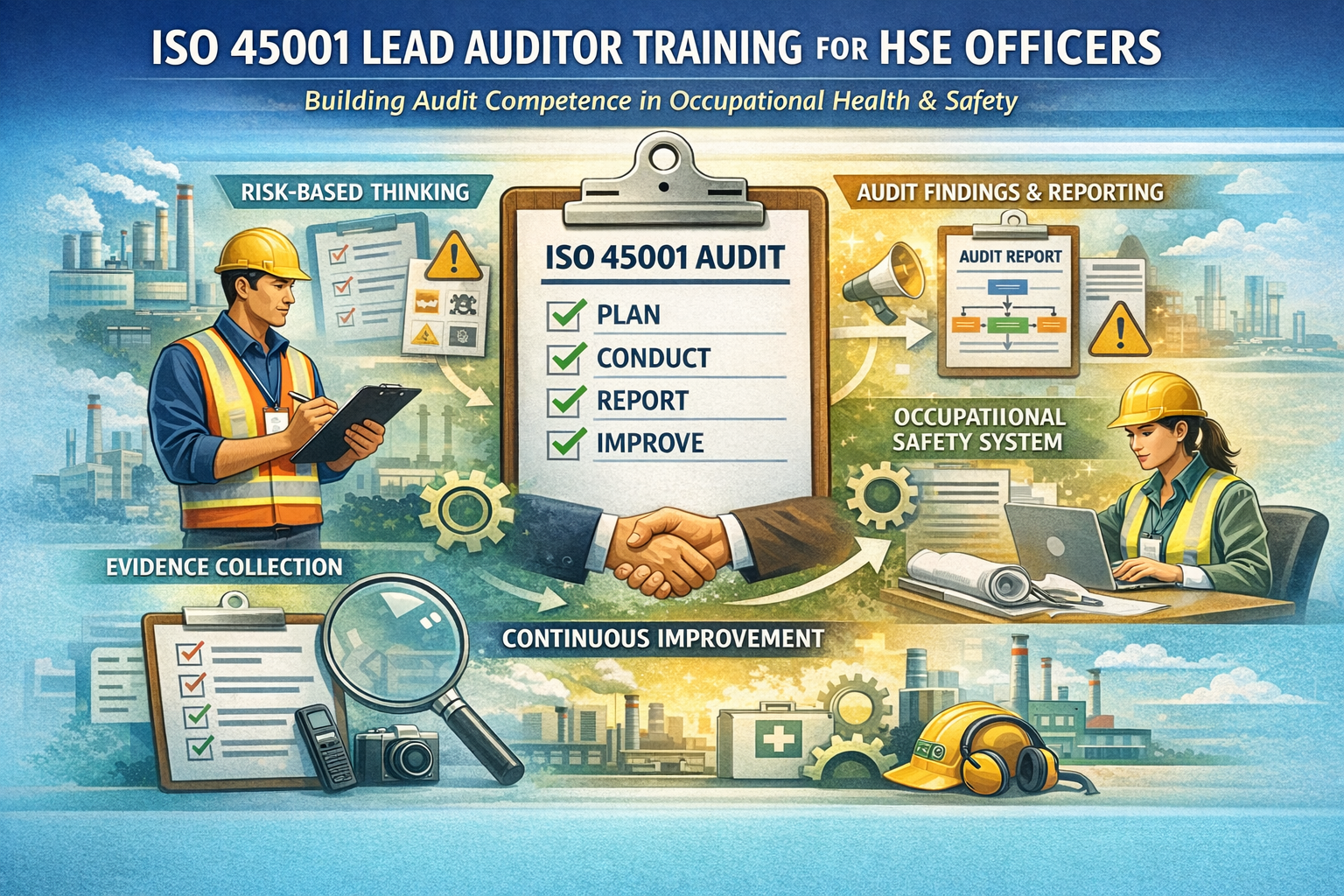
ISO 45001 lead auditor training follows a systematic framework that combines theoretical understanding with practical application. For example, the course introduces key audit principles, planning methods, evidence collection techniques, and reporting structures. Consequently, for HSE officers, this structured approach ensures that learning is not abstract but directly connected to real workplace scenarios and operational safety challenges.
Developing Audit Competence Beyond Basic Compliance
A central outcome of ISO 45001 lead auditor training is the ability to assess effectiveness rather than simple compliance. More importantly, HSE officers learn to evaluate whether safety controls are functioning as intended and whether they produce consistent outcomes. Therefore, this competence allows professionals to identify gaps that may not be visible through routine inspections or checklist-based assessments.
Interpreting Occupational Health and Safety Requirements in Practice
ISO 45001 lead auditor training emphasizes the interpretation of requirements within real operational contexts. Rather than relying on theoretical understanding alone, HSE officers are trained to assess how requirements are applied across departments, activities, and risk environments. Thus, this practical interpretation strengthens their ability to evaluate system performance with clarity and consistency.
Strengthening Risk-Based Thinking Through Structured Evaluation
Risk assessment is a fundamental component of occupational health and safety systems. Accordingly, ISO 45001 lead auditor training enhances the ability of HSE officers to evaluate how risks are identified, analysed, and controlled. At the same time, the training reinforces the understanding that risk management is not a standalone activity but an ongoing process integrated into daily operations.
Transition from Inspection-Based Approach to Audit-Based Evaluation
Traditionally, safety roles often relied on inspection-based methods focused on identifying visible issues. However, ISO 45001 lead auditor training introduces a broader audit-based perspective. As a result, HSE officers learn to analyse processes, review system interactions, and evaluate long-term effectiveness rather than focusing only on immediate observations or isolated findings.
Planning and Conducting Audits with Professional Consistency
ISO 45001 lead auditor training provides a clear methodology for planning and conducting audits. Specifically, this includes defining audit scope, preparing checklists, selecting sampling techniques, and organizing audit activities systematically. Consequently, for HSE officers, this structured approach ensures that audits are consistent, objective, and aligned with organizational requirements.
Evidence Collection and Objective Evaluation Techniques
A key element of ISO 45001 lead auditor training is the development of evidence-based evaluation skills. In practice, HSE officers are trained to collect information through observations, interviews, and document reviews. Above all, the focus remains on objective evidence rather than assumptions, ensuring that audit conclusions are reliable and supported by verifiable data.
Communication Skills in Audit Situations
ISO 45001 lead auditor training also addresses the importance of communication during audits. For instance, HSE officers learn how to conduct interviews, ask structured questions, and present findings clearly. As a result, effective communication ensures that audit outcomes are understood by all stakeholders and that corrective actions are accepted and implemented without unnecessary resistance.
Reporting Findings with Clarity and Accuracy
The ability to document audit findings accurately is an essential outcome of ISO 45001 lead auditor training. In addition, HSE officers are trained to prepare structured reports that clearly describe nonconformities, observations, and opportunities for improvement. Therefore, well-documented reports support decision-making and contribute to continuous improvement within the organization.
Understanding Organizational Context in Safety Systems
ISO 45001 lead auditor training highlights the importance of evaluating safety systems within the context of the organization. In particular, HSE officers learn to consider operational complexity, workforce behaviour, and environmental conditions when assessing system effectiveness. Thus, this broader perspective ensures that audits reflect real conditions rather than theoretical expectations.
Evaluating Process Effectiveness and System Performance
Beyond identifying gaps, ISO 45001 lead auditor training enables HSE officers to assess whether processes achieve intended results. For example, this includes reviewing performance indicators, monitoring trends, and analysing recurring issues. Consequently, the focus shifts from isolated incidents to overall system performance and long-term safety outcomes.
Addressing Behavioural Aspects in Occupational Safety
Human behaviour plays a significant role in workplace safety. Therefore, ISO 45001 lead auditor training supports HSE officers in understanding how behaviour influences system effectiveness. In addition, the training encourages evaluation of communication practices, supervision quality, and worker engagement as part of the audit process.
Managing Internal and External Audit Responsibilities
ISO 45001 lead auditor training prepares HSE officers to handle both internal and external audit responsibilities. On one hand, internal audits focus on system improvement. On the other hand, external audits require formal evaluation and compliance demonstration. Thus, the training ensures that professionals can adapt their approach based on the audit context and expectations.
Enhancing Professional Confidence in Decision-Making
One of the practical outcomes of ISO 45001 lead auditor training is increased confidence in professional judgment. As a result, HSE officers develop the ability to analyse situations, interpret findings, and justify conclusions with clarity. Ultimately, this confidence supports effective communication with management and strengthens the credibility of safety recommendations.
Integration of Audit Skills into Daily HSE Activities
The knowledge gained from ISO 45001 lead auditor training extends beyond formal audits. For instance, HSE officers can apply audit principles in routine activities such as inspections, incident investigations, and safety reviews. Therefore, this integration ensures that system-based thinking becomes part of everyday decision-making processes.
Common Challenges Addressed Through Structured Training
HSE officers often face challenges such as inconsistent procedures, limited resources, and resistance to safety initiatives. However, ISO 45001 lead auditor training provides structured methods to address these challenges by focusing on root cause analysis, system evaluation, and clear communication of findings and recommendations.
Selecting an Appropriate ISO 45001 Lead Auditor Training Program
Choosing the right ISO 45001 lead auditor training program is essential for effective learning. In particular, HSE officers should consider factors such as course structure, trainer experience, and practical components. For example, training providers like Integrated Assessment Service offer programs designed to balance theoretical knowledge with practical application, thereby supporting real-world competence development.
Long-Term Professional Development and Career Impact
ISO 45001 lead auditor training contributes to long-term professional growth for HSE officers. Over time, it enhances analytical skills, improves system understanding, and expands career opportunities. As a result, the training positions professionals to take on broader responsibilities, including audit leadership and safety system management roles.
Conclusion A Structured Path Toward Stronger Safety Systems
In conclusion, ISO 45001 lead auditor training provides a comprehensive framework for developing audit competence and system-based thinking. For HSE officers, it represents a transition from routine safety management to structured evaluation of organizational processes. Ultimately, by strengthening analytical skills and practical understanding, the training supports the development of more effective and resilient occupational health and safety systems.
