

Introduction
Microscopes have been at the centre of medicine’s most transformative discoveries — from Robert Koch’s identification of bacterial pathogens in the 19th century to modern-day cancer genomics. Today, the role of microscopes in medical research and diagnostics encompasses a vast spectrum of applications, from routine clinical examination to cutting-edge research into disease mechanisms at the molecular level. Understanding how microscopes contribute to medical progress illuminates why continued investment in microscopy technology remains a priority for healthcare institutions worldwide.
Microscopes in Clinical Pathology
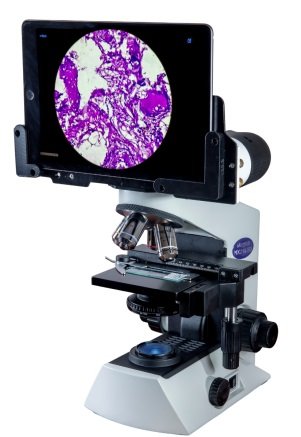
Clinical pathology is perhaps the most direct application of microscopes in medical research and diagnostics Microscope. Every day, pathologists and laboratory technicians use compound laboratory microscopes to examine thousands of specimens — blood smears for haematological disorders, tissue biopsies for cancer diagnosis, sputum smears for tuberculosis, urine sediments for kidney disease, and stool preparations for gastrointestinal infections. The accuracy of these diagnoses depends directly on the quality of the microscope and the skill of the examiner. Magnus Opto models such as the MX21i and MLXplus are specifically designed to meet the optical standards required for reliable clinical pathology.
Microscopes in Cancer Research
Cancer research relies on microscopes at every stage of investigation. Histopathological examination under a laboratory microscope remains the definitive method for cancer diagnosis and grading. Research microscopes such as the MLXi Plus enable immunofluorescence studies of cancer cell behaviour, fluorescence in situ hybridisation (FISH) for chromosomal analysis, and live-cell imaging of tumour invasion and metastasis. Digital imaging with MagVision software enables quantitative analysis of tumour microenvironments, supporting the development of new therapeutic strategies.
Microscopes in Infectious Disease Research
Microscopy is fundamental to infectious disease research and diagnostics. Dark-field microscopy is used to visualise unstained spirochaetes. Fluorescence microscopy with specific antibody probes enables rapid identification of viral and bacterial antigens. Electron microscopy allows visualisation of viral particles — critical for characterising newly emerging pathogens. In malaria diagnostics, thick and thin blood smear examination under a compound microscope remains the gold standard method. The importance of microscopes in daily life extends to every interaction we have with the healthcare system.
Microscopes in Genetics and Molecular Research
Cytogenetic applications of microscopy in medical research are highly specialised but critically important. Fluorescence microscopes equipped with narrow-band filter sets enable FISH analysis to detect chromosomal abnormalities associated with cancer and genetic disorders. Confocal microscopes provide three-dimensional reconstructions of chromosome organisation within cell nuclei. These applications require the highest quality optics — as provided by the MLXi Plus — combined with sensitive digital cameras and sophisticated image analysis software.
Digital Pathology and AI Integration
The integration of microscopy with digital imaging and artificial intelligence is transforming medical diagnostics. Whole-slide imaging systems capture complete tissue sections as high-resolution digital files that can be transmitted for remote consultation, analysed by AI algorithms, and archived for future reference. MagVision software from Magnus Opto represents a step in this direction, providing digital image capture, measurement, and documentation capability for laboratory microscopes across the product range.
Microscopes in Drug Development
The pharmaceutical industry relies heavily on microscopy throughout the drug development pipeline. Cell-based assays using fluorescence microscopes assess drug cytotoxicity and mechanism of action. Histopathological examination of animal model tissue sections evaluates target organ toxicity during preclinical studies. Quality control microscopy ensures pharmaceutical products meet standards for particulate contamination and uniformity. These applications span from entry-level stereo microscopes to research-grade compound microscopes with advanced imaging capabilities.
Conclusion
The role of microscopes in medical research and diagnostics cannot be overstated — they are the instruments through which medicine sees, understands, and ultimately conquers disease. Magnus Opto’s comprehensive range of laboratory microscopes, from the CH20i to the MLXi Plus, supports this essential work across India’s healthcare and research ecosystem.
Frequently Asked Questions (FAQs)
Q: What is the most important use of microscopes in medical diagnostics?
A: Histopathological examination of tissue biopsies for cancer diagnosis and microbiological examination of clinical specimens for pathogen identification are among the most critical uses of microscopes in routine medical diagnostics.
Q: How do microscopes contribute to cancer research?
A: Microscopes enable histological diagnosis, immunofluorescence studies of cancer cell biology, chromosomal analysis by FISH, live-cell imaging of tumour behaviour, and quantitative digital pathology analysis that together advance understanding and treatment of cancer.
Q: What type of microscope is used in malaria diagnosis?
A: Malaria is diagnosed using Giemsa-stained thin and thick blood smears examined under a compound laboratory microscope, where Plasmodium species and parasitaemia can be identified and quantified.
Q: How is digital imaging changing medical microscopy?
A: Digital imaging is enabling remote consultation, AI-assisted diagnosis, quantitative image analysis, and digital archiving that are transforming the speed, accessibility, and accuracy of microscopy-based medical diagnostics.
Q: What microscopes does Magnus Opto recommend for hospital laboratories?
A: For hospital clinical laboratories, Magnus Opto recommends the MX21i or MLXplus for routine diagnostic pathology, and the MLXi Plus for research or specialist diagnostic applications requiring advanced optical performance and fluorescence capability.
