

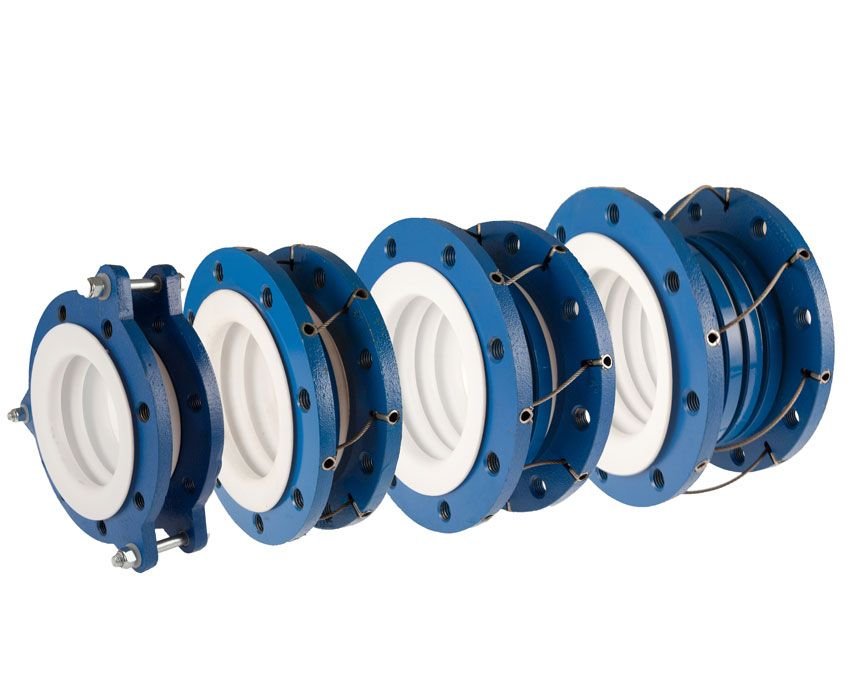
Industrial piping systems face constant stress from heat, vibration, pressure changes, and chemical exposure. Over time, these forces can cause leaks, cracks, and costly downtime if the system isn’t designed to absorb movement. This is where PTFE expansion joints come in. Known for their exceptional chemical resistance and durability, PTFE expansion joints have become a go-to solution for engineers who need dependable performance in demanding environments. At Advanced Flexible Systems Inc, we specialize in designing and manufacturing high-performance expansion joints built to handle the toughest industrial conditions.
What Are PTFE Expansion Joints?
PTFE expansion joints are flexible connectors made from polytetrafluoroethylene (PTFE), a synthetic fluoropolymer prized for its resistance to extreme temperatures, corrosive chemicals, and abrasive media. Unlike standard rubber or metal joints, PTFE expansion joints can operate reliably in highly acidic or caustic environments without degrading. This makes them a preferred choice in chemical processing plants, pharmaceutical manufacturing, and other industries where product purity and material integrity are non-negotiable. Because PTFE is naturally non-stick and chemically inert, these joints also require less maintenance over their service life, reducing long-term operating costs for facility managers.
Comparing PTFE, Ducting, and Viton Expansion Joints
While PTFE expansion joints are ideal for chemically aggressive applications, they aren’t the only option on the market. Ducting expansion joints are typically used in HVAC systems, exhaust lines, and air-handling equipment where thermal expansion and vibration need to be absorbed without restricting airflow. These joints are often built from fabric or elastomer-coated materials designed to flex under repeated thermal cycling. On the other hand, viton expansion joints are known for their outstanding resistance to oils, fuels, and hydrocarbons, making them a strong choice for petrochemical and automotive applications. Choosing between PTFE expansion joints, ducting expansion joints, and b ultimately depends on the specific media, temperature range, and pressure conditions your system needs to withstand. At Advanced Flexible Systems Inc, our engineering team helps clients evaluate these factors to select the right joint for each unique application.
Key Benefits of Using PTFE Expansion Joints
One of the biggest advantages of PTFE expansion joints is their ability to handle a wide temperature range, often from sub-zero conditions up to several hundred degrees Fahrenheit, without losing structural integrity. Their chemical inertness also means they won’t react with aggressive acids, solvents, or alkalis, which extends the lifespan of the entire piping system. Additionally, PTFE expansion joints offer excellent flexibility, allowing them to absorb axial, lateral, and angular movement caused by thermal expansion or equipment vibration. This flexibility helps prevent stress fractures and reduces the risk of unplanned shutdowns. For industries where downtime translates directly into lost revenue, investing in quality PTFE expansion joints from a trusted manufacturer like Advanced Flexible Systems Inc can make a significant difference in operational reliability.
Common Applications Across Industries
PTFE expansion joints are widely used in chemical processing, pharmaceutical production, water treatment, and food and beverage manufacturing, where hygienic, non-reactive materials are essential. In facilities that also rely on ducting expansion joints for ventilation systems, combining both solutions ensures comprehensive protection across liquid, gas, and airflow lines. Similarly, plants that handle petroleum-based products often pair PTFE expansion joints with viton expansion joints to cover both highly corrosive chemical lines and oil-resistant applications within the same facility. This layered approach to piping protection minimizes the risk of system failure and helps maintain consistent production output.
Choosing the Right Manufacturer
Not all expansion joints are created equal, and material quality plays a major role in long-term performance. When sourcing PTFE expansion joints, it’s important to work with a manufacturer that understands the specific demands of your industry and can customize solutions accordingly. Advanced Flexible Systems Inc has built a reputation for engineering expansion joints that meet rigorous industry standards while offering the flexibility to design custom solutions for unique piping configurations. Whether you need standard PTFE expansion joints, specialized ducting expansion joints for airflow systems, or viton expansion joints for fuel and oil resistance, working with an experienced partner ensures your system is protected for years to come.
What Searchers Really Want to Know
Before buying, most engineers and procurement teams are searching for answers to a few specific questions, and addressing them directly helps buyers make faster, more confident decisions.
- How much do PTFE expansion joints cost? Pricing varies based on diameter, pressure rating, and whether the joint is a standard size or custom-engineered. While PTFE expansion joints often carry a higher upfront cost than basic rubber alternatives, their extended service life and low maintenance needs typically lower total cost of ownership over time.
- How long do they last? Service life depends on operating temperature, chemical exposure, and cycle frequency, but properly specified PTFE expansion joints can last significantly longer than standard elastomer joints in corrosive applications, sometimes doubling or tripling their lifespan.
- How do I choose the right size and rating? Correct sizing requires matching the joint’s diameter, pressure class, and movement capability (axial, lateral, angular) to your system’s actual operating conditions. Undersizing or misapplying a joint, whether it’s a PTFE expansion joint, a ducting expansion joint, or a viton expansion joint, is one of the most common causes of premature failure.
- Can these joints be installed in existing systems? Yes. Most PTFE expansion joints are designed as retrofit-friendly components, and Advanced Flexible Systems Inc offers guidance on installation clearances, flange compatibility, and torque specifications to ensure a proper fit without reworking the entire pipeline.
- What maintenance do they require? One of the strongest selling points of PTFE expansion joints is minimal upkeep. Routine visual inspections for surface wear, along with periodic checks for movement beyond rated limits, are usually enough to keep the joint performing reliably for years.
Ready to Upgrade Your Piping System?
Don’t let outdated or mismatched expansion joints put your operations at risk. Contact Advanced Flexible Systems Inc today to speak with our engineering team about custom PTFE expansion joints designed for your facility’s exact specifications. Reach out now for a consultation and discover how the right expansion joint solution can improve safety, reduce maintenance costs, and extend the life of your entire piping system.
