Key Takeaways
- A deepfake is media created or altered using artificial intelligence to make someone appear to say or do something they never did.
- The tools to create realistic fake media are now widely available, often free and easy to use.
- Look carefully at the edges of the face, especially around the hairline, ears and jaw.
- Lip movement is often difficult for AI to match perfectly.
- Heads may move stiffly, bodies may stay unnaturally still while the face moves, or hands may look distorted.
A video shows a famous person saying something shocking. A voice message from your boss urgently asks you to transfer money. A clip of a friend appears online doing something they would never do. A few years ago, you could trust what you saw and heard with reasonable confidence. Today, AI tools can create convincing fake videos, photos and voices in minutes.
These fakes are called deepfakes, and they are becoming harder to recognise. Learning how to spot a deepfake is now an everyday digital skill, just like recognising a phishing email. This guide explains what deepfakes are, the warning signs to look for and simple habits that protect you, your family and your business from being fooled.
What Is a Deepfake?
A deepfake is media created or altered using artificial intelligence to make someone appear to say or do something they never did. The name comes from "deep learning," the type of AI used to study real images, videos and recordings of a person and then generate new content that looks and sounds like them.
Deepfakes can be harmless, such as movie effects or comedy clips clearly labelled as fake. The problem arises when they are used to deceive. Scammers, propagandists and harassers use them to spread false information, damage reputations or trick people into handing over money or sensitive data.
Why Deepfakes Are a Growing Problem
The tools to create realistic fake media are now widely available, often free and easy to use. A short audio clip from social media or a public video can be enough to imitate someone's voice. Images can be generated or edited so naturally that the changes are invisible at first glance.
The same generative AI technology that powers creative tools, which we explain in white label AI image generator software, can be misused when it falls into the wrong hands. As quality improves, the old tricks for spotting fakes become less reliable, which makes careful habits even more important.
Watch the Face Closely
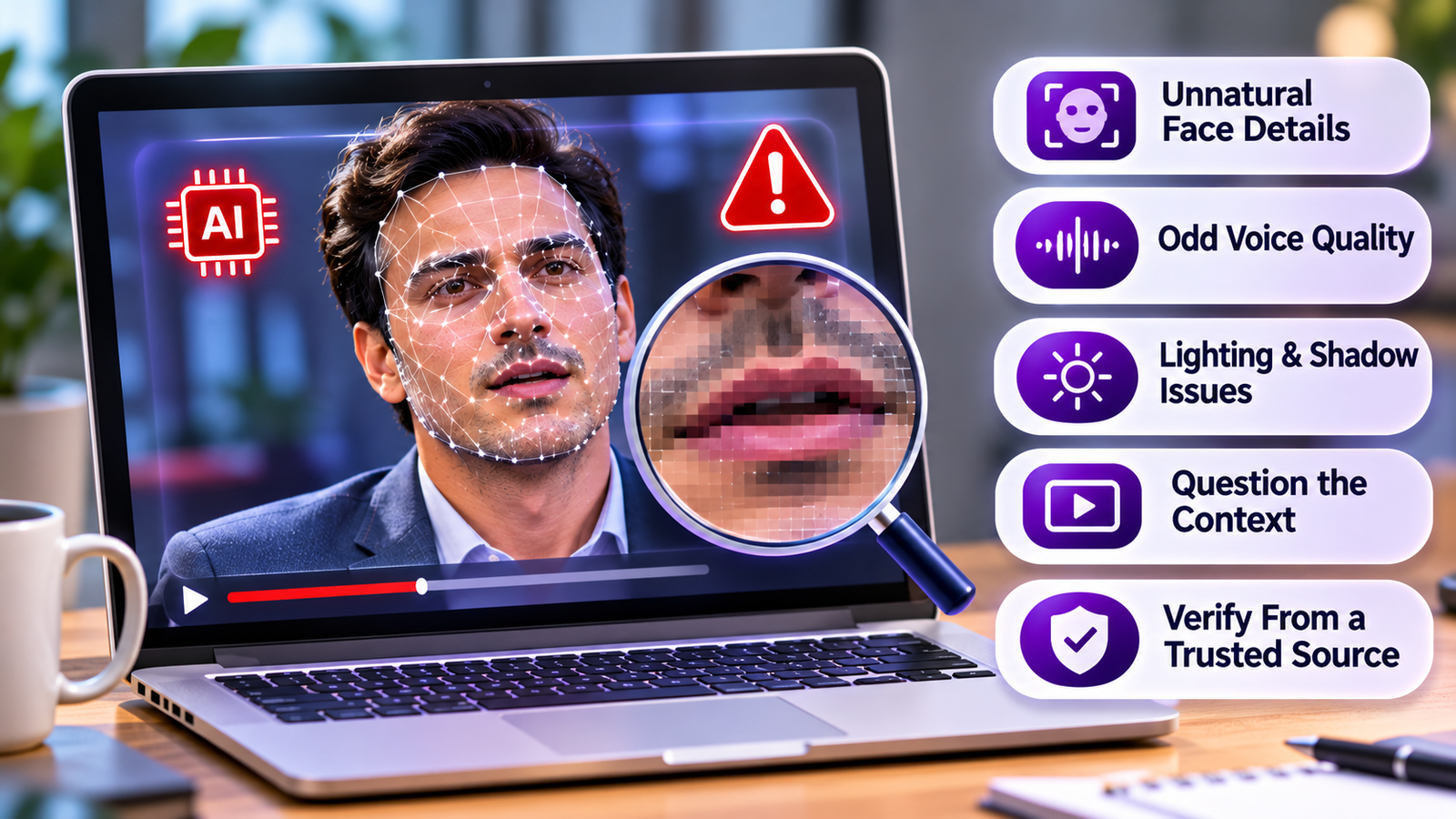
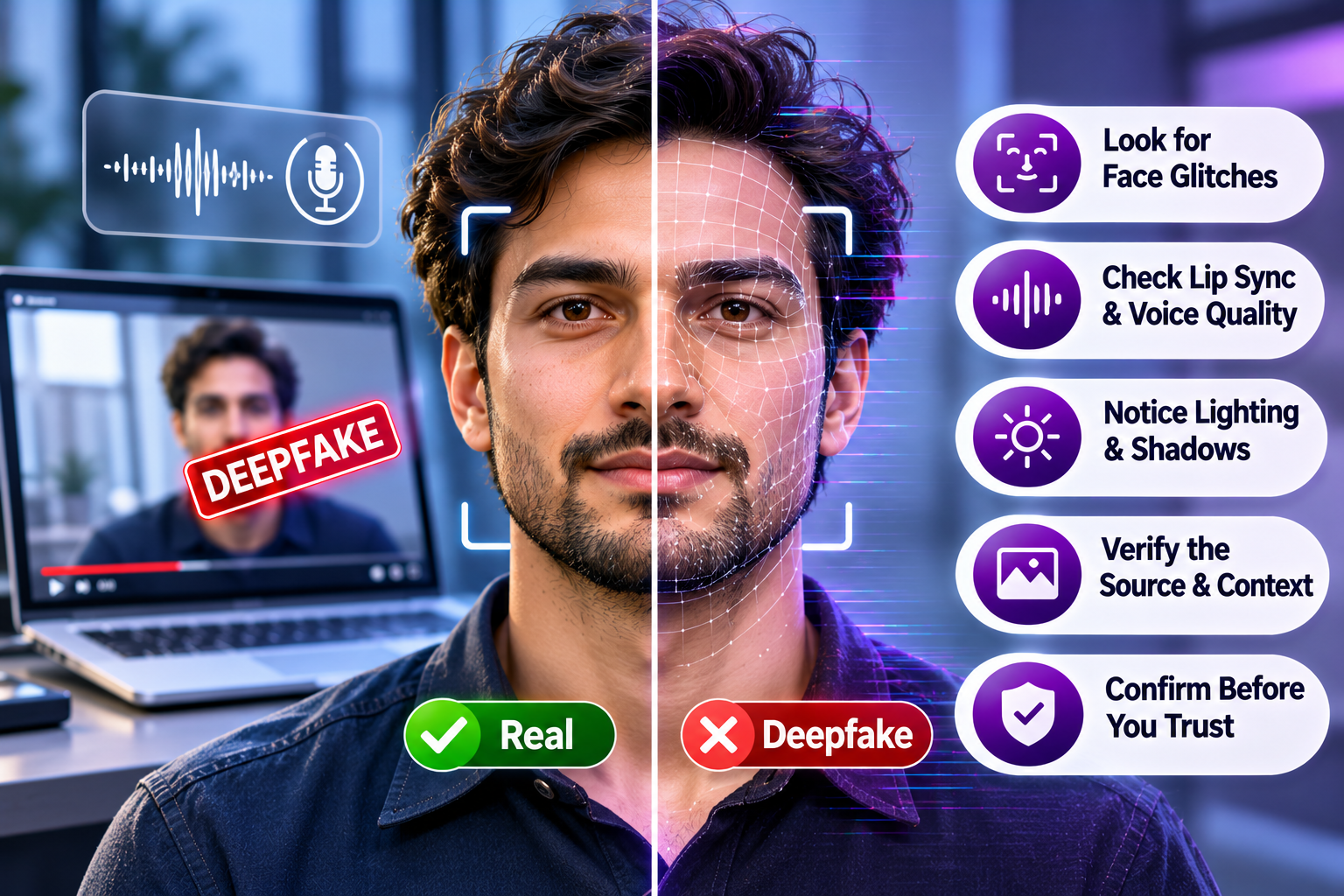
In many fake videos, the face is where small errors appear. Look carefully at the edges of the face, especially around the hairline, ears and jaw. You may notice blurring, flickering or a slightly unnatural blend between the face and the background.
Skin can also look too smooth, waxy or oddly lit compared with the rest of the scene. Teeth may appear blurry or merge together, and earrings or glasses might change shape between frames. Expressions sometimes feel slightly off, as if the emotions do not quite match the words being spoken.
Check the Lips and the Audio
Lip movement is often difficult for AI to match perfectly. Watch whether the mouth movements truly line up with the words, especially with sounds that require closed lips, such as "b," "p" and "m." A slight delay or mismatch can be a strong clue.
Listen carefully to the voice as well. Cloned voices may sound flat, robotic or strangely even, without the natural pauses, breaths and changes in tone that real speech has. Background noise might also be missing or inconsistent, making the voice seem oddly clean compared with the setting shown in the video.
Look at Lighting, Shadows and Movement
Real scenes follow the rules of physics. In fakes, shadows may fall in the wrong direction, reflections in eyes or glasses may not match the surroundings, and lighting on the face may differ from lighting on the body or background.
Movement can be another giveaway. Heads may move stiffly, bodies may stay unnaturally still while the face moves, or hands may look distorted. Pausing a video and studying individual frames often reveals glitches that are easy to miss at full speed.
Question the Context, Not Just the Pixels
As deepfakes improve, visual clues alone are not enough. The context around a video or message is often a better warning sign. Ask yourself where the content came from, who shared it first and whether trusted news sources are reporting the same thing.
Be especially cautious with content designed to provoke strong emotions such as anger, fear or excitement. Fakes are often made to spread quickly before anyone checks them. If something seems shocking or too perfect to be true, take a moment to verify it before sharing or reacting.
Verify Before You Trust
Simple verification steps can expose many fakes. A reverse image search can show whether a photo has appeared elsewhere in a different context. Searching for key phrases from a video can reveal whether reliable sources have confirmed or debunked it. Checking the original account that posted the content often tells you a lot about its trustworthiness.
Some platforms and camera makers are also beginning to attach content credentials, which show how and when an image or video was created and whether it has been edited. These labels are not yet everywhere, but they are a growing tool for confirming authenticity.
Protect Yourself From Voice Cloning Scams
One of the most dangerous uses of deepfakes is voice cloning for fraud. Scammers may call pretending to be a family member in trouble or a company executive requesting an urgent payment. The voice sounds real, and the pressure to act quickly is intense.
The best defence is to slow down and verify through another channel. Hang up and call the person back on a number you already know. Many families now agree on a private code word that only they know, which can be asked during any unexpected emergency call. Businesses should require a second approval for payments, no matter how urgent a request sounds.
How Businesses Can Reduce the Risk
For companies, deepfakes add a new layer to traditional fraud and phishing. Attackers may impersonate leaders on video calls, send fake voice notes to finance teams or create false statements that harm the brand.
Clear processes are the strongest protection. Payment changes and large transfers should always be confirmed through established channels, and staff should feel comfortable questioning unusual requests, even from senior people. Strong account security also limits damage, which is why we recommend reading why every business should use multi-factor authentication. Automated monitoring tools can help detect suspicious activity, as explained in security automation's impact on cybersecurity teams.
Can Technology Detect Deepfakes?
Researchers and security companies are developing tools that analyse media for signs of AI manipulation. These systems look for tiny inconsistencies in pixels, audio patterns or file data that humans cannot easily see. Some are already used by news organisations and large platforms.
However, no detection tool is perfect. As creation tools improve, detection must constantly catch up. That is why technology works best alongside human judgement and good habits. Our article on the role of cybersecurity applications in detecting and preventing modern threats explains how security software adds protection across many types of digital risk.
Keep Your Own Images and Voice Safer
The more photos, videos and voice recordings of you that are publicly available, the easier it is to create a convincing fake. You do not need to disappear from the internet, but it helps to review privacy settings on social media and limit who can see personal content.
Be thoughtful about posting long voice notes or videos publicly, especially if you are in a role that handles money or sensitive decisions. Phones are adding new tools to fight scam calls, including AI-powered call screening, as discussed in how AI smartphones are changing everyday mobile use.
Final Thoughts
Deepfakes are a reminder that seeing and hearing are no longer always believing. The good news is that a few simple habits make a big difference. Look closely at faces, lips and lighting, question the source and context, verify before sharing and always confirm unusual requests through a trusted channel.
Technology will keep improving on both sides, but careful, calm thinking remains your best defence. For more simple guides on AI, security and everyday technology, explore the latest articles on AtechVibe.