A few years ago, online shopping meant typing a product name into a search bar and scrolling through pages of results. Today, the experience feels very different. Stores seem to know what you like, chat assistants answer questions instantly, and recommendations often match your taste surprisingly well. Behind almost all of these changes is AI in online shopping.
Artificial intelligence now shapes nearly every step of the buying journey, from the moment you start browsing to the day your parcel arrives. For customers, it means faster, more personal shopping. For online stores, it opens new ways to grow sales and reduce costs. This article explains how it works, where it helps most and what both shoppers and sellers should watch out for.
Personalised Product Recommendations
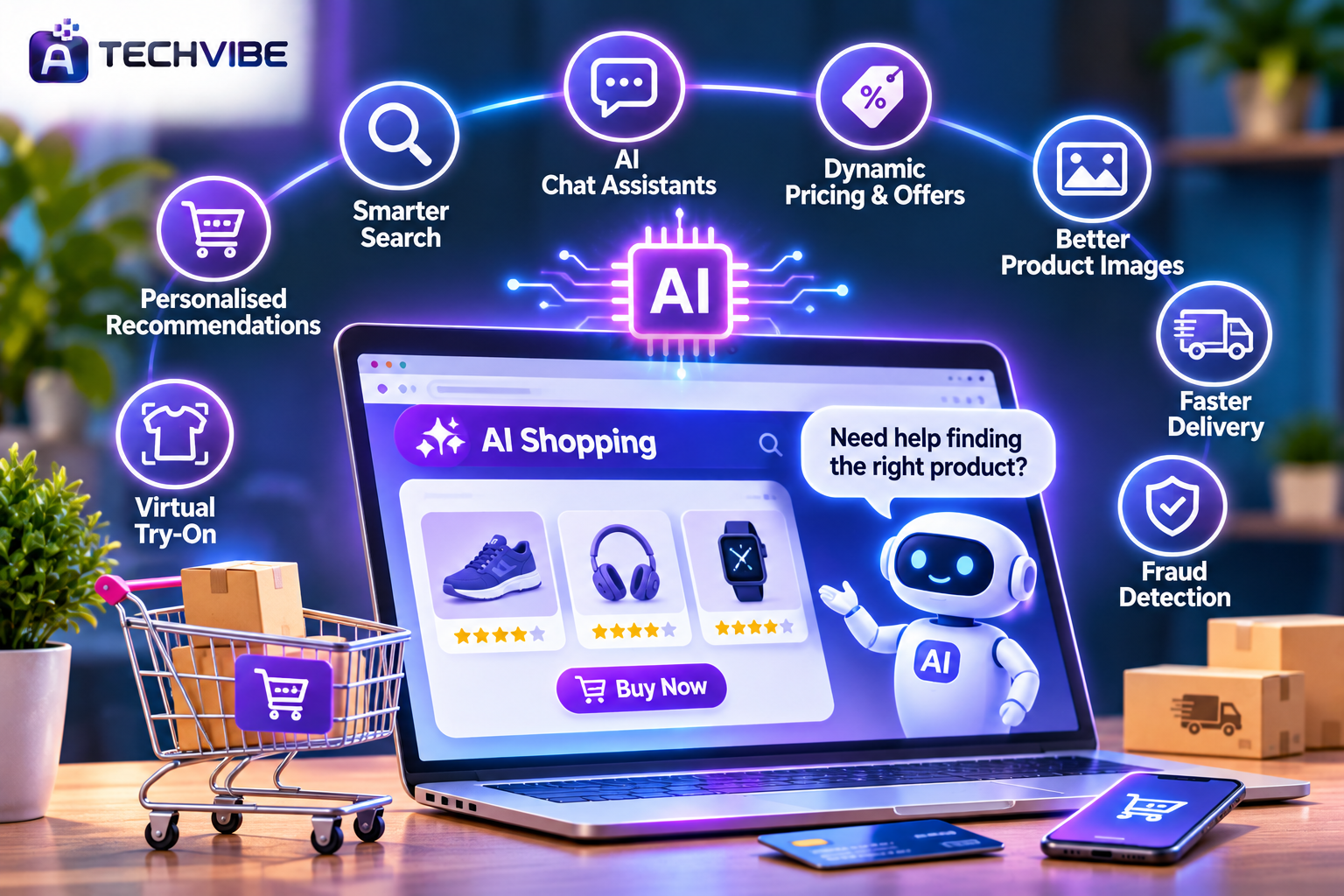
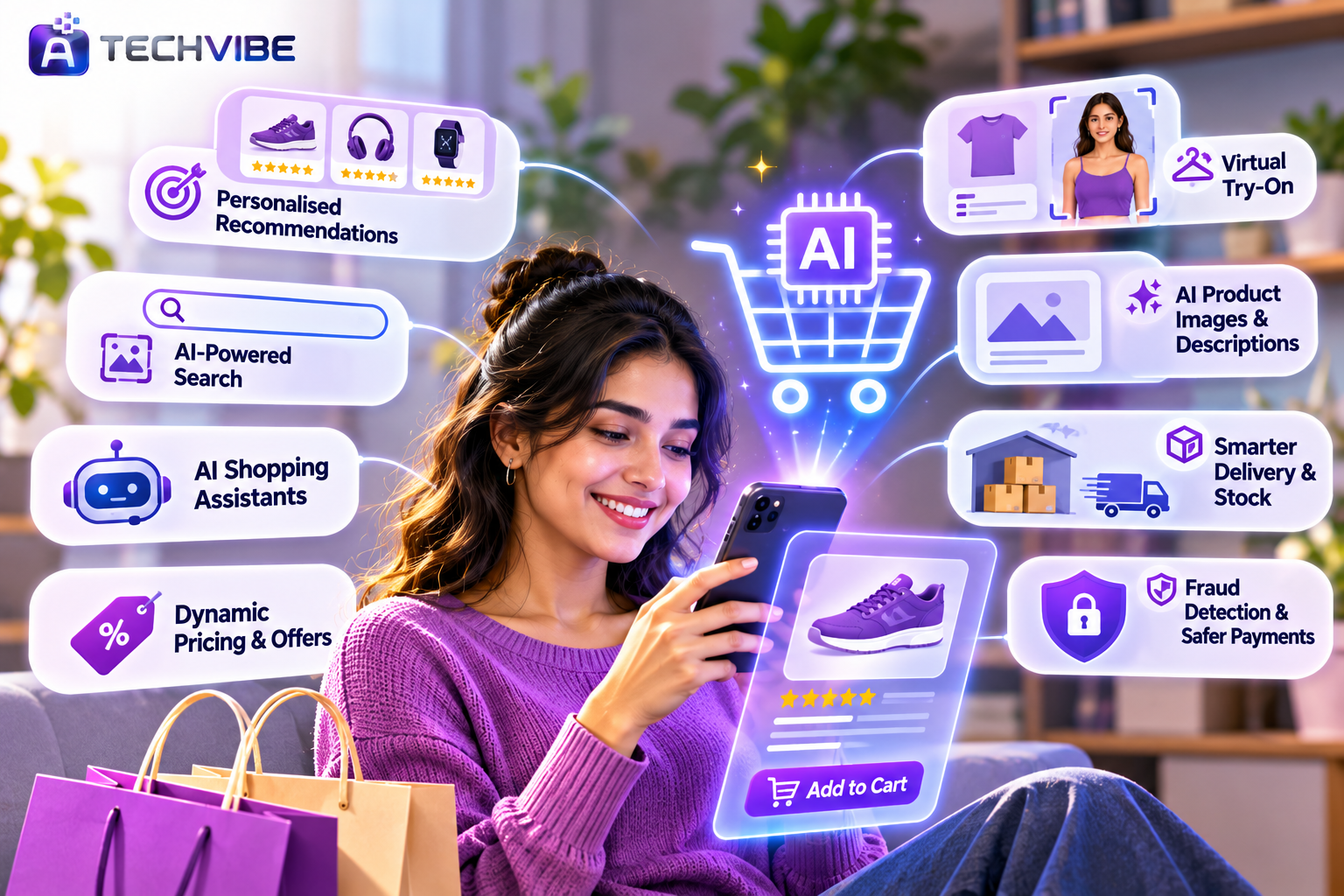
The most visible use of AI in online shopping is personalised recommendations. When a store shows “you might also like” or “customers who bought this also bought,” AI is studying your browsing history, past purchases and the behaviour of similar shoppers to predict what you are most likely to want next.
These systems learn constantly. If you start looking at running shoes, the homepage may begin showing sports gear within minutes. For stores, good recommendations increase the number of items in each order and help customers discover products they would never have searched for. We explain the technology behind this in more detail in how machine learning is changing customer experiences.
Smarter Search That Understands What You Mean
Traditional store search only matched exact words. If you typed “light jacket for rain” and the product was listed as “waterproof windbreaker,” you might never find it. AI-powered search understands meaning rather than just matching words, so it can connect what you type with what you actually want.
Many stores now also offer visual search, where you upload a photo and the system finds similar items. Voice search is growing too, letting shoppers simply ask for what they need. Together, these tools make it easier to find the right product quickly, which reduces frustration and abandoned visits.
AI Shopping Assistants and Chatbots
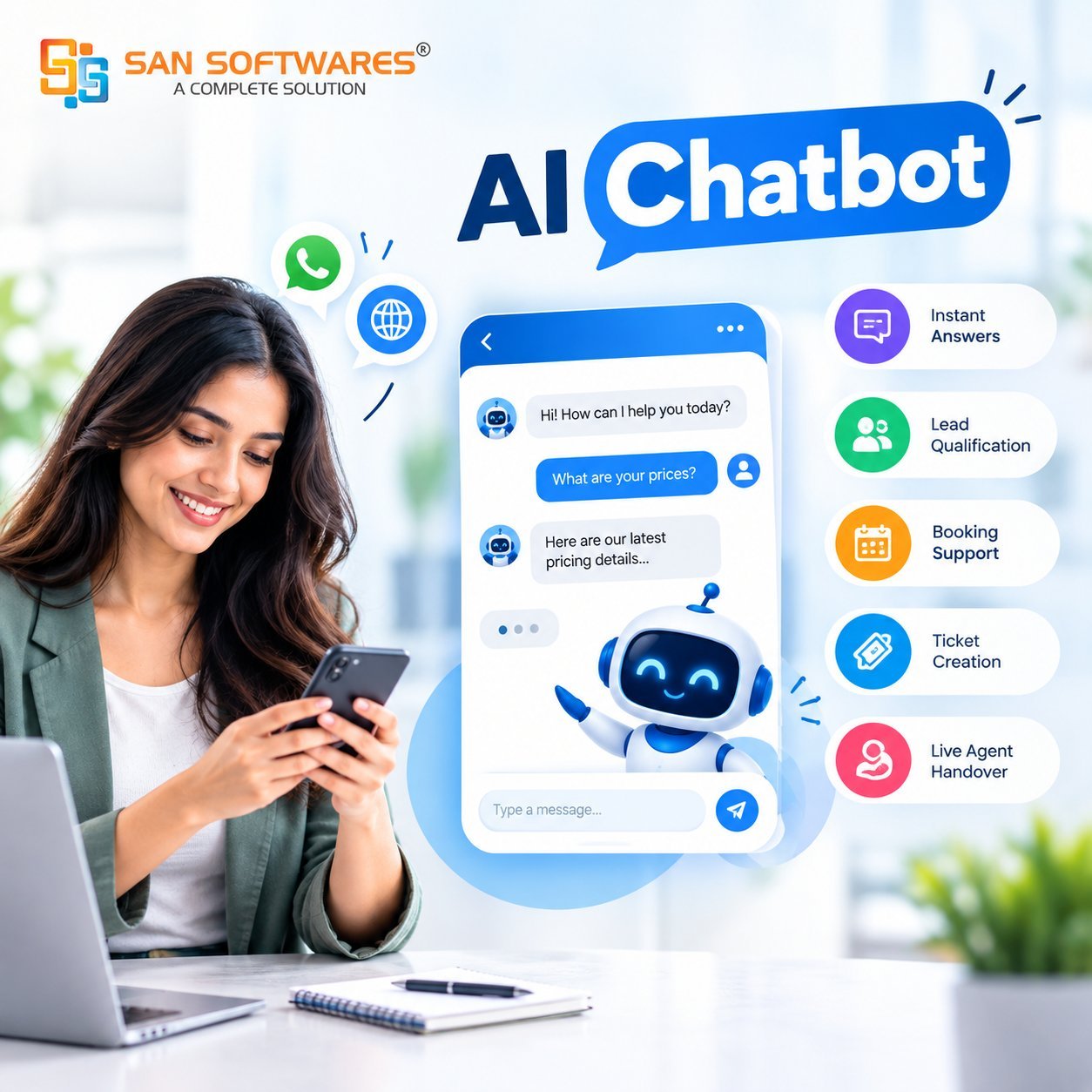
Customer questions used to wait in email inboxes for hours. Now, AI chat assistants can answer them instantly at any time of day. They can explain sizing, compare products, check stock, track orders and guide shoppers through returns.
The newest assistants go further than simple question-and-answer bots. They can understand a request like “I need a gift for my dad who loves gardening, under two thousand rupees” and suggest suitable options. Some businesses are even using AI agents that complete tasks from start to finish, a shift we cover in how AI agents are changing the way businesses work.
Dynamic Pricing and Personalised Offers
Many online stores use AI to adjust prices based on demand, competitor prices, stock levels and time of year. This is known as dynamic pricing. Airlines and hotels have used it for years, and it is now common in ecommerce as well.
AI also decides which discounts and offers to show each customer. One shopper might see free delivery, while another receives a percentage off a product they viewed earlier. When done fairly and transparently, this helps stores reward loyal customers and recover sales that might otherwise be lost.
Better Product Images and Descriptions
Creating high-quality product photos and descriptions for thousands of items takes enormous time. AI tools now help stores write clear descriptions, translate them into other languages and produce lifestyle images that show products in real-world settings.
Some platforms even offer virtual try-on features, letting shoppers see how glasses, clothes or makeup might look on them before buying. Businesses are building entire products around this capability, as we explore in white label AI image generator software.
Smarter Marketing and Advertising
AI plays a major role in how online stores reach new customers. Advertising platforms use machine learning to decide who sees an ad, when they see it and which version works best. Email platforms use AI to choose the best send time and recommend products in each message.
This makes marketing budgets go further, because ads reach people who are genuinely interested. You can learn more in how AI is improving campaign targeting and conversion tracking. Strong search visibility still matters too, and our guide on how ecommerce SEO services help online stores grow explains how stores attract visitors without paying for every click.
Faster Delivery and Smarter Stock Management
Behind the scenes, AI helps stores predict how much of each product they will sell, so they can keep the right amount in stock. This reduces both empty shelves and expensive overstock.
AI also plans delivery routes, estimates arrival times and helps warehouses pick and pack orders faster. Food and grocery delivery apps rely heavily on this kind of real-time planning, a model we discuss in how an UberEats clone can help you enter the online food delivery market.
Fraud Detection and Safer Payments
Online stores face constant attempts at payment fraud, fake accounts and stolen card use. AI systems monitor transactions in real time and flag unusual behaviour, such as a sudden large order from a new location or many failed payment attempts.
This protects both shoppers and sellers. Customers can add another layer of safety by using two-step login on their shopping and payment accounts, a habit we explain in why every business should use multi-factor authentication.
What Shoppers Should Keep in Mind
AI makes online shopping more convenient, but it also relies heavily on personal data. Every search, click and purchase helps stores build a picture of your preferences. It is worth reviewing privacy settings, limiting app permissions and reading how a store uses your information.
Shoppers should also stay aware that recommendations and limited-time offers are designed to encourage buying. Taking a moment to compare prices and read genuine reviews remains one of the best ways to make smart decisions, even in an AI-driven store.
How Small Online Stores Can Start Using AI
AI is no longer only for large retailers. Many ecommerce platforms now include AI features such as product recommendations, automated email campaigns, chat assistants and description writing tools at little or no extra cost.
The best approach is to start with one area that saves time or increases sales, such as automated abandoned cart emails or a simple chat assistant, and measure the results before adding more. Our guide on how small businesses can use AI without a big budget shares practical, affordable ways to begin.
The Future of AI in Online Shopping
The next stage of AI in online shopping is likely to feel even more conversational. Instead of browsing categories, shoppers may simply describe what they need and let an AI assistant compare options, check reviews and even complete the purchase. Virtual try-ons will become more realistic, and delivery predictions will become more precise.
For stores, the winners will be those that use AI to make shopping genuinely easier and more helpful, not just more persuasive. Trust, transparency and good service will matter as much as clever technology.
Final Thoughts
AI has quietly transformed online shopping, from the products we see to the prices we pay and the speed at which orders arrive. Used well, it saves shoppers time and helps businesses of every size compete. Used carelessly, it can feel intrusive. The key for both sides is balance: smart technology combined with honest, customer-first thinking.
For more easy-to-read guides on AI, ecommerce and everyday technology, explore the latest articles on AtechVibe.