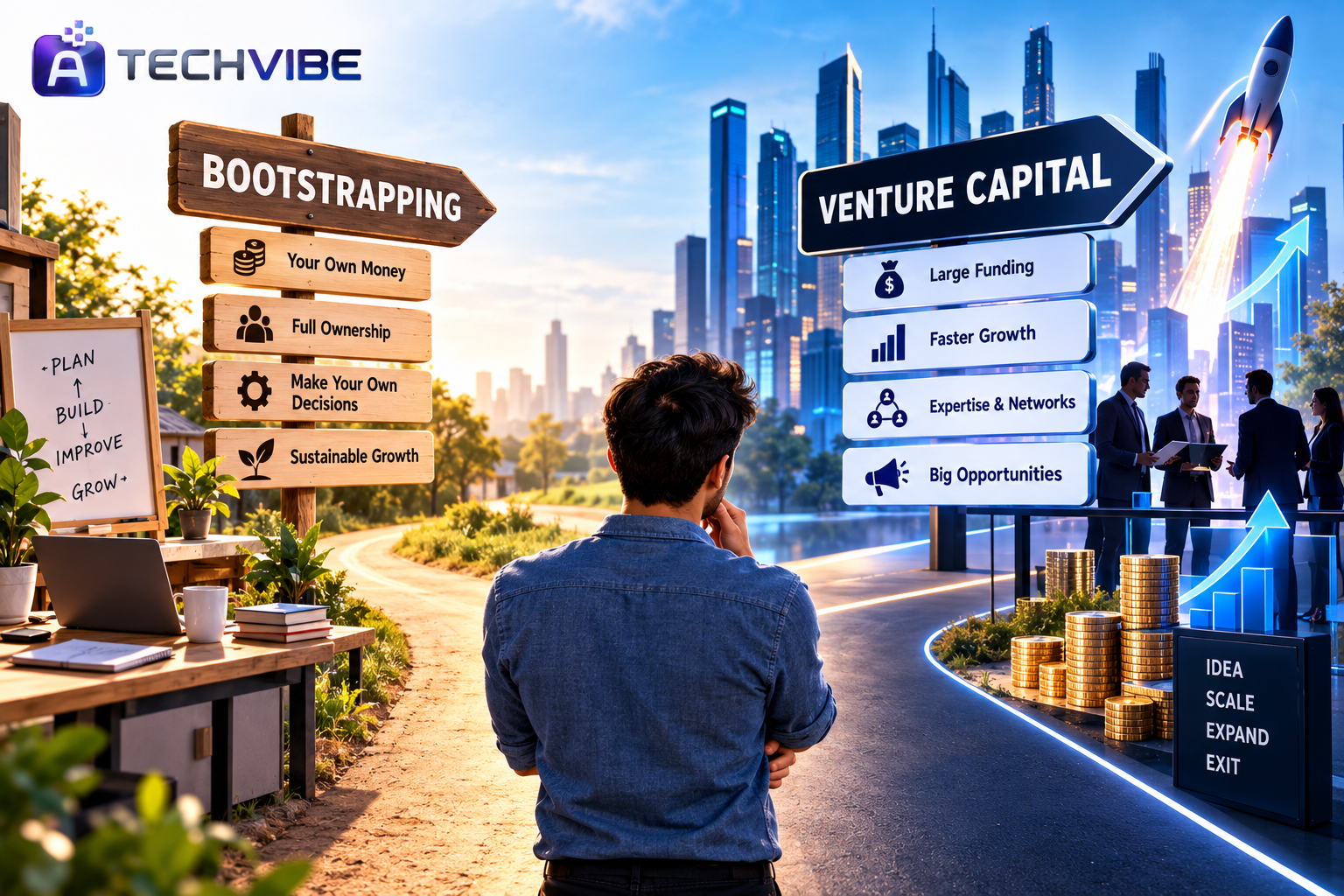
Every founder eventually faces the same question. Do you grow slowly with your own money and revenue, or do you raise outside investment to move fast? Headlines celebrate startups that raise huge funding rounds, which can make bootstrapping feel like the “small” option. But many strong, profitable companies were built without a single investor.
The bootstrapping vs venture capital decision shapes everything about your startup: how fast you grow, who makes decisions, how much of the company you own and what success even looks like. There is no universally right answer. There is only the right answer for your business, your market and your goals. This guide helps you find it.
What Is Bootstrapping?
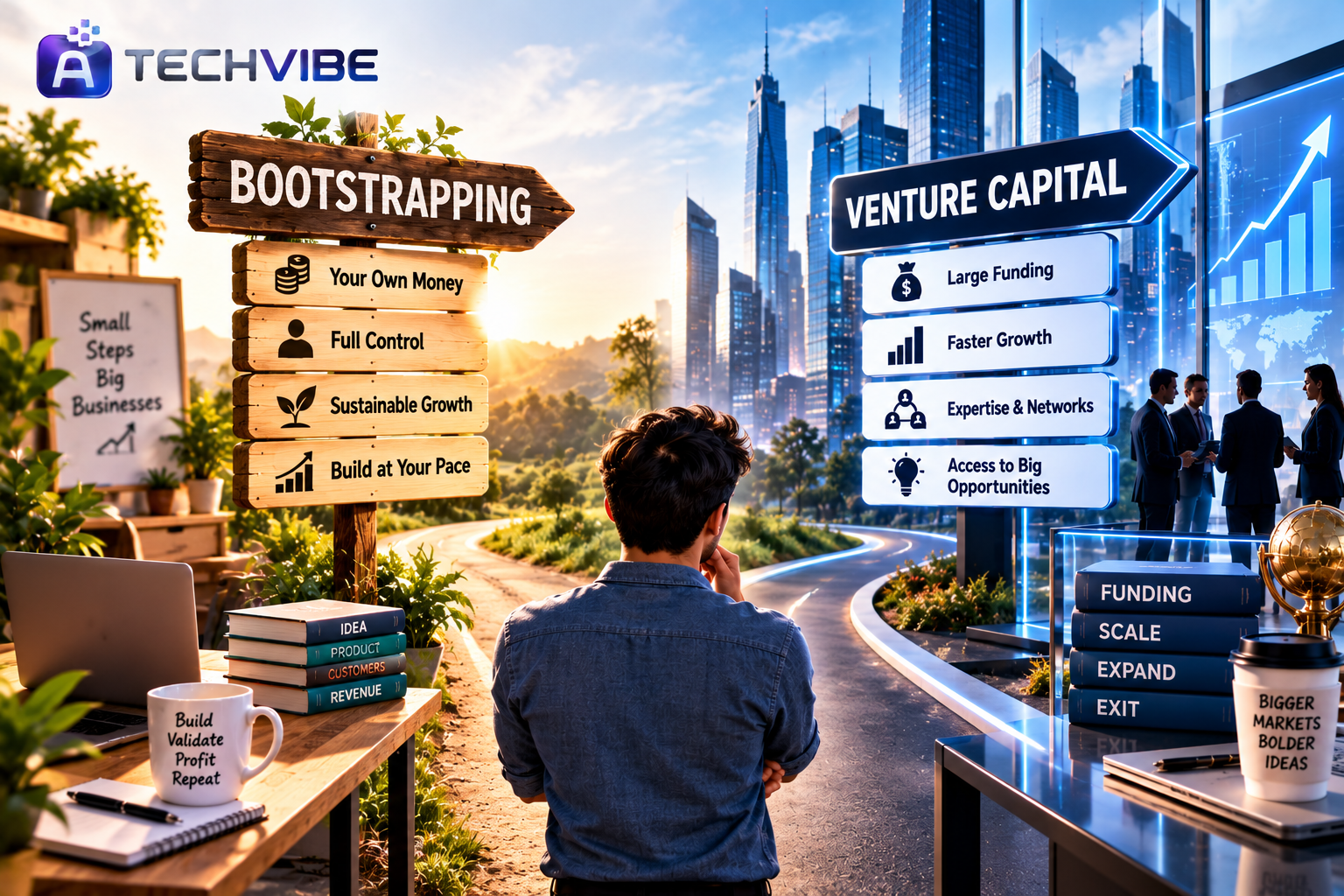
Bootstrapping means building your company using personal savings, early customer revenue and careful spending, without selling equity to outside investors.
Growth is funded by profit. If you want to hire someone or build a new feature, you wait until revenue can pay for it.
The Upside of Bootstrapping
You keep full ownership. Every share of the company stays with you and your co-founders.
You make the decisions. No board approval, no investor pressure, no one pushing you toward a direction you do not believe in.
You build discipline. Limited money forces you to focus on what customers will actually pay for. That habit often leads to healthier, more sustainable businesses.
You can grow at your own pace. There is no deadline to hit aggressive growth targets before the next funding round.
The Downside of Bootstrapping
Growth can be slower. You may miss opportunities if competitors with funding move faster.
Personal financial risk. Founders often invest their own savings and may pay themselves little in the early years.
Limited resources. Hiring, marketing and product development all have to wait for revenue.
Harder in some markets. Businesses that need expensive research, hardware or long development cycles can be very difficult to bootstrap.
What Is Venture Capital?
Venture capital (VC) is investment from firms that fund high-growth startups in exchange for a share of the company. VC firms expect a small number of their investments to grow extremely large, producing returns that make up for the many that fail.
That model shapes everything about how VC-backed startups operate.
The Upside of Venture Capital
Speed. Large amounts of capital let you hire quickly, build faster and expand into new markets.
Expertise and networks. Good investors bring advice, introductions to customers and partners, and help with future fundraising.
Credibility. Backing from respected investors can make it easier to attract talent, media attention and large clients.
Room for bold bets. Some ideas, such as deep tech or large platforms, simply need significant money before they can earn revenue.
The Downside of Venture Capital
You give up ownership. Each round dilutes your share of the company.
You share control. Investors often take board seats and have a say in major decisions.
Pressure for rapid growth. VCs typically want companies that can grow very large very fast. A steady, profitable business may not be enough for them.
A defined end goal. Investors usually expect an “exit,” such as an acquisition or public listing, within a certain number of years.
Fundraising takes time. Pitching, negotiating and due diligence can pull founders away from building the product for months.
The Middle Paths Most Founders Forget
It is not a simple choice between “no money” and “big VC.” Several options sit in between.
Angel investors. Individuals who invest smaller amounts at an early stage, often with more flexible expectations than VC firms.
Friends and family. Common for very early funding, but treat it professionally with clear written terms to protect relationships.
Revenue-based financing. You receive money now and repay it as a percentage of future revenue, without giving up equity.
Grants and government programmes. Many countries support startups through grants, tax benefits and seed funding schemes, such as India’s Startup India initiative. These can provide non-dilutive capital.
Crowdfunding. Pre-selling a product to customers can raise money and prove demand at the same time.
Accelerators and incubators. They usually offer small investments, mentorship and connections in exchange for a modest equity stake.
Questions to Ask Before You Decide
How big can this market really get? VC suits ideas that could serve huge markets. Niche businesses with solid profits often fit bootstrapping better.
How quickly can you earn revenue? If customers can pay soon after launch, bootstrapping becomes much more realistic.
How expensive is it to build? Software that a small team can develop is easier to self-fund than hardware, biotech or infrastructure. Smart development choices also lower costs, as we explain in the business benefits of Flutter app development and the benefits of outsourcing mobile app development.
Is speed critical? In winner-takes-most markets, being first at scale can matter enormously. In others, steady progress wins.
What do you personally want? Some founders want to build a large company and are comfortable sharing control. Others want independence, a healthy lifestyle business and full ownership. Both are valid.
Signs Bootstrapping Is Right for You
Customers are willing to pay early.
Your costs to build and run the product are manageable.
You value control and long-term independence.
Your market is solid but may not be enormous.
You prefer profitable, sustainable growth over rapid expansion.
Signs Venture Capital May Be Right for You
Your idea targets a very large market.
Competitors are well funded and moving fast.
Building the product requires heavy upfront investment.
You are comfortable sharing ownership and decision-making.
You are aiming for a major exit in the future.
Can You Switch Paths Later?
Yes, and many successful companies do. A common route is to bootstrap first, prove the product and reach steady revenue, then raise money on much better terms. Investors pay more attention, and value your company more highly, when you already have paying customers.
Going the other way is harder. Once you have raised VC money, investors expect high growth, and switching to a slower, profit-first model usually requires difficult conversations.
Common Mistakes Founders Make
Raising money before validating the idea. Funding does not fix a product nobody wants.
Raising too much too early. Large rounds at an early stage can mean heavy dilution and unrealistic expectations.
Choosing investors only by valuation. The right partner matters more than the highest number.
Bootstrapping a business that needs capital. Some ideas simply cannot survive slow growth in a competitive market.
Ignoring the technical foundation. Whether funded or not, build software that can grow. We explore this in startup software development that scales from day one and startup software development services for scalable growth.
Keep Costs Lean Either Way
Funded or not, smart startups watch every expense. AI tools, cloud software and automation now let small teams achieve what once required many employees. Our guides on using AI without a big budget and key tech trends for small businesses share practical ways to do more with less.
Choose the Path, Not the Hype
Raising money is not a measure of success, and bootstrapping is not a sign of thinking small. They are tools for different goals. The right choice depends on your market, your product, your timeline and the kind of company you want to build.
Be honest about what your business needs and what you want from it. Then choose the funding path that supports that vision, not the one that makes the best headline. For more guides on startups, technology and growth, explore the latest articles on AtechVibe.