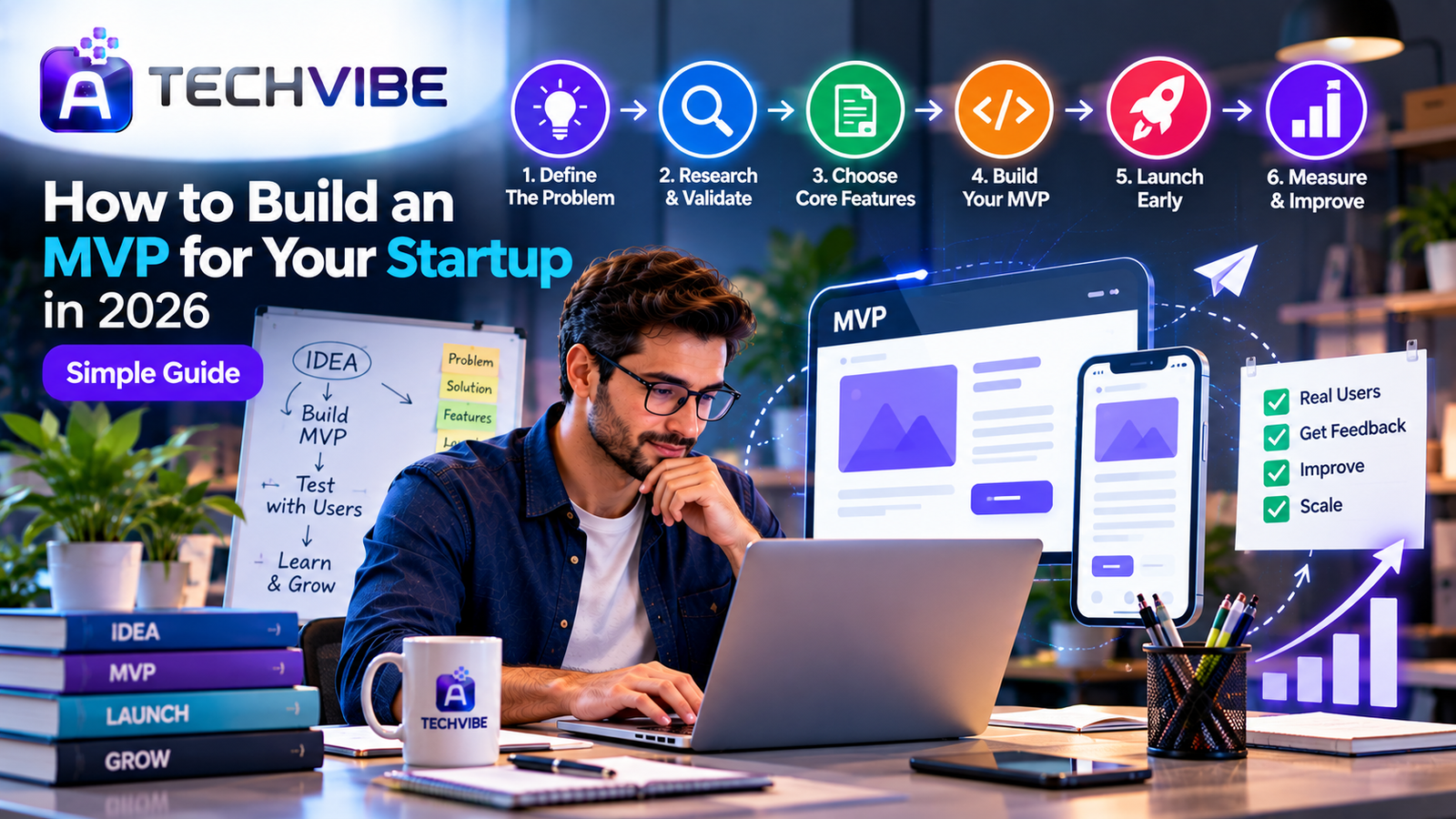
Learning how to build an MVP is one of the smartest moves a new founder can make. An MVP, or minimum viable product, is the simplest version of your idea that real customers can use. It helps you test demand before you spend months and a large budget on a full product.
Many startups fail because they build something nobody wants. An MVP protects you from that mistake. It turns a risky guess into a small, measurable experiment. At AtechVibe, we follow how founders turn ideas into real products, and the pattern is clear: the teams that test early usually win. This guide walks you through each step in plain language.
What Is an MVP?
An MVP is not a half-finished product. It is a focused product that solves one main problem well. It includes only the features needed to deliver value and collect honest feedback.
Think of it as an experiment. You launch something small, watch how people use it, and learn what to build next. The goal is learning, not perfection. A good MVP answers one big question: will people actually use and pay for this?
Why Every Startup Needs an MVP
It saves money. You spend only on core features instead of a long wish list.
It saves time. A focused product can launch in weeks, not years.
It proves demand. Real users show you whether the idea is worth pursuing.
It attracts investors. A working product with early users is far more convincing than a slide deck.
It guides your roadmap. Feedback tells you exactly which features matter most and which ones you can skip.
It builds early fans. The first users often become your loudest supporters and best source of referrals.
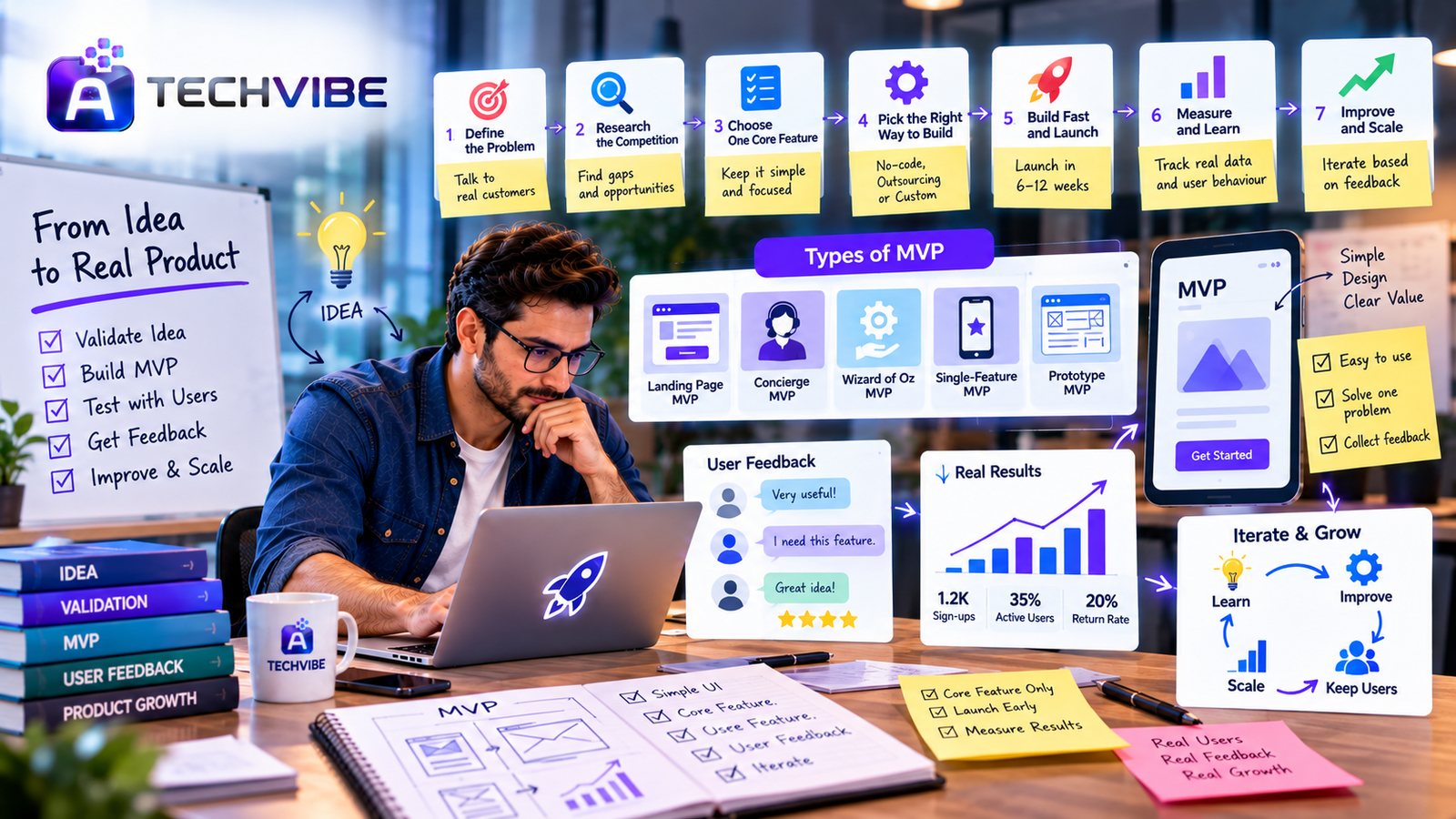
Types of MVP You Can Choose
Not every MVP needs to be a full app. Depending on your idea, a simpler format may test demand faster and cheaper.
Landing page MVP. Create a single page that explains your product and asks visitors to sign up or pre-order. If people sign up, you have early proof of interest.
Concierge MVP. Deliver the service manually to a few customers. For example, instead of building a meal-planning app, create plans by hand and send them by email. You learn exactly what customers value before writing any code.
Wizard of Oz MVP. The product looks automated to users, but people handle tasks behind the scenes. It feels real while you test whether automation is worth building.
Single-feature MVP. Build one core feature extremely well and nothing else. Many successful apps started this way.
Prototype MVP. A clickable design that shows how the product will work. It is useful for early feedback and investor conversations.
Choose the simplest type that still answers your main question.
How to Build an MVP Step by Step
Step 1: Define the Problem Clearly
Start with the problem, not the product. Write one sentence that describes who has the problem and why it hurts. For example: "Small gyms struggle to manage class bookings without expensive software."
Talk to at least 15 to 20 potential customers. Ask how they solve the problem today, what it costs them and what frustrates them most. Avoid pitching your idea during these conversations. Just listen. Their answers will shape everything you build.
Step 2: Study the Competition
Look at how others already solve this problem. Read their reviews, especially the negative ones. Complaints reveal gaps you can fill.
Competition is not a bad sign. It often proves that a market exists. Your job is to find a sharper angle, a simpler experience or an underserved group of customers.
Step 3: Choose One Core Feature
List every feature you imagine. Then cross out everything that is not essential to solving the main problem. What remains is your MVP.
Be ruthless here. Extra features slow you down and make it harder to learn what really works. A helpful test is to ask: "Would early users still get value if this feature did not exist?" If the answer is yes, leave it out for now.
Step 4: Pick the Right Way to Build
You have several options. No-code tools let non-technical founders create simple apps and websites quickly. Cross-platform frameworks help you launch on both Android and iOS from one codebase, which we explain in the business benefits of Flutter app development. Hybrid apps are another budget-friendly route, covered in our guide to hybrid app development.
If you do not have a technical co-founder, working with an outside team can make sense. Read about the benefits of outsourcing mobile app development before deciding, and ask any partner for examples of MVPs they have launched.
Step 5: Design for Simplicity
Your MVP does not need a stunning design. It needs a clear one. Users should understand what to do within seconds.
Keep screens minimal. Use simple language. Make the main action obvious. Remove anything that distracts from the core task. A clean, easy experience matters more than visual polish at this stage.
Step 6: Build Fast and Launch Early
Set a short deadline, ideally six to twelve weeks. Deadlines force focus and stop endless tweaking.
Launch to a small group first, such as early sign-ups, friends in your industry or a niche online community. Early users are usually forgiving and eager to share opinions. Their feedback is worth far more than a big public launch with no learning plan.
Step 7: Measure What Matters
Decide in advance how you will judge success. Useful measures include sign-ups, daily active users, how many people return after a week, and whether anyone is willing to pay.
Add simple analytics from day one. Numbers show you what people do, not just what they say. Set clear targets before launch, such as "30 percent of users return in the first week," so you can judge results honestly.
Step 8: Learn, Improve and Repeat
Collect feedback through short surveys, quick calls and in-app messages. Look for patterns rather than reacting to every single comment.
Then improve the product in small cycles. Fix the biggest pain points first. Over time, your MVP grows into a full product shaped by real users rather than assumptions.
How Much Does an MVP Cost?
Costs vary widely. A landing page or concierge MVP may cost very little beyond your time. A simple no-code app can be built on a modest budget. A custom mobile or web app usually costs more, depending on complexity, team location and features.
The key is to match spending to what you need to learn. Do not invest in a full custom platform if a landing page can answer your first question. As your MVP proves demand, you can invest more confidently. Our article on startup software development services for scalable growth explains how to plan budgets as your product grows.
Common MVP Mistakes to Avoid
Building too much. If your MVP takes a year, it is not minimal.
Skipping customer research. Guessing what users want is expensive.
Chasing perfection. A good product today beats a perfect one next year.
Ignoring scalability completely. Your MVP should be simple, but its foundation should allow growth. We explore this balance in startup software development that scales from day one.
Launching without a plan to learn. Without clear metrics, you will not know whether the MVP worked.
Ignoring security. Even a small product handles user data. Protect logins and stored information from the start.
How AI Is Speeding Up MVP Development
AI tools are changing how quickly startups can move. Coding assistants help developers write and test code faster. Design tools can produce layouts in minutes. Chatbots can answer early customer questions automatically, and AI analytics can summarise feedback from hundreds of users.
These tools do not replace skilled people, but they shorten the path from idea to launch. Learn more in how AI is changing software development and how AI agents are changing the way businesses work.
Frequently Asked Questions
How long does it take to build an MVP?
Most MVPs take between a few days and three months. Landing pages and concierge MVPs are fastest, while custom apps take longer.
Do I need a technical co-founder?
Not always. No-code tools and outsourcing partners make it possible to launch without one, especially in the early stage.
When should I move beyond the MVP?
When users return regularly, recommend the product to others and show willingness to pay, it is time to invest in a fuller version.
Final Thoughts
Knowing how to build an MVP gives your startup a real advantage. Start with a clear problem, choose the simplest MVP type, focus on one core feature, launch quickly and let real users guide you. Small, smart steps reduce risk and help you build something people truly want.
For more guides on startups, apps and emerging tech, visit the AtechVibe homepage and explore our latest articles.