What is agentic AI, and why is everyone in tech suddenly talking about it? In simple terms, agentic AI is artificial intelligence that can take action on its own. Instead of only answering questions, it can plan steps, use tools and complete tasks with very little human input.
This is a big shift. For years, AI was mostly a smart assistant that waited for instructions. Now it is becoming a digital worker that can finish jobs from start to end. At AtechVibe, we track how new technology changes the way businesses work, and agentic AI is one of the most important trends of 2026. This guide explains what it is, how it works and how your business can use it safely.
What Is Agentic AI?
Agentic AI refers to AI systems that act like agents. An agent is something that works toward a goal. It decides what to do next, takes action, checks the result and adjusts if needed.
Traditional AI tools respond to a single prompt. You ask a question, and you get an answer. Agentic AI goes further. You give it a goal, such as “prepare a weekly sales report and email it to the team,” and it figures out the steps. It might pull data from your CRM, create charts, write a summary and send the email, all on its own.
The key difference is autonomy. Agentic AI does not just think. It acts.
How Agentic AI Is Different From Chatbots
Many people confuse AI agents with chatbots. They are related, but not the same.
A chatbot answers questions in a conversation. It reacts to what you type and usually stops there.
An AI agent works toward an outcome. It can break a goal into smaller tasks, connect to other software, remember context and keep going until the job is done.
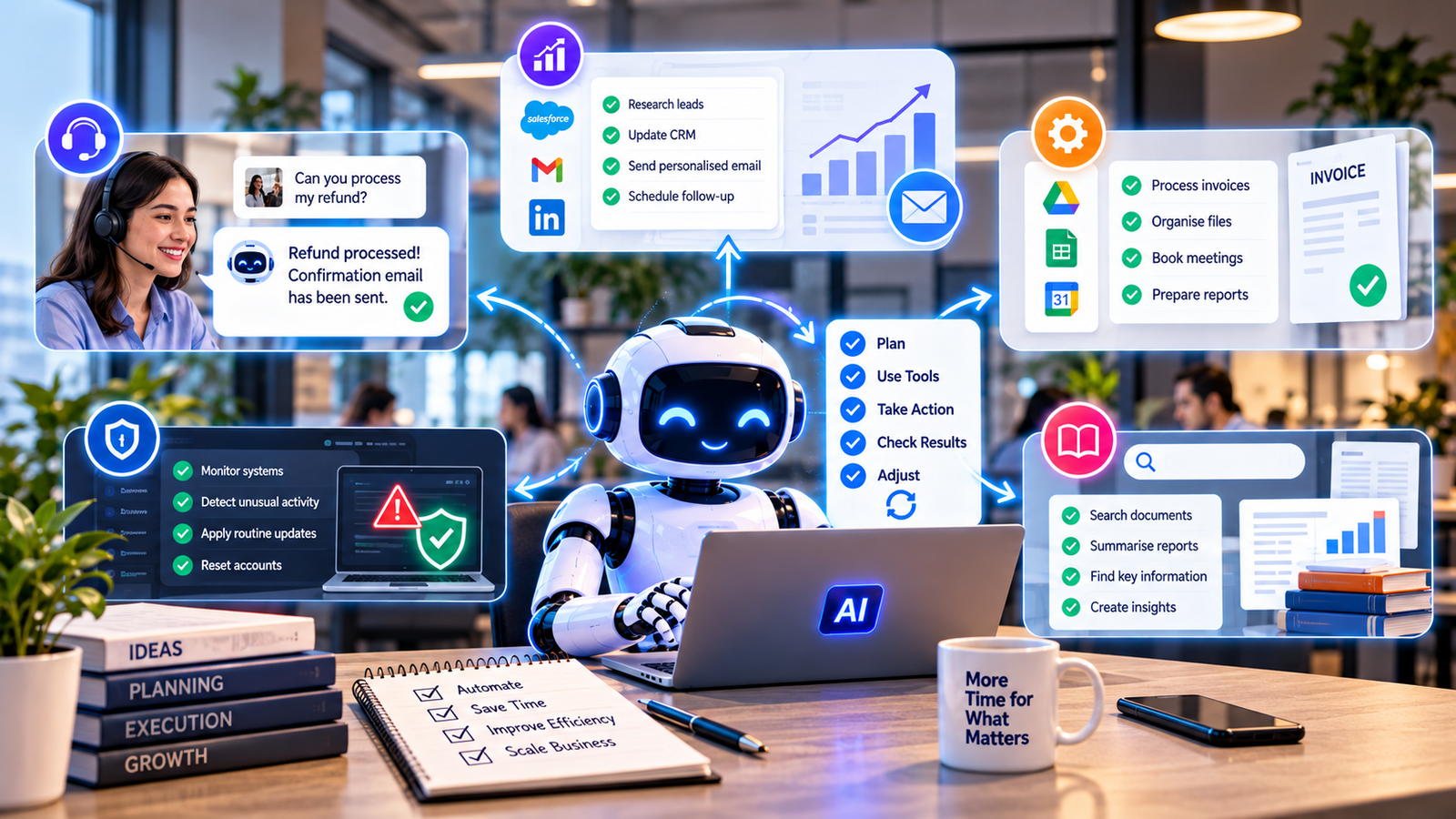
For example, a chatbot can tell a customer your refund policy. An AI agent can check the order, confirm eligibility, process the refund and send a confirmation email. One gives information. The other completes the task.
How Does Agentic AI Work?
Most AI agents follow a simple loop:
Understand the goal. The agent reads the instruction and works out what success looks like.
Plan the steps. It breaks the goal into smaller actions.
Use tools. It connects to apps such as email, spreadsheets, calendars, databases or web browsers.
Check the results. After each step, it reviews what happened.
Adjust and continue. If something fails, it tries another approach or asks a human for help.
Behind the scenes, a large language model acts as the “brain.” It is connected to tools, memory and rules that control what the agent is allowed to do. This combination is what turns a smart model into a useful worker.
Real Business Uses of Agentic AI
Agentic AI is already moving from experiments into daily operations. Here are some of the most practical uses.
Customer Support
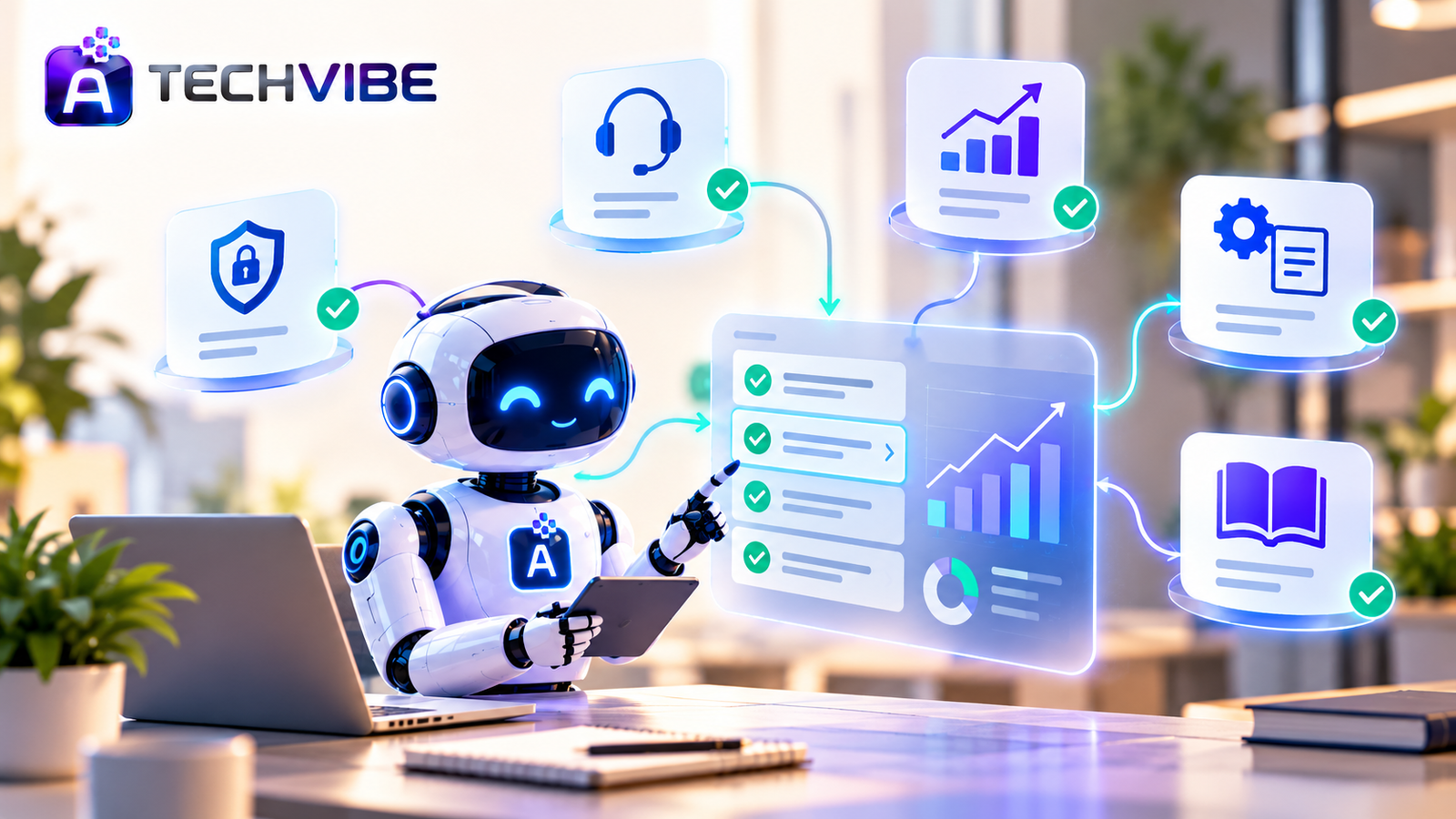
AI agents can handle common requests from start to finish. They can track orders, update addresses, reset passwords and process simple refunds. Human staff then focus on complex or sensitive cases. This also improves the overall experience, a topic we explore in how machine learning is changing customer experiences.
Sales and Marketing
Agents can research leads, update CRM records, draft personalised emails and schedule follow-ups. Some can also monitor campaign performance and suggest changes. Businesses using large CRM platforms are already adding these features, as we discuss in Sales force solutions for customer-centric business growth.
Operations and Admin
Repetitive admin work is a perfect fit. Agents can process invoices, match receipts, organise files, book meetings and prepare reports. These tasks take hours each week but follow clear rules.
IT and Cybersecurity
In IT, agents can monitor systems, spot unusual activity and take first steps to contain threats. They can also reset accounts or apply routine updates. We look at this shift in security automation’s impact on cybersecurity teams.
Knowledge and Research
Agents can search company documents, summarise long reports and answer staff questions using internal knowledge. This turns scattered information into something useful. Learn more in how AI is transforming enterprise knowledge management.
For a wider view of these changes, read how AI agents are changing the way businesses work.
Benefits of Agentic AI for Businesses
Time savings. Agents handle routine tasks around the clock, freeing people for higher-value work.
Faster response. Customers get answers and actions in minutes instead of hours.
Consistency. Agents follow the same process every time, which reduces human error in repetitive work.
Scalability. As demand grows, agents can handle more work without hiring at the same pace.
Better use of data. Agents can connect information across different tools, giving teams a clearer picture.
Risks and Challenges to Consider
Agentic AI is powerful, but it is not magic. Because agents can act, mistakes can have real consequences. Businesses should be aware of these risks.
Wrong actions. An agent might misunderstand a goal and take the wrong step, such as sending an email to the wrong person.
Security concerns. Agents need access to systems and data. If that access is too broad, a mistake or attack could cause damage.
Hidden costs. Running AI agents uses computing power, and costs can grow quickly. We covered this issue in a warning sign about AI’s real cost.
Lack of transparency. It is not always clear why an agent made a decision, which can make problems harder to fix.
Over-reliance. If teams depend fully on agents, they may lose skills or miss errors.
How to Use Agentic AI Safely
The good news is that most risks can be managed with clear rules.
Start with low-risk tasks. Begin with internal work like report preparation or file organisation before letting agents interact with customers or money.
Keep humans in the loop. Require approval for important actions such as payments, refunds above a set amount or public messages.
Limit access. Give each agent only the permissions it needs. An agent that writes reports does not need access to payroll.
Log everything. Keep a record of every action an agent takes so you can review and correct mistakes.
Test before scaling. Run a pilot with a small team, measure results and fix problems before a wider rollout.
How to Get Started With Agentic AI
You do not need a large tech team to begin. Follow these simple steps.
Step 1: Find repetitive tasks. List jobs that take time, follow clear rules and happen often.
Step 2: Pick one use case. Choose the task with the biggest time savings and the lowest risk.
Step 3: Choose your approach. Many business apps now include built-in agent features. For custom needs, consider specialist partners, as explained in AI agent development services for autonomous business operations.
Step 4: Set clear limits. Define what the agent can and cannot do, and when it must ask a human.
Step 5: Measure and improve. Track time saved, error rates and user feedback. Expand only when results are proven.
If budget is a concern, our guide on how small businesses can use AI without a big budget shows affordable ways to begin. For a complete plan, follow our AI adoption roadmap for small businesses.
The Future of Agentic AI
Agentic AI is still developing, but the direction is clear. Agents will become more reliable, better at working with each other and easier to set up. In the near future, many employees may manage a small team of AI agents, each handling a specific part of their workload.
This does not mean AI will replace people. It means the nature of work will change. People will spend less time on routine tasks and more time on decisions, creativity and relationships, the areas where human judgment matters most.
Final Thoughts
So, what is agentic AI? It is AI that does not just answer but acts, turning goals into completed tasks. For businesses, it offers real gains in speed, efficiency and scale. The key is to start small, keep humans in control and set clear rules from day one.
Businesses that learn to work alongside AI agents now will be better prepared for the years ahead. For more simple guides on AI, technology and business growth.